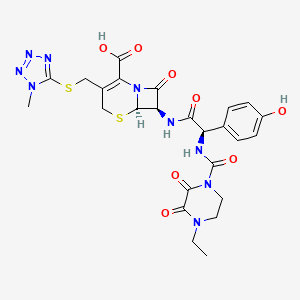
The drug inhibits bacterial cell wall synthesis. It acts by binding to specific penicillin-binding proteins (PBPs) located within the bacterial cell wall, inhibiting the third stage of cell wall synthesis. This leads to cell lysis (autolysis).
The drug is active against many pathogens, including Gram-positive bacteria of the genus Staphylococcus: S. aureus, S. epidermidis, and of the genus Streptococcus: S. pyogenes, S. pneumoniae, S. agalactiae, S. faecalis.
The drug is also active against Gram-negative bacteria: Escherichia coli, Klebsiella spp., Enterobacter spp., Citrobacter spp., Haemophilus influenzae, Proteus mirabilis, Proteus vulgaris, Morganella morganii, Providencia rettgeri, Providencia spp., Serratia spp., Salmonella, Shigella, Pseudomonas aeruginosa, other Pseudomonas species, Bordetella pertussis, Neisseria gonorrhoeae, Neisseria meningitidis, Yersinia enterocolitica.
It is also used in infections caused by anaerobic bacteria: Gram-positive and Gram-negative cocci, Gram-negative bacilli, and many strains of Bacteroides.
The drug is eliminated from the body via bile and urine.
⚠️ Warnings
Severe hypersensitivity reactions may occur following administration; the risk is higher in patients with known hypersensitivity to other drugs or allergens. In the event of a severe allergic reaction, the drug should be discontinued and appropriate therapy initiated. In the case of anaphylaxis, administration of adrenaline, oxygen, and intravenous corticosteroids may be required.
Severe cutaneous reactions have been reported rarely, including toxic epidermal necrolysis, Stevens–Johnson syndrome, and exfoliative dermatitis. If such reactions occur, the antibiotic should be discontinued and appropriate treatment initiated.
Caution is advised in patients with hepatic disease or biliary obstruction. The half-life of the drug is prolonged, and elimination occurs primarily via urine.
Malnourished patients, those on a restricted diet, those with malabsorption syndrome, patients receiving prolonged parenteral nutrition, or those taking anticoagulants may be at increased risk of haemorrhage, which can occasionally be massive and life-threatening. Particular caution should be exercised in these patients if bleeding of unknown origin, thrombocytopenia, or hypoprothrombinemia occurs.
Use of the drug may cause Clostridioides difficile infection, which leads to pseudomembranous colitis manifesting as severe diarrhoea. These bacteria emerge as a result of altered colonic flora. Appropriate treatment should be initiated if this occurs. Therefore, the use of probiotics is recommended during antibacterial therapy.