This information is for educational purposes only. It is not intended as medical advice. Always consult a qualified healthcare professional.
Rx
Cerdelga
84 mg, Kapsułki twarde
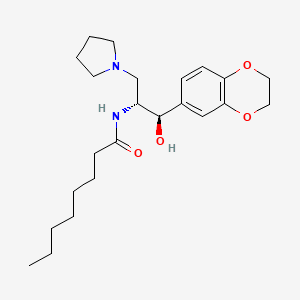
INN: Eliglustatum
Data updated: 2026-04-13
Available in:
🇨🇿🇩🇪🇬🇧🇫🇷🇵🇱🇸🇰🇺🇦
Form
Kapsułki twarde
Dosage
84 mg
Route
doustna
Storage
—
About This Product
User Reviews
Reviews reflect personal experiences and are not medical advice. Always consult your doctor.
Manufacturer
Sanofi B.V. (Irlandia)
Composition
Eliglustatum 84 mg
ATC Code
A16AX10
Source
URPL
Pharmacotherapeutic group: Other alimentary tract and metabolism products, various alimentary tract and metabolism products, ATC code: A16AX10.
Mechanism of action
Eliglustat is a potent and specific inhibitor of glucosylceramide synthase, and acts as a substrate reduction therapy (SRT) for GD1. SRT aims to reduce the rate of synthesis of the major substrate glucosylceramide (GL-1) to match its impaired rate of catabolism in patients with GD1, thereby preventing glucosylceramide accumulation and alleviating clinical manifestations.
Pharmacodynamic effects
In clinical trials in treatment-naïve GD1 patients, plasma GL-1 levels were elevated in the majority of these patients and decreased upon eliglustat treatment. Additionally, in a clinical trial in GD1 patients stabilised on enzyme replacement therapy (ERT) (i.e. having already achieved therapeutic goals on ERT prior to initiating eliglustat treatment), plasma GL-1 levels were normal in most patients and decreased upon eliglustat treatment.
Clinical efficacy and safety
The recommended dosing regimens (see section 4.2) are based on modelling, either of PK/PD data from the dose-titration regimens applied in the clinical studies for IMs and EMs, or physiologically-based PK data for PMs.
Pivotal study of eliglustat in treatment-naïve GD1 patients – study 02507(ENGAGE)
Study 02507 was a randomized, double-blind, placebo-controlled, multicentre clinical study in 40 patients with GD1. In the eliglustat group 3 (15%) patients received a starting dose of 42 mg eliglustat twice daily during the 9-month primary analysis period and 17 (85%) patients received a dose escalation to 84 mg twice daily based on plasma trough concentration.
Table 5: Change from baseline to month 9 (primary analysis period) in treatment-naïve patients with GD1 receiving treatment with eliglustat in study 02507
Placebo*
(n=20)
a
Eliglustat (n=20)
a
Difference
(Eliglustat – Placebo)
[95% CI]
p value
b
Percentage change in spleen volume MN (%)
(primary endpoint)
2.26
-27.77
-30.0
[-36.8, -23.2]
<0.0001
Absolute change in haemoglobin level
(secondary endpoint)
(g/dL)
-0.54
0.69
1.22
[0.57, 1.88]
0.0006
(mmol/L)
-0.34
0.43
0.76
[0.35, 1.17]
Percentage change in liver volume MN (%)
(secondary endpoint)
1.44
-5.20
-6.64
[-11.37, -1.91]
0.0072
Percentage change in platelet count (%)
(secondary endpoint)
-9.06
32.00
41.06
[23.95, 58.17]
<0.0001
MN = Multiples of Normal, CI = confidence interval
a
At baseline, mean spleen volumes were 12.5 and 13.9 MN in the placebo and eliglustat groups, respectively, and mean liver volumes were 1.4 MN for both groups. Mean haemoglobin levels were 12.8 g/dL (7.954 mmol/L) and 12.1 g/dL (7.51 mmol/L), and platelet counts were 78.5 and 75.1 x 10
9
/L, respectively.
b
Estimates and p-values are based on an ANCOVA model
* All patients transitioned to eliglustat treatment after month 9.
During the open-label long term treatment period with eliglustat (extension phase), all patients with complete data who continued to receive eliglustat showed further improvements throughout the extension phase. Results (change from baseline) after 18 months, 30 months and 4.5 years of exposure to eliglustat on the following endpoints were: absolute change in haemoglobin level 1.1 g/dL (1.03) [0.68 mmol/L (0.64); n=39], 1.4 g/dL (0.93) [0.87 mmol/L (0.58); n=35], and 1.4 g/dL (1.31) [0.87 mmol/L (0.81); n=12]; mean increase in platelet count (mm
3
) 58. 5% (40.57%) [n=39], 74.6% (49.57%) [n=35], and 86.8% (54.20%) [n=12]; mean reduction in spleen volume (MN) 46.5% (9.75%) [n=38], 54.2% (9.51%) [n=32], and 65.6% (7.43%) [n=13]; and mean reduction in liver volume (MN) 13.7% (10.65%) [n=38], 18.5% (11.22%) [n=32], and 23.4% (10.59%) [n=13].
Long-term clinical outcomes in treatment-naïve GD1 patients – study 304
Study 304 was a single-arm, open-label, multicentre study of eliglustat in 26 patients of which 19 completed 4 years of treatment. Of these patients, 15 (79%) received a dose escalation to 84 mg eliglustat twice daily; 4 (21%) patients continued to receive 42 mg twice daily.
In the study, 18 patients completed 8 years of treatment. Of these 18 patients, one (6%) received a further dose escalation to 127 mg twice daily; 14 (78%) continued on 84 mg eliglustat twice daily; 3 (17%) patients continued to receive 42 mg twice daily. At year 8, 16 patients had an efficacy endpoint assessment.
Eliglustat showed sustained improvements in organ volume and haematological parameters over the 8 year treatment period (see Table 6).
Table 6: Change from baseline to year 8 in study 304
N
Baseline value (Mean)
Change from baseline (Mean)
Standard deviation
Spleen volume (MN)
15
17.34
-67.9%
17.11
Haemoglobin level
(g/dL)
16
11.33
2.08
1.75
(mmol/L)
7.04
1.29
1.09
Liver volume (MN)
15
1.60
-31.0%
13.51
Platelet count (x10
9
/L)
16
67.53
109.8%
114.73
MN = Multiples of Normal
Pivotal study of eliglustat in GD1 patients switching from ERT– Study 02607 (ENCORE)
Study 02607 was a randomized, open-label, active-controlled, non-inferiority, multicentre clinical study in 159 patients previously stabilised with ERT. In the eliglustat group 34 (32%) patients received a dose escalation to 84 mg eliglustat twice daily and 51 (48%) to 127 mg twice daily during the 12-month primary analysis period, and 21 (20%) patients continued to receive 42 mg twice daily.
Based on the aggregate data from all doses tested in this study, eliglustat met the criteria set in this study to be declared non-inferior to imiglucerase in maintaining patient stability. After 12 months of treatment, the percentage of patients meeting the primary composite endpoint (composed of all four components mentioned in Table 7) was 84.8% [95% confidence interval 76.2% - 91.3%] for the eliglustat group compared to 93.6% [95% confidence interval 82.5% - 98.7 %] for the imiglucerase group. Of the patients who did not meet stability criteria for the individual components, 12 of 15 eliglustat patients and 3 of 3 imiglucerase patients remained within therapeutic goals for GD1.
There were no clinically meaningful differences between groups for any of the four individual disease parameters (see Table 7).
Table 7: Changes from baseline to month 12 (primary analysis period) in patients with GD1 switching to eliglustat in study 02607
Imiglucerase
(N=47)**
Mean [95% CI]
Eliglustat
(N=99)
Mean [95% CI]
Spleen volume
Percentage of patients with stable spleen volume*
a
100%
95.8%
Percentage change in spleen volume MN (%)*
-3.01 [-6.41, 0.40]
-6.17 [-9.54, -2.79]
Haemoglobin level
Percentage of patients with stable haemoglobin level
a
100%
94.9%
Absolute change in haemoglobin level
(g/dL)
0.038 [-0.16, 0.23]
-0.21 [-0.35, -0.07]
(mmol/L)
0.024 [-0.099, 0.14]
-0.13 [-0.22, -0.043]
Liver volume
Percentage of patients with stable liver volume
a
93.6%
96.0%
Percentage change in liver volume MN (%)
3.57 [0.57, 6.58]
1.78 [-0.15, 3.71]
Platelet count
Percentage of patients with stable platelet count
a
100%
92.9%
Percentage change in platelet count (%)
2.93 [-0.56, 6.42]
3.79 [0.01, 7.57]
MN = Multiples of Normal, CI = confidence interval
* Excludes patients with a total splenectomy.
** All patients transitioned to Eliglustat treatment after 52 weeks
a
The stability criteria based on changes between baseline and 12 months: haemoglobin level ≤1.5 g/dL (0.93 mmol/L) decrease, platelet count ≤25% decrease, liver volume ≤20% increase, and spleen volume ≤25% increase.
All patient number (N)= Per Protocol Population
During the open-label long term treatment period with eliglustat (extension phase) the percentage of patients with complete data meeting the composite stability endpoint was maintained at 84.6% (n=136) after 2 years, 84.4% (n=109) after 3 years and 91.1% (n=45) after 4 years. The majority of extension phase discontinuations were due to transition to commercial product from year 3 onwards. Individual disease parameters of spleen volume, liver volume, haemoglobin levels and platelet count remained stable through 4 years (see Table 8).
Table 8: Changes from month 12 (primary analysis period) to month 48 in patients with GD1 in the long-term treatment period on eliglustat in study 02607
Year 2
Year 3
Year 4
Imiglucerase/ Eliglustat
a
Mean [95% CI]
Eliglustat
b
Mean [95% CI])
Imiglucerase/ Eliglustat
a
Mean [95% CI]
Eliglustat
b
Mean [95% CI]
Imiglucerase/ Eliglustat
a
Mean [95% CI]
Eliglustat
b
Mean [95% CI]
Patients at start of year (N)
51
101
46
98
42
96
Patients at end of year (N)
46
98
42
96
21
44
Patients with available data (N)
39
97
16
93
3
42
Spleen volume
Patients with stable spleen volume (%)*
31/33 (93.9)
[0.798, 0.993]
69/72 (95.8)
[0.883, 0.991]
12/12 (100.0)
[0.735, 1.000]
65/68 (95.6)
[0.876, 0.991]
2/2 (100.0)
[0.158, 1.000]
28/30 (93.3)
[0.779, 0.992]
Change in spleen volume MN (%)*
-3.946[-8.80, 0.91]
-6.814[-10.61, -3.02]
-10.267[-20.12, -0.42]
-7.126[-11.70, -2.55]
-27.530[-89.28, 34.22]
-13.945[-20.61, -7.28]
Haemoglobin level
Patients with stable haemoglobin level (%)
38/39 (97.4)
[0.865, 0.999]
95/97 (97.9)
[0.927, 0.997]
16/16 (100.0)
[0.794, 1.000]
90/93 (96.8)
[0.909, 0.993]
3/3 (100.0)
(0.292, 1.000]
42/42 (100.0)
[0.916, 1.000]
Change from baseline in haemoglobin level
(g/dL)
0.034[-0.31, 0.38]
-0.112[-0.26, 0.04]
0.363[-0.01, 0.74]
-0.103[-0.27, 0.07]
0.383[-1.62, 2.39]
0.290[0.06, 0.53]
(mmol/L)
0.021[-0.19,
0.24]
-0.077[-0.16,
0.025]
0.23[-0.006,
0.46]
-0.064[- 0.17, 0.043]
0.24 [-1.01,
1.48]
0.18 [0.0374, 0.33]
Liver volume
Patients with stable liver volume (%)
38/39 (97.4)
(0.865, 0.999)
94/97 (96.9)
(0.912, 0.994)
15/16 (93.8)
[0.698, 0.998]
87/93 (93.5)
(0.865, 0.976)
3/3 (100.0)
[0.292, 1.000]
40/42 (95.2)
[0.838, 0.994]
Change from baseline in liver volume MN (%)
0.080[-3.02, 3.18]
2.486[0.50, 4.47]
-4.908[-11.53, 1.71]
3.018[0.52, 5.52]
-14.410[-61.25, 32.43]
-1.503[-5.27, 2.26]
Platelet count
Patients with stable platelet count (%)
33/39 (84.6)
[0.695, 0.941]
92/97 (94.8)
[0.884, 0.983]
13/16 (81.3)
[0.544, 0.960]
87/93 (93.5)
[0.865, 0.976]
3/3 (100.0)
[0.292, 1.000]
40/42 (95.2)
[0.838, 0.994]
Change in platelet count (%)
-0.363[-6.60, 5.88]
2.216[-1.31, 5.74]
0.719[-8.20, 9.63]
5.403[1.28, 9.52]
-0.163[-35.97, 35.64]
7.501[1.01, 13.99]
Composite stability endpoint
Patients who are stable on eliglustat (%)
30/39 (76.9)
[0.607, 0.889]
85/97 (87.6)
[0.794, 0.934]
12/16 (75.0)
[0.476, 0.927]
80/93 (86.0)
[0.773, 0.923]
3/3 (100.0)
[0.292, 1.000]
38/42 (90.5)
[0.774, 0.973]
MN = Multiples of Normal, CI = confidence interval
* Excludes patients with a total splenectomy.
a Imiglucerase/Eliglustat - Originally randomised to imiglucerase
b Eliglustat - Originally Randomised to eliglustat
Clinical experience in CYP2D6 PMs and URMs
There is limited experience with eliglustat treatment of patients who are PMs or URMs. In the primary analysis periods of the three clinical studies, a total of 5 PMs and 5 URMs were treated with eliglustat. All PMs received 42 mg eliglustat twice daily, and four of these (80%) had an adequate clinical response. The majority of URMs (80%) received a dose escalation to 127 mg eliglustat twice daily, all of which had adequate clinical responses. The one URM who received 84 mg twice daily did not have an adequate response.
The predicted exposures with 84 mg eliglustat once daily in patients who are PMs are expected to be similar to exposures observed with 84 mg eliglustat twice daily in CYP2D6 IMs. Patients who are URMs may not achieve adequate concentrations to achieve a therapeutic effect. No dosing recommendation for URMs can be given.
Effects on skeletal pathology
After 9 months of treatment, in Study 02507, bone marrow infiltration by Gaucher cells, as determined by the total Bone Marrow Burden (BMB) score (assessed by MRI in lumbar spine and femur) decreased by a mean of 1.1 points in eliglustat treated patients (n=19) compared to no change in patients receiving placebo (n=20). Five eliglustat-treated patients (26%) achieved a reduction of at least 2 points in the BMB score.
After 18 and 30 months of treatment, BMB score had decreased by a mean 2.2 points (n=18) and 2.7 (n=15), respectively for the patients originally randomised to eliglustat, compared to a mean decrease of 1 point (n=20) and 0.8 (n=16) in those originally randomised to placebo.
After 18 months of eliglustat treatment in the open-label extension phase, the mean (SD) lumbar spine Bone Mineral Density T-score increased from -1.14 (1.0118) at Baseline (n=34) to -0.918 (1.1601) (n=33) in the normal range. After 30 months and 4.5 years of treatment, the T-score further increased to -0.722 (1.1250) (n=27) and -0.533 (0.8031) (n=9), respectively.
Results of study 304 indicate that skeletal improvements are maintained or continue to improve during at least 8 years of treatment with eliglustat.
In study 02607, lumbar spine and femur BMD T- and Z-scores were maintained within the normal range in patients treated with eliglustat for up to 4 years.
Electrocardiographic evaluation
No clinically significant QTc prolonging effect of eliglustat was observed for single doses up to 675 mg.
Heart-rate corrected QT interval using Fridericia's correction (QTcF) was evaluated in a randomized, placebo and active (moxifloxacin 400 mg) controlled cross-over, single-dose study in 47 healthy subjects. In this trial with demonstrated ability to detect small effects, the upper bound of the one-sided 95% confidence interval for the largest placebo-adjusted, baseline-corrected QTcF was below 10 msec, the threshold for regulatory concern. While there was no apparent effect on heart rate, concentration-related increases were observed for the placebo corrected change from baseline in the PR, QRS, and QTc intervals. Based on PK/PD modelling, eliglustat plasma concentrations 11-fold the predicted human C
max
are expected to cause mean (upper bound of the 95% confidence interval) increases in the PR, QRS, and QTcF intervals of 18.8 (20.4), 6.2 (7.1), and 12.3 (14.2) msec, respectively.
Elderly
A limited number of patients aged 65 years (n=10) and over were enrolled in clinical trials. No significant differences were found in the efficacy and safety profiles of elderly patients and younger patients.
Paediatric population
Paediatric patients (2 to <18 years of age)
Study EFC13738 (ELIKIDS) is an ongoing Phase 3, open-label, two-cohort, multicentre study to evaluate the safety and pharmacokinetics (PK) of eliglustat alone (Cohort 1) or in combination with imiglucerase (Cohort 2) in paediatric patients aged 2 to less than 18 years old with GD1 and GD3. Cohort 1 enrolled GD1 and GD3 patients who were receiving ERT for at least 24 months and reached prespecified therapeutic goals with respect to their haemoglobin level (ages 2 to <12 years: ≥11.0 g/dL (6.827 mmol/L); for ages 12 to <18 years: ≥11.0 g/dL (6.827 mmol/L) for females and ≥12.0 g/dL (7.452 mmol/L) for males), platelet count (≥100,000/mm
3
), and spleen volume (<10.0 MN) and liver volume (<1.5 MN), and had absence of Gaucher-related pulmonary disease, severe bone disease, or persistent thrombocytopenia. Cohort 2 enrolled GD1 and GD3 patients who, despite ongoing treatment with ERT for ≥36 months, were having at least one severe clinical manifestation of GD (e.g. pulmonary disease, symptomatic bone disease, or persistent thrombocytopenia).
There were 51 patients in Cohort 1 (n=46 GD1 and n=5 GD3) and 6 in Cohort 2 (n=3 GD1 and n=3 GD3). Patients were dosed according to their CYP2D6 predicted phenotype (EM, IM, PM) and weight category with potential dose increase due to increased body weight and lower PK exposure (based on the results of individual and subgroup PK analyses). No patient below 15 kg at baseline was enrolled into the study. During the 52 week period, 28 patients (49.2%) had at least one dose increase.
The safety profile of eliglustat seen in this study is consistent with the safety profile of eliglustat in adults and no new adverse reactions were identified (see section 4.8).
The main efficacy endpoints for Cohort 1 included change from baseline to 52-weeks (primary analysis period) for haemoglobin (g/dL), platelets (%), spleen volume (%), and liver volume (%). The majority of study patients (96%) on eliglustat monotherapy maintained their Gaucher-related clinical parameters (Table 9) within the pre-specified therapeutic goals for study entry. Of the 3 patients below the age of 6 years on eliglustat monotherapy, 2 switched to imiglucerase.
Out of 51 patients, 47 in Cohort 1 were maintained on eliglustat monotherapy through 52 weeks.
Four patients (n=2 GD1, n=2 GD3) required a switch to imiglucerase due to decline in Gaucher-related clinical parameters. Of the 4 patients, one (GD3) discontinued the study and 3 initiated rescue therapy treatment. Further, one (GD1) of the 3 patients who initiated rescue therapy withdrew from the study during the primary analysis period.
Of the five patients with GD3 on eliglustat monotherapy one discontinued the study due to Covid-19 and 2 patients qualified for rescue therapy; of the two who qualified for rescue therapy, one patient discontinued the study and one completed the PAP on rescue therapy as stated above. The efficacy data of eliglustat as monotherapy in paediatric patients below the age of 6 years (n=3) and with GD3 (n=5) are limited; no clinically meaningful conclusion can be drawn.
The main efficacy endpoint for patients in Cohort 2 was the percentage of patients with improvement in the severe manifestation(s) that made the patient eligible for inclusion in Cohort 2 after 52 weeks of treatment. For efficacy of combination therapy, 4 out of 6 patients did not meet the main endpoint; no conclusion can be drawn as to the use of combination therapy in the paediatric population.
Table 9: Changes from baseline to 52 weeks (primary analysis period) in patients with GD on eliglustat monotherapy (Cohort 1) in study EFC13738
Age (years) [n]
Gaucher-related clinical parameters
Mean (SD) at baseline
Mean (SD) at week 52
Mean change (SD)
2 to < 6 [n = 3]
GD1: n = 2
GD3: n = 1
Haemoglobin level (g/dL)
(mmol/L)
12.25 (0.76)
7.61 (0.47)
11.93 (0.60)
7.41 (0.37)
-0.32 g/dL (0.20)
-0.25 mmol/L (0.01)
Platelet count (x10
9
/L)
261.50 (59.33)
229.33 (90.97)
-12.19% (26.05)
Spleen volume (MN)
3.84 (1.37)
5.61 (2.56)
42.12% (16.64)
Liver volume (MN)
1.22 (0.27)
1.43 (0.02)
21.23% (26.97)
6 to < 12 [n = 15]
GD1: n = 14
GD3: n = 1
Haemoglobin level (g/dL)
(mmol/L)
13.70 (1.17)
8.51 (0.73)
13.21 (1.22)
8.2 (0.76)
-0.49 g/dL (1.17)
-0.3 mmol/L (0.73)
Platelet count (x10
9
/L)
216.40 (51.80)
231.73 (71.62)
7.25% (20.50)
Spleen volume (MN)
3.01 (0.86)
2.93 (0.82)
0.11% (19.52)
Liver volume (MN)
1.02 (0.20)
1.03 (0.16)
2.22% (13.86)
12 to < 18 [n = 33]
GD1: n = 30
GD3: n = 3
Haemoglobin level (g/dL)
(mmol/L)
13.75 (0.97)
8.54 (0.60)
13.37 (1.20)
8.3 (0.75)
-0.38 g/dL (1.01)
-0.24 mmol/L (0.63)
Platelet count (x10
9
/L)
210.64 (49.73)
177.11 (50.92)
-14.36% (20.67)
Spleen volume (MN)
3.48 (1.78)
3.41 (1.65)
1.79% (26.11)
Liver volume (MN)
0.93 (0.16)
0.92 (0.18)
-1.47% (10.39)
The European Medicines Agency has waived the obligation to submit the results of studies with eliglustat in all subsets of the paediatric population in Gaucher disease type 2 (see section 4.2 for information on paediatric use).
⚠️ Warnings
Any unused product or waste material should be disposed of in accordance with local requirements.