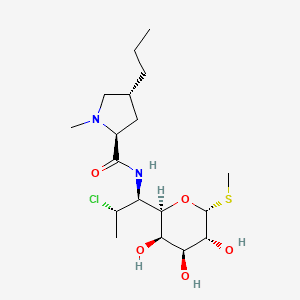
Clindamycin is an antibiotic belonging to the lincosamide class, available in capsule form for the treatment of bacterial infections caused by susceptible organisms. Its bacteriostatic to bactericidal effects are based on the inhibition of protein synthesis through binding to the 50S ribosomal subunit. Clindamycin also possesses antiparasitic properties. The capsules are usually taken three to four times daily regardless of meals. A large glass of water should be consumed to prevent esophageal irritation. The most common possible adverse effects include diarrhea, pseudomembranous colitis, abdominal pain, and skin rashes. Due to adverse effects on the intestinal flora, concomitant and subsequent administration of a probiotic is recommended. Clindamycin is a substrate of CYP3A.
Clindamycin (ATC J01FF01) has bacteriostatic to bactericidal properties against gram-positive aerobic as well as gram-positive and gram-negative anaerobic bacteria. Target organisms include, for example, streptococci, staphylococci, chlamydiae, Bacteroides, pneumococci, and Propionibacterium species (selection).
Its effects are based on the inhibition of protein synthesis through binding to the 50S subunit of bacterial ribosomes. Clindamycin has a short half-life of 1.5 to 3.5 hours.
In combination with other active substances, efficacy has also been demonstrated against parasitic diseases caused by protozoa such as toxoplasmosis, babesiosis, and malaria, as well as against fungal infections (Pneumocystis pneumonia).