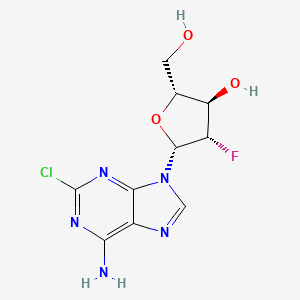
Clofarabine is a purine nucleoside antimetabolite.
Its antitumour activity is thought to be due to 3 mechanisms:
- Inhibition of DNA polymerase α, resulting in termination of DNA chain elongation and/or DNA synthesis/repair.
- Inhibition of ribonucleotide reductase with reduction of cellular deoxynucleotide triphosphate (dNTP) concentrations.
- Disruption of mitochondrial membrane integrity with the release of cytochrome C and other pro-apoptotic factors, leading to programmed cell death, even in non-dividing lymphocytes.
First, clofarabine must diffuse or be transported into target cells, where it is sequentially phosphorylated to the monophosphate and diphosphate by intracellular kinases and then finally to the active conjugate: clofarabine 5'-triphosphate.
Clofarabine has a high affinity for one of the activating phosphorylation enzymes – deoxycytidine kinase – which exceeds that of the natural substrate: deoxycytidine.
In addition, clofarabine possesses greater resistance to cellular degradation by adenosine deaminase and a reduced susceptibility to phosphorolytic cleavage compared with other active substances in its class, although the affinity of clofarabine triphosphate for DNA polymerase α and ribonucleotide reductase is similar to or greater than that of deoxyadenosine triphosphate.
⚠️ Warnings
Pregnancy
Pregnancy:
Clofarabine should not be used during pregnancy unless strictly necessary.
Breastfeeding
Breastfeeding:
If you are breastfeeding, you must stop before starting treatment and must not breastfeed during treatment and for 3 months after treatment has ended.
Driving
Driving:
Do not drive or use any tools or machines if you feel dizzy, light-headed, or faint.
Tell your doctor if any of the following conditions apply to you.
Clofarabine Norameda may not be suitable for you:
- if you have had a severe reaction after using this medicine previously;
- if you have or have ever had kidney disease;
- if you have or have ever had liver disease;
- if you have or have ever had heart disease.
Tell your doctor or nurse immediately if you experience any of the following symptoms, as treatment may need to be stopped:
- if you develop a fever or high temperature – because clofarabine reduces the number of blood cells produced in the bone marrow, you may be more susceptible to infections;
- if you have breathing difficulties, rapid breathing, or shortness of breath;
- if you notice any change in your heart rate;
- if you feel dizzy (light-headed) or faint – this may be a symptom of low blood pressure;
- if you feel nauseous or have diarrhoea;
- if your urine is darker than usual – it is important to drink plenty of water to avoid dehydration;
- if you develop a skin rash with blisters or mouth ulcers;
- if you lose your appetite, feel nauseous, vomit, have diarrhoea, dark-coloured urine and light-coloured stools, stomach pain, jaundice (yellowing of the skin and eyes), or generally feel unwell, these may be symptoms of liver inflammation (hepatitis) or liver damage (hepatic failure);
- if you pass little or no urine or experience drowsiness, nausea, vomiting, shortness of breath, loss of appetite, and/or weakness (these may be signs of acute renal failure/renal insufficiency).
If you are the parent of a child being treated with Clofarabine Norameda, tell the doctor if any of these conditions apply to your child.
During treatment with Clofarabine Norameda, your doctor will carry out regular blood tests and other tests to monitor your health.
Because of the way this medicine works, your blood and other organs will be affected.
Talk to your doctor about contraception.
Young men and women must use effective contraceptive methods during and after treatment.
Clofarabine may cause damage to male and female reproductive organs.
Ask your doctor to explain what can be done to protect you or to allow you to have a family in the future.
Tell your doctor if you are taking or have recently taken:
- medicines for heart disease;
- any medicine that affects blood pressure;
- medicines that affect the liver or kidneys;
- other medicines, including medicines obtained without a prescription.
👨⚕️
Verified by medical editor
Dr. Ozarchuk, PharmD · April 2026
User Reviews
Reviews reflect personal experiences and are not medical advice. Always consult your doctor.