This information is for educational purposes only. It is not intended as medical advice. Always consult a qualified healthcare professional.
Bazedoxifenum — Description, Dosage, Side Effects | PillsCard
Rx
Bazedoxifenum
20 mg, Tabletki powlekane
INN: Bazedoxifenum
Data updated: 2026-04-13
Available in:
🇨🇿🇩🇪🇬🇧🇫🇷🇵🇱🇵🇹🇸🇰🇺🇦
Form
Tabletki powlekane
Dosage
20 mg
Route
doustna
Storage
—
About This Product
User Reviews
Reviews reflect personal experiences and are not medical advice. Always consult your doctor.
Manufacturer
Pfizer Europe MA EEIG (Irlandia)
ATC Code
G03XC02
Source
URPL
Pharmacotherapeutic group: Sex hormones and modulators of the genital system, selective estrogen receptor modulator, ATC code: G03XC02.
Mechanism of action
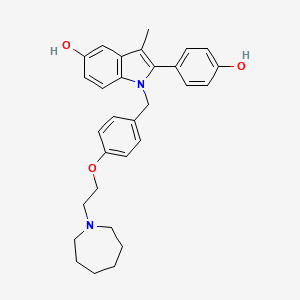
Bazedoxifene belongs to a class of compounds known as selective estrogen receptor modulators (SERMs). Bazedoxifene acts as both an estrogen receptor agonist and/or antagonist, depending on the cell type and tissue and target genes. Bazedoxifene reduces bone resorption and thereby decreases biochemical markers of bone turnover to premenopausal levels. These effects on bone remodelling lead to an increase in bone mineral density (BMD), which in turn contributes to a lower risk of fractures. Bazedoxifene acts primarily as an estrogen receptor antagonist in uterine and breast tissue.
Clinical efficacy
The efficacy of bazedoxifene was established in two multicentre, double-blind, randomised, placebo- and active-controlled phase III clinical trials: a 3-year osteoporosis treatment study and a 2-year osteoporosis prevention study.
Osteoporosis treatment study
In the osteoporosis treatment study, 7,492 postmenopausal women (mean age 66 years; range 50 to 85 years and a median time since menopause of 19.5 years) received bazedoxifene (20 or 40 mg daily), raloxifene (60 mg daily), or placebo to evaluate the incidence of new vertebral fractures over 3 years (3-year core study). The 3-year core study was extended twice with two 2-year double-blind, placebo-controlled extensions of the core study, resulting in a total treatment duration of up to 7 years (7-year study). A total of 3,146 subjects continued in the first 2-year extension (bazedoxifene 20 mg: n=1,047; bazedoxifene 40/20 mg: n=1,041; placebo: n=1,058). The 40 mg bazedoxifene dose was reduced to 20 mg after approximately 4 years. The raloxifene group was discontinued during the first 2-year extension.
A total of 1,732 subjects continued in the second 2-year extension (bazedoxifene 20 mg: n=560; bazedoxifene 40/20 mg: n=582; placebo: n=590). All patients received 1,200 mg of calcium and 400 IU of vitamin D daily.
This study primarily enrolled patients of Caucasian background (87.3%) with osteoporosis who had no vertebral fracture at baseline (BMD T-score at the lumbar spine [LS] or femoral neck [FN] between -2.5 and -4.0) or patients with osteoporosis who had at least 1 mild vertebral fracture at baseline. The mean baseline T-score was -2.4 at the LS and -1.7 at the FN.
After 3 years of treatment, bazedoxifene 20 mg (42%), bazedoxifene 40 mg (37%), and raloxifene 60 mg (42%) achieved a significant reduction in the incidence of new vertebral fractures compared with placebo. The reduction in vertebral fracture incidence was similar in the bazedoxifene and raloxifene groups. The therapeutic effect was similar in patients with and without a pre-existing vertebral fracture (Table 1).
Table 1: Effect of bazedoxifene on vertebral fracture risk after 3 years of treatment
Number of patients Bazedoxifene Placebo 20 mg
Absolute risk reduction
Relative risk reduction (95% CI)
Total number of patients
n=1,724 n=1,741
Number (%)
a
of patients with a new
35 (2.34%) 59 (4.07%)
1.73%
42%
b
vertebral fracture
(11%, 62%)
Patients without a baseline
n=757 n=760
fracture
Number (%)
a
of patients with ≥1
13 (1.98%) 20 (3.13%)
1.15%
35%
c
new vertebral fracture
Patients with ≥1 baseline
n=967 n=981
fracture
Number (%)
a
of patients with ≥1
22 (2.63%) 39 (4.80%)
2.17%
45%
d
new vertebral fracture
(6%, 68%)
a Kaplan–Meier estimates b p-value=0.015 c p-value=0.22 d p-value=0.035
After 5 years of treatment, the incidence of new vertebral fractures remained lower in the bazedoxifene 20 mg group (4.49%) compared with placebo (6.82%), with a 36% relative risk reduction (p=0.014).
After 7 years of treatment, the incidence of new vertebral fractures remained lower in the bazedoxifene 20 mg group (7.64%) compared with placebo (9.90%), with a 30% relative risk reduction (p=0.022).
The incidence of osteoporosis-related non-vertebral fractures was similar in the bazedoxifene 20 mg (5.68%), raloxifene 60 mg (5.87%), and placebo (6.26%) groups. In a post-hoc analysis, the 10-year fracture probability was determined as an index of baseline fracture risk. The median 10-year probability of major osteoporotic fracture for the overall study population was 11%. In patients treated with bazedoxifene, fracture incidence was dependent on baseline fracture risk: the higher the fracture risk, the greater the benefit of bazedoxifene treatment.
Bazedoxifene was associated with a significant reduction in the risk of all clinical fractures in patients with a 10-year fracture probability of 16% or greater.
In a post-hoc analysis, the relative risk of non-vertebral fractures in bazedoxifene-treated patients decreased with increasing fracture probability. In patients with a fracture probability of 20% or greater (n=618), the risk of non-vertebral fractures in the bazedoxifene group was reduced by 55% (95% CI: 18–76) compared with placebo-treated patients.
The increase in BMD at the LS with bazedoxifene 20 mg and raloxifene 60 mg compared with placebo was significant at month 6 (1.02% and 1.29%) and was maintained over 3 years (1.32% and 2.08%). The effect of bazedoxifene on BMD at other skeletal sites was similar. The increase in BMD compared with placebo remained statistically significant at all skeletal sites throughout 5 years of treatment with bazedoxifene. After 7 years of bazedoxifene treatment, the increase in BMD compared with placebo remained statistically significant at the femoral neck, trochanter, and total hip. The increase in BMD from baseline at the lumbar spine in the bazedoxifene 20 mg group was not statistically greater than that in the placebo group after 7 years of treatment.
Patients were withdrawn from the study if they experienced excessive bone loss or an incidental vertebral fracture. Such withdrawal occurred statistically significantly more often in the placebo group (4.0%) than in the bazedoxifene 20 mg (2.8%) or raloxifene 60 mg (2.1%) groups.
Osteoporosis prevention study
In the prevention study (1,583 patients; mean age 58 years; mean years since menopause 11), the effects of bazedoxifene (10, 20, or 40 mg daily), raloxifene (60 mg daily), and placebo on BMD were compared. All patients received daily calcium supplementation; most received 600 mg of calcium daily (e.g. Caltrate), although some received up to 1,200 mg daily. This study enrolled patients with BMD T-scores at the LS and FN of no less than -2.5. The median T-score ranged from -0.6 to -1.4 depending on the skeletal site.
BMD was preserved in the bazedoxifene 20 mg and raloxifene 60 mg groups, whereas a significant decrease in BMD was observed in placebo-treated patients. The increase in LS BMD with bazedoxifene 20 mg and raloxifene 60 mg compared with placebo was significant at month 6 (1.14% and 1.26%) and was maintained over 2 years (1.41% and 1.49%). The effect of bazedoxifene on BMD at other skeletal sites was similar.
Clinical safety
Assessment of bone histomorphometry and bone turnover
In the osteoporosis treatment study in 7,492 postmenopausal women (mean age = 66 years), 121 iliac crest bone biopsies were performed in patients treated with bazedoxifene, raloxifene, and placebo (bazedoxifene 20 mg=28; bazedoxifene 40 mg=29; raloxifene 60 mg=32; placebo=32) following administration of a fluorochrome label, after approximately 2 or 3 years of treatment. Histological analysis of the bone biopsies from all treatment groups demonstrated normal lamellar bone formation in all treated patients. No evidence of osteomalacia, peritrabecular or marrow fibrosis, cellular toxicity, or woven bone was found in any bone biopsy specimen from any treatment group.
Histomorphometric analysis demonstrated normal mineralisation, based on normal osteoid thickness, normal mineralisation lag time, and normal mineral apposition rate.
In the osteoporosis treatment study, treatment with bazedoxifene 20 mg and raloxifene 60 mg led to significant decreases in serum markers of bone resorption (C-telopeptide) and bone formation (osteocalcin) compared with placebo, indicative of reduced bone turnover. The median reduction in C-telopeptide and osteocalcin from baseline was greater than 25% with bazedoxifene treatment. Similar reductions in the rate of bone turnover were observed in the osteoporosis prevention study.
Effects on lipid metabolism and the cardiovascular system
In the osteoporosis treatment study, after 3 years of treatment, bazedoxifene 20 mg and raloxifene 60 mg produced significant reductions in serum total cholesterol and LDL cholesterol and a significant increase in HDL cholesterol compared with placebo. In the bazedoxifene 20 mg group, the median percent changes from baseline were as follows: total cholesterol -3.75%, LDL cholesterol -5.36%, and HDL cholesterol 5.10%, and were similar to the levels observed with raloxifene 60 mg. The effect on triglycerides with bazedoxifene 20 mg and raloxifene 60 mg was similar to that with placebo. This lipid profile was maintained throughout 7 years of treatment. The clinical relevance of these changes has not been evaluated. The effect of treatment on lipids was similar in the osteoporosis prevention study. The clinical relevance of these changes has not been established.
In the osteoporosis treatment study in 7,492 subjects (mean age = 66 years), women treated with bazedoxifene had an increased risk of VTE (deep vein thrombosis, pulmonary embolism, or retinal vein thrombosis) (see section 4.8).
The highest incidence of VTE per 1,000 patient-years of follow-up was observed during the first year: 4.64 in the bazedoxifene 20 mg group and 1.73 in the placebo group (relative risk 2.69).
The incidence per 1,000 patient-years over 3 years was 2.86 in the bazedoxifene 20 mg group and 1.76 in the placebo group (relative risk 1.63). The incidence per 1,000 patient-years over 5 years was 2.34 in the bazedoxifene 20 mg group and 1.56 in the placebo group (relative risk 1.50). After 7 years, the incidence per 1,000 patient-years was 2.06 in the bazedoxifene 20 mg group and 1.36 in the placebo group (relative risk 1.51).
Cerebrovascular effects
In the 3-year core study, the incidence of ischaemic stroke per 1,000 patient-years was similar between the bazedoxifene 20 mg (1.98) and placebo (2.2) groups and higher in the bazedoxifene 40 mg group (2.27). The incidence of transient ischaemic attack (TIA) per 1,000 patient-years was similar between the bazedoxifene 20 mg (1.1) and placebo (0.88) groups and higher in the bazedoxifene 40 mg group (1.59).
After 5 years of treatment, the incidence of ischaemic stroke per 1,000 patient-years was similar between the bazedoxifene 20 mg (1.87) and placebo (2.02) groups. The incidence of TIA per 1,000 patient-years was higher in the bazedoxifene 20 mg group (0.94) compared with placebo (0.62).
After 7 years of treatment, the incidence of ischaemic stroke per 1,000 patient-years was the same between the bazedoxifene 20 mg (1.78) and placebo (1.78) groups. The incidence of TIA per 1,000 patient-years was higher in the bazedoxifene 20 mg group (0.96) compared with placebo (0.55).
Effects on the uterus
In the osteoporosis treatment study, transvaginal ultrasonography (TVU) after 2 years of treatment showed minimal changes in endometrial thickness in the placebo (-0.08 mm, n=131), bazedoxifene 20 mg (-0.07 mm, n=129), and raloxifene 60 mg (0.16 mm, n=110) groups. After 3 years, no cases of endometrial carcinoma occurred and 1 case (0.1%) of endometrial hyperplasia was reported in the bazedoxifene 20 mg group. In the raloxifene 60 mg group, there was 1 case (0.1%) of endometrial carcinoma, 1 case (0.1%) of sarcoma, and 1 case (0.1%) of endometrial hyperplasia. In the placebo group, there were 3 cases (0.2%) of endometrial carcinoma and 1 case (0.1%) of endometrial hyperplasia.
Endometrial polyps were diagnosed during the 36-month study in 10 patients treated with bazedoxifene 20 mg, 17 patients treated with raloxifene 60 mg, and 11 patients treated with placebo.
After 5 years of treatment in the bazedoxifene 20 mg group, endometrial thickness did not change and remained comparable to that in the placebo group; no cases of endometrial carcinoma were reported in the bazedoxifene 20 mg group compared with 6 cases in the placebo group (p<0.05).
After 7 years of treatment in the bazedoxifene 20 mg group, endometrial thickness did not change and remained comparable to that in the placebo group; no cases of endometrial carcinoma were reported in the bazedoxifene 20 mg group compared with 7 cases in the placebo group (p<0.008).
In the osteoporosis prevention study, TVU after 2 years showed minimal changes from baseline in endometrial thickness in the placebo (-0.24 mm, n=154), bazedoxifene 20 mg (-0.06 mm, n=158), and raloxifene 60 mg (0.01 mm, n=154) groups. No cases of endometrial hyperplasia or malignancy were identified in patients treated with bazedoxifene or raloxifene.
Effects on the breast
In the osteoporosis treatment study, after 3 years of treatment, the incidence of adverse events involving the breast in the bazedoxifene group was similar to that in the placebo group. There were 5 cases of breast cancer in 4,591 patient-years in the bazedoxifene 20 mg group (1.09 per 1,000), 7 cases of breast cancer in 4,526 patient-years in the raloxifene 60 mg group (1.55 per 1,000), and 8 cases of breast cancer in 4,604 patient-years in the placebo group (1.74 per 1,000). After 5 years of treatment, 9 cases of breast cancer were reported in the bazedoxifene 20 mg group (1.40 per 1,000 patient-years) and 10 cases in the placebo group (1.56 per 1,000 patient-years). After 7 years of treatment, 13 cases of breast cancer were reported in the bazedoxifene 20 mg group (1.78 per 1,000 patient-years) and 11 cases in the placebo group (1.50 per 1,000 patient-years).
In the osteoporosis prevention study, the incidence of adverse events involving the breast (breast tenderness, breast pain, breast cancer, benign breast neoplasm) in the bazedoxifene 20 mg and raloxifene 60 mg groups was similar to that in the placebo group.
In a breast tissue density study, an ancillary study to the osteoporosis treatment trial, 444 postmenopausal women (mean age = 59 years) with osteoporosis from all 4 treatment groups were evaluated for changes in mammographic breast tissue density over 24 months.
The mean changes in mammographic breast tissue density in the bazedoxifene 20 mg group were significantly reduced from baseline (-1.45 percentage points, p<0.05), whereas no changes were observed in the placebo group (-0.15 percentage points).
Effects on the thyroid and ovarian malignancy
In the osteoporosis treatment study in 7,492 postmenopausal women (mean age = 66 years), 5 cases of thyroid cancer were reported among 1,886 subjects treated with bazedoxifene (20 mg) (0.69 per 1,000 patient-years) and 1 case of thyroid cancer was reported among 1,885 subjects treated with placebo (0.14 per 1,000 patient-years) after 7 years of treatment. No cases of thyroid cancer were reported in the 40 mg group during up to 5 years of treatment.
In the osteoporosis treatment study in 7,492 postmenopausal women (mean age = 66 years), 5 cases of ovarian cancer were reported among 1,886 subjects treated with bazedoxifene (20 mg) (0.69 per 1,000 patient-years) and no cases of ovarian cancer were reported among 1,885 subjects treated with placebo after 7 years of treatment. One case of ovarian cancer was reported in the 40 mg group during up to 5 years of treatment.
⚠️ Warnings
The use of CONBRIZA is not recommended in women at increased risk of venous thromboembolic events. CONBRIZA is associated with an increased risk of venous thromboembolic events (VTE). In clinical studies, the highest incidence of VTE was observed during the first year of treatment, with a relative risk of 2.69 compared with placebo. After 3 years, the relative risk was 1.63, and after 5 years of the study, the relative risk was 1.50; after 7 years, the relative risk was 1.51 (see section 5.1). In clinical studies, risk factors associated with VTE were advanced age, obesity, immobilisation, surgery, major trauma, and malignancy. CONBRIZA should be discontinued before and during prolonged immobilisation (e.g. post-surgical recovery, prolonged bed rest), and treatment should be resumed only after the patient is fully ambulatory. In addition, women taking CONBRIZA should be advised to move about regularly during prolonged travel.
Bazedoxifene has not been studied in premenopausal women. Its safety has not been established in premenopausal women, and its use in this population is not recommended.
No cases of endometrial proliferation have been recorded. Any uterine bleeding during CONBRIZA therapy is unexpected and should be thoroughly investigated.
Bazedoxifene has not been studied in women with triglyceride levels >300 mg/dL (>3.4 mmol/L). It may raise serum triglyceride levels; therefore, caution should be exercised in patients with established hypertriglyceridaemia (see section 5.1).
The safety of CONBRIZA in patients with breast cancer has not been studied. No data are available on concomitant use with agents used to treat early or advanced stages of breast cancer. Therefore, bazedoxifene is not recommended for the treatment or prevention of breast cancer.
Bazedoxifene has not been adequately evaluated in patients with severe renal impairment; caution should be exercised in this population.
In patients with hepatic impairment, a 4.3-fold increase in the area under the curve (AUC) [on average] was observed compared with controls. Use in this population is not recommended (see section 5.2).
Excipients with known effect
CONBRIZA contains lactose. Patients with rare hereditary problems of galactose intolerance, total lactase deficiency, or glucose-galactose malabsorption should not take this medicinal product.
This medicinal product contains less than 1 mmol (23 mg) of sodium per tablet, that is to say essentially "sodium-free".