Pharmacotherapeutic group: Cough and cold preparations; Other antitussives, ATC code: R05DB27
Mechanism of action
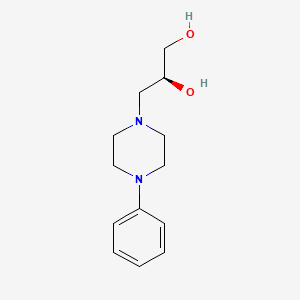
Levodropropizine exerts its antitussive activity through inhibition at the level of C-fibres. Levodropropizine corresponds chemically to (2S)-3-(4-phenylpiperazin-1-yl)propane-1,2-diol. Levodropropizine has antitussive effects, predominantly of the peripheral type at the tracheobronchial level, accompanied by antiallergic and antibronchospastic activity.
Pharmacodynamic effects
In vitro studies have demonstrated that it is capable of inhibiting the release of neuropeptides from C-fibres. Levodropropizine acts on the bronchopulmonary system by inhibiting bronchospasm induced by histamine, serotonin or bradykinin.
⚠️ Warnings
The pharmacokinetic profile of levodropropizine is not significantly altered when administered to elderly patients; therefore, no adjustment of the dose or dosing interval is required in this population.
Nevertheless, given that the sensitivity of elderly patients to various medicinal products may be altered, levodropropizine should be administered with caution in this group.
Caution should be exercised when the product is administered to patients with severe renal impairment (creatinine clearance < 35 ml/min).
Caution is also required with concomitant administration of medicinal products with sedative effects, particularly in susceptible patients (see section 4.5).
As no data are available on the effect of food on the absorption of the product, it is recommended that the product be taken between meals (on an empty stomach).
Paediatric population
Dituzdin 60 mg film-coated tablets are not intended for children under 12 years of age, see section 4.2.
Excipient with known effect
This medicinal product contains less than 1 mmol sodium (23 mg) per film-coated tablet, that is to say essentially "sodium-free".