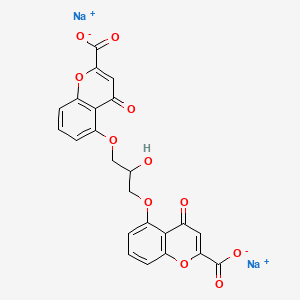
Pharmacotherapeutic group: Antiallergic agents excluding corticosteroids. Cromoglicic acid. ATC code: R01AC01.
Sodium cromoglicate, the active substance of Allergocrom nasal spray:
prevents degranulation of sensitised mast cells following antigen exposure, thereby blocking the release of inflammatory mediators — both those already present within the cell (e.g. preformed histamine, kinins, eosinophil chemotactic factor, neutrophil chemotactic factor) and those synthesised only after provocation (e.g. prostaglandins, leukotrienes).
A stabilising effect has also been demonstrated in humans in IgE-mediated, antigen-induced bronchospasm.
It affects both the immediate response (associated primarily with histamine) and the delayed response (associated with prostaglandins, leukotrienes and chemotactic factors).
A further postulated mechanism of action is blockade of the calcium channels coupled to the IgE receptor. By this means, cromolyn prevents calcium entry into mast cells and inhibits their degranulation.
In doing so, it binds to a specific binding protein that forms part of the calcium channel modulated by the IgE receptor. This mechanism of action is currently considered to operate to the same extent across all mucosal surfaces (e.g. bronchial, nasal, ocular, intestinal).
⚠️ Warnings
Allergocrom nasal spray is suitable only for prophylaxis or long-term therapy. Treatment should therefore be continued for as long as the patient remains exposed to the relevant antigen (pollen, dust, fungal allergens, food allergens). The efficacy of therapy should be reviewed at regular intervals. Once satisfactory clinical stabilisation has been achieved, the dose should be reduced accordingly. To accelerate onset of effect, it may be appropriate to administer decongestant nasal drops for 2 to 3 days prior to initiating Allergocrom nasal spray, in order to reduce nasal mucosal swelling.
Short-term combination with antihistamines may also be of benefit.