Reference images only. Packaging and labels vary by country and batch. Always consult the leaflet supplied with your product.
Available in:
🇨🇿🇩🇪🇬🇧🇫🇷🇵🇱🇵🇹🇸🇰🇹🇷🇺🇦
Form
Proszek do sporządzania koncentratu roztworu do infuzji
Dosage
500 mg
Route
—
Storage
—
About This Product
Manufacturer
CHEPLAPHARM Arzneimittel GmbH
ATC Code
J05AB06
Source
URPL
Pharmacotherapeutic group: Antivirals for systemic use, direct acting antivirals, nucleosides and nucleotides excluding reverse transcriptase inhibitors, ATC code: J05AB06.
Mechanism of action
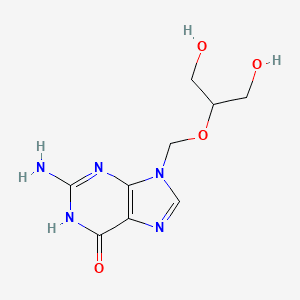
Ganciclovir is a synthetic analogue of 2'-deoxyguanosine, which inhibits replication of herpes viruses both
in vitro
and
in vivo
. Sensitive human viruses include human cytomegalovirus (HCMV), herpes simplex virus 1 and 2 (HSV-1 and HSV-2), human herpesvirus 6, 7 and 8 (HHV-6, HHV-7, HHV-8), Epstein-Barr virus (EBV), varicella zoster virus (VZV), and hepatitis B virus. Clinical studies have been limited to evaluation of efficacy in patients with CMV infection.
In CMV-infected cells, ganciclovir is initially phosphorylated to ganciclovir monophosphate by the viral protein kinase, UL97. Further phosphorylation occurs by several cellular kinases to produce ganciclovir triphosphate, which is then slowly metabolised intracellularly. This has been shown to occur in HSV- and HCMV-infected cells, with half-lives of 18 and 6-24 hours, respectively, after removal of extracellular ganciclovir. As the phosphorylation is largely dependent on the viral kinase, phosphorylation of ganciclovir occurs preferentially in virus-infected cells.
The virustatic activity of ganciclovir is a result of the inhibition of viral DNA synthesis by: (1) competitive inhibition of incorporation of deoxyguanosine triphosphate into DNA by DNA polymerase, and (2) incorporation of ganciclovir triphosphate into viral DNA, causing termination of, or very limited, viral DNA elongation.
Antiviral activity
The
in vitro
antiviral activity, measured as IC50 of ganciclovir against CMV, is in the range of 0.08 μM (0.02 μg/mL) to 14 μM (3.57 μg/mL).
Clinical efficacy and safety
Viral resistance
The possibility of viral resistance should be considered in patients who repeatedly achieve a poor clinical response or experience continuous viral excretion during treatment.
Viral resistance to ganciclovir can arise by selection of mutations in the viral kinase gene (UL97) responsible for ganciclovir monophosphorylation and/or the viral polymerase gene (UL54). Viruses containing mutations in the UL97 gene are resistant to ganciclovir alone, whereas viruses with mutations in the UL54 gene are resistant to ganciclovir but may show cross-resistance to other antivirals that also target viral polymerase.
Paediatric population
In a prospective study, 36 severely immunocompromised paediatric patients (6 months - 16 years of age) with HIV and CMV infection received intravenous ganciclovir at a dose of 5 mg/kg per day for 2 days followed by oral ganciclovir for a median of 32 weeks. Ganciclovir was effective with a toxicity profile similar to that seen in adults. Ganciclovir was associated with a decrease in the detection of CMV by culture or polymerase chain reaction. Neutropenia was the only severe adverse drug reaction observed during the study and although none of the children required treatment cessation, 4 required granulocyte colony-stimulating factor (G-CSF) treatment to maintain absolute neutrophil counts > 400 cells/mm
3
.
In a retrospective study, 122 paediatric liver transplantation recipients (16 days – 18 years of age, median age 2.5 years) received a minimum of 14 days of intravenous ganciclovir 5 mg/kg twice a day followed by pre-emptive CMV PCR monitoring. Forty-three patients were considered high-risk for CMV and 79 were routine-risk. Asymptomatic CMV infection was detected by PCR in 34.4% of subjects and was more likely in high-risk than in routine-risk recipients (58.1% vs. 21.8%, p = 0.0001). Twelve subjects (9.8%) developed CMV disease (8 high-risk vs. 4 routine-risk, p = 0.03). Three subjects developed acute rejection within 6 months of detection of CMV, but CMV was preceded by rejection in 13 subjects. There were no deaths secondary to CMV. A total of 38.5% of subjects were spared antiviral medications beyond their initial postoperative prophylaxis.
In a retrospective analysis, the safety and efficacy of ganciclovir was compared to valganciclovir in 92 paediatric kidney and/or liver transplant patients (7 months - 18 years of age, median age 9 years). All children received intravenous ganciclovir 5 mg/kg twice daily for 2 weeks following transplantation. Children treated before 2004 then received oral ganciclovir 30 mg/kg/dose up to 1 g/dose three times daily (n = 41), while children treated after 2004 received valganciclovir up to 900 mg once daily (n = 51). The overall incidence of CMV was 16% (15/92 patients). Time to onset of CMV infection was comparable in both groups.
In a randomised, controlled study, 100 neonates (≤ 1 month of age) with symptomatic congenital CMV disease with CNS involvement received 6 weeks of intravenous ganciclovir 6 mg/kg every 12 hours or no treatment. Of the 100 patients enrolled, 42 met all study criteria and had both baseline and 6-month follow up audiometric evaluations. Of these, 25 received ganciclovir and 17 received no treatment. Twenty-one of 25 ganciclovir recipients had improved hearing or maintained normal hearing from baseline to 6 months compared with 10/17 control patients (84% and 59%, respectively p = 0.06). None of the ganciclovir recipients had worsening hearing from baseline to 6 months, compared with 7 control patients (p < 0.01). By one year after baseline, 5/24 ganciclovir recipients and 13/19 control patients had worsening hearing (p < 0.01). In the course of the study, 29/46 ganciclovir-treated patients had neutropenia, compared with 9/43 control patients (p < 0.1). There were 9 deaths during the study, 3 in the ganciclovir group and 6 in the control group. No deaths were related to study medication.
In a Phase III, randomised, controlled study, 100 neonates (3-33 days of age, median age 12 days) with severe symptomatic congenital CMV with CNS involvement, received either intravenous ganciclovir 6 mg/kg twice daily for 6 weeks (n = 48) or no antiviral treatment (n = 52). Infants who received ganciclovir had improved neurodevelopmental outcomes at 6 and 12 months compared with those who did not receive antiviral treatment. Although ganciclovir recipients had fewer delays and more normal neurological outcomes, most were still behind what would be considered normal development at 6 weeks, 6 months, or 12 months of age. Safety was not assessed in this study.
A retrospective study investigated the effect of antiviral treatment on late-onset hearing loss in infants with congenital CMV infection (4-34 months of age, mean age 10.3 ± 7.8 months, median age 8 months). The study included 21 infants with normal hearing at birth who developed late-onset hearing loss. Antiviral treatment consisted of either:
- Intravenous ganciclovir 5 mg/kg daily for 6 weeks followed by oral valganciclovir 17 mg/kg twice daily for 6 weeks then daily until 1 year of age, or
- Oral valganciclovir 17 mg/kg twice daily for 12 weeks then daily for 9 months.
None of the children required a cochlear implant and hearing loss improved in 83% of ears affected by hearing loss at baseline. Neutropenia was the only side effect reported and it was not necessary to discontinue treatment in any patient.
⚠️ Warnings
Caution should be exercised in the handling of Cymevene.
Since Cymevene is considered a potential teratogen and carcinogen in humans, caution should be observed in its handling. Avoid inhalation or direct contact of the powder contained in the vials or direct contact of the reconstituted solution with the skin or mucous membranes. Cymevene solutions are alkaline (pH ~11). If such contact occurs, wash thoroughly with soap and water, rinse eyes thoroughly with plain water.
Preparation of the reconstituted concentrate
Aseptic technique should be used throughout to reconstitute lyophilised Cymevene.
1. The flip-off cap should be removed to expose the central portions of the rubber stopper. Draw 10 mL of water for injection into a syringe, then slowly inject through the centre of the rubber stopper into the vial pointing the needle towards the wall of the vial.
Do not use bacteriostatic water for injection containing parabens (para-hydroxybenzoates), since these are incompatible with Cymevene.
2. The vial should be gently swirled in order to ensure complete wetting of the product.
3. The vial should be gently rotated/swirled for some minutes to obtain a clear reconstituted solution.
4. The reconstituted solution should be checked carefully to ensure that the product is in solution and practically free from visible particles prior to dilution with compatible solvent. Reconstituted solutions of Cymevene range in colour from colourless to light yellow.
For storage conditions of the reconstituted concentrate, see sections 6.3.
Preparation of final diluted solution for infusion
Based on patient weight the appropriate volume should be removed with a syringe from the vial and further diluted into an appropriate infusion solution. Add a volume of 100 mL of diluent to the reconstituted solution. Infusion concentrations greater than 10 mg/mL are not recommended.
Sodium chloride, dextrose 5%, Ringer's or lactated Ringer's solutions are determined chemically or physically compatible with Cymevene.
Cymevene should not be mixed with other intravenous products.
The diluted solution should then be infused intravenously over 1 hour as directed in section 4.2. Do not administer by intramuscular or subcutaneous injection because this may result in severe tissue irritation due to the high pH (~11) of ganciclovir solution.
For storage conditions of the diluted solution for infusion, see section 6.3.
Disposal
For single use only. Any unused medicinal product or waste material should be disposed of in accordance with local requirements.
👨⚕️
Verified by medical editor
Dr. Ozarchuk, PharmD · April 2026
User Reviews
Reviews reflect personal experiences and are not medical advice. Always consult your doctor.