This information is for educational purposes only. It is not intended as medical advice. Always consult a qualified healthcare professional.
Rx
Dacogen
50 mg, Proszek do sporządzania koncentratu roztworu do infuzji
INN: Decitabinum
Data updated: 2026-04-13
Available in:
🇨🇿🇩🇪🇬🇧🇫🇷🇵🇱🇵🇹🇸🇰🇹🇷🇺🇦
Form
Proszek do sporządzania koncentratu roztworu do infuzji
Dosage
50 mg
Route
dożylna
Storage
User Reviews
Reviews reflect personal experiences and are not medical advice. Always consult your doctor.
—
About This Product
Manufacturer
Janssen-Cilag International N.V. (Belgia)
Composition
Decitabinum 50 mg
ATC Code
L01BC08
Source
URPL
Pharmacotherapeutic group: Antineoplastic agents, antimetabolites, pyrimidine analogues; ATC Code: L01BC08
Mechanism of action
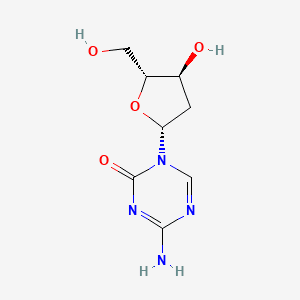
Decitabine (5-aza-2′-deoxycytidine) is a cytidine deoxynucleoside analogue that selectively inhibits DNA methyltransferases at low doses, resulting in gene promoter hypomethylation that can result in reactivation of tumour suppressor genes, induction of cellular differentiation or cellular senescence followed by programmed cell death.
Clinical experience
The use of Dacogen was studied in an open-label, randomised, multicentre Phase III study (DACO-016) in subjects with newly diagnosed
de novo
or secondary AML according to the WHO classification. Dacogen (n = 242) was compared to treatment choice (TC, n = 243) which consisted of patient's choice with physician's advice of either supportive care alone (n = 28, 11.5%) or 20 mg/m
2
cytarabine subcutaneously once daily for 10 consecutive days repeated every 4 weeks (n = 215, 88.5%). Dacogen was administered as a 1-hour intravenous infusion of 20 mg/m
2
once daily for 5 consecutive days repeated every 4 weeks.
Subjects who were considered candidates for standard induction chemotherapy were not included in the study as shown by the following baseline characteristics. The median age for the intent-to-treat (ITT) population was 73 years (range 64 to 91 years). Thirty-six percent of subjects had poor-risk cytogenetics at baseline. The remainder of the subjects had intermediate-risk cytogenetics. Patients with favourable cytogenetics were not included in the study. Twenty-five percent of subjects had an ECOG performance status ≥ 2. Eighty-one percent of subjects had significant comorbidities (e.g., infection, cardiac impairment, pulmonary impairment). The number of patients treated with Dacogen by racial group was White 209 (86.4%) and Asian 33 (13.6%).
The primary endpoint of the study was overall survival. The secondary endpoint was complete remission rate that was assessed by independent expert review. Progression-free survival and Event-free survival were tertiary endpoints.
The median overall survival in the --ITT population was 7.7 months in subjects treated with Dacogen compared to 5.0 months for subjects in the TC arm (hazard ratio 0.85; 95% CI: 0.69, 1.04, p = 0.1079). The difference did not reach statistical significance, however, there was a trend for improvement in survival with a 15% reduction in the risk of death for subjects in the Dacogen arm (Figure 1). When censored for potentially disease modifying subsequent therapy (i.e., induction chemotherapy or hypomethylating agent) the analysis for overall survival showed a 20% reduction in the risk of death for subjects in the Dacogen arm [HR = 0.80, (95% CI: 0.64, 0.99), p-value = 0.0437)].
Figure 1. Overall survival (ITT population).
In an analysis with an additional 1 year of mature survival data, the effect of Dacogen on overall survival demonstrated a clinical improvement compared to the TC arm (7.7 months vs. 5.0 months, respectively, hazard ratio = 0.82, 95% CI: 0.68, 0.99, nominal p-value = 0.0373, Figure 2).
Figure 2. Analysis of mature overall survival data (ITT population).
Based on the initial analysis in the ITT population, a statistically significant difference in complete remission rate (CR + CRp) was achieved in favour of subjects in the Dacogen arm, 17.8% (43/242) compared to the TC arm, 7.8% (19/243); treatment difference 9.9% (95% CI: 4.07; 15.83), p = 0.0011. The median time to best response and median duration of best response in patients who achieved a CR or CRp were 4.3 months and 8.3 months, respectively. Progression-free survival was significantly longer for subjects in the Dacogen arm, 3.7 months (95% CI: 2.7, 4.6) compared with subjects in the TC arm, 2.1 months (95% CI: 1.9, 3.1); hazard ratio 0.75 (95% CI: 0.62, 0.91), p = 0.0031. These results as well as other endpoints are shown in Table 2.
Table 2: Other efficacy endpoints for Study DACO-016 (ITT population)
Outcomes
Dacogen
n = 242
TC (combined group)
n = 243
p-value
CR + CRp
43 (17.8%)
19 (7.8%)
0.0011
OR = 2.5
(1.40, 4.78)
b
CR
38 (15.7%)
18 (7.4%)
-
EFS
a
3.5
(2.5, 4.1)
b
2.1
(1.9, 2.8)
b
0.0025
HR = 0.75
(0.62, 0.90)
b
PFS
a
3.7
(2.7, 4.6)
b
2.1
(1.9, 3.1)
b
0.0031
HR = 0.75
(0.62, 0.91)
b
CR = complete remission; CRp = complete remission with incomplete platelet recovery, EFS = event-free survival, PFS = progression-free survival, OR = odds ratio, HR = hazard ratio
- = Not evaluable
a
Reported as median months
b
95% confidence intervals
Overall survival and complete remission rates in pre-specified disease-related sub-groups (i.e., cytogenetic risk, Eastern Cooperative Oncology Group [ECOG] score, age, type of AML, and baseline bone marrow blast count) were consistent with results for the overall study population.
The use of Dacogen as initial therapy was also evaluated in an open-label, single-arm, Phase II study (DACO-017) in 55 subjects > 60 years with AML according to the WHO classification. The primary endpoint was complete remission (CR) rate that was assessed by independent expert review. The secondary endpoint of the study was overall survival. Dacogen was administered as a 1-hour intravenous infusion of 20 mg/m
2
once daily for 5 consecutive days repeated every 4 weeks. In the ITT analysis, a CR rate of 23.6% (95% CI: 13.2, 37) was observed in 13/55 subjects treated with Dacogen. The median time to CR was 4.1 months, and the median duration of CR was 18.2 months. The median overall survival in the ITT population was 7.6 months (95% CI: 5.7, 11.5).
The efficacy and safety of Dacogen has not been evaluated in patients with acute promyelocytic leukaemia or CNS leukaemia.
Paediatric population
A Phase I/II open-label, multicentre study evaluated the safety and efficacy of Dacogen in sequential administration with cytarabine in children aged 1 month to < 18 years with relapsed or refractory AML. A total of 17 subjects were enrolled and received Dacogen 20 mg/m
2
in this study, of which 9 subjects received cytarabine 1 g/m
2
and 8 subjects received cytarabine administered at the maximum tolerable dose of 2 g/m
2
. All subjects discontinued the study treatment. The reasons for treatment discontinuation included disease progression (12 [70.6%] subjects), subjects proceeding to transplant (3 [17.6%]), investigator decision (1 [5.9%]), and “other” (1 [5.9%]). Reported adverse events were consistent with the known safety profile of Dacogen in adults (see section 4.8). Based on these negative results, Dacogen should not be used in children with AML aged < 18 years, because efficacy was not established (see section 4.2).
⚠️ Warnings
Recommendations for safe handling
Skin contact with the solution should be avoided and protective gloves must be worn. Standard procedures for dealing with cytotoxic medicinal products should be adopted.
Reconstitution procedure
The powder should be aseptically reconstituted with 10 ml of water for injections. Upon reconstitution, each ml contains approximately 5 mg of decitabine at pH 6.7 to 7.3. Within 15 minutes of reconstitution, the solution must be further diluted with cold infusion fluids (sodium chloride 9 mg/ml [0.9%] solution for injection or 5% glucose solution for injection) to a final concentration of 0.15 to 1.0 mg/ml. For the shelf-life and the precaution for storage after reconstitution, see section 6.3.
Dacogen should not be infused through the same intravenous access/line with other medicinal products.
Disposal
This medicinal product is for single use only. Any unused medicinal product or waste material should be disposed of in accordance with local requirements.