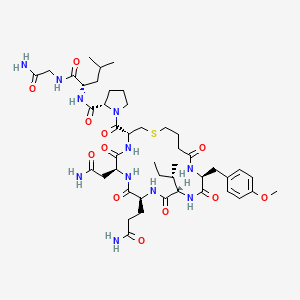
Pharmacotherapeutic group: oxytocin and analogues. ATC code: H01BB03.
The pharmacological and clinical properties of carbetocin are those of a long-acting oxytocin agonist.
Like oxytocin, carbetocin binds selectively to oxytocin receptors in the smooth muscle of the uterus, stimulates rhythmic uterine contractions, increases the frequency of existing contractions, and raises uterine muscle tone.
Carbetocin is capable of increasing the rate and strength of spontaneous uterine contractions following delivery. The onset of uterine contractions after carbetocin administration is rapid following intravenous or intramuscular injection, with sustained contractions occurring within 2 minutes.
A single 100 µg intravenous or intramuscular dose of carbetocin administered after delivery of the infant is sufficient to maintain adequate uterine contractions and prevent uterine atony and excessive bleeding, and is comparable to a several-hour infusion of oxytocin.
Clinical efficacy and safety
The efficacy of carbetocin in the prevention of postpartum haemorrhage due to uterine atony following caesarean section was established in a randomised, active-controlled, double-blind, double-dummy, parallel-group study designed to evaluate the efficacy and safety of carbetocin compared with oxytocin 25 IU. Six hundred and fifty-nine healthy pregnant women undergoing elective caesarean section under epidural anaesthesia received either carbetocin 100 µg/ml as an intravenous bolus dose or oxytocin 25 IU as an 8-hour intravenous infusion.
Analysis of the primary endpoint, the need for additional oxytocin intervention, showed that further oxytocin intervention was required in 15 (5%) subjects who received intravenous carbetocin 100 µg, compared with 32 (10%) subjects in the oxytocin 25 IU group (p = 0.013).
The efficacy of carbetocin in the prevention of postpartum haemorrhage following vaginal delivery was established in a single randomised, active-controlled, double-blind study. A total of 29,645 subjects were randomised to receive a single intramuscular dose of either 100 µg carbetocin or 10 IU oxytocin. For the primary study endpoint, blood loss ≥ 500 ml or the use of additional uterotonics, similar values were obtained in both treatment groups (carbetocin: 2,135 subjects, 14.47%; oxytocin: 2,122 subjects, 14.38%; relative risk [RR] 1.01; 95% CI: 0.95 to 1.06), demonstrating non-inferiority of carbetocin compared with oxytocin with respect to the primary endpoint.
Paediatric population
In the clinical development of carbetocin for the prevention of postpartum haemorrhage following vaginal delivery, 151 women aged 12 to 18 years received carbetocin at the recommended dose of 100 µg, and 162 received 10 IU oxytocin. Efficacy and safety were similar in both patient treatment groups.
⚠️ Warnings
Carbetocin is intended for use only in well-equipped specialist obstetric units with experienced and qualified staff available at all times.
The use of carbetocin at any stage prior to delivery of the infant is not appropriate, owing to its uterotonic activity, which persists for several hours, in contrast to the rapid decline in effect observed after discontinuation of an oxytocin infusion.
In the event of persistent vaginal or uterine bleeding following carbetocin administration, the cause of the bleeding must be identified. Particular caution is required in situations such as retained placental fragments, perineal, vaginal or uterine lacerations, inadequate uterine recovery, or a coagulation disorder.
Carbetocin is intended for single use only, by either the intramuscular or intravenous route. When given intravenously, it must be administered slowly over 1 minute. In cases of persistent uterine hypotonia or atony and subsequent excessive bleeding, additional treatment with other uterotonics should be considered. No data are available regarding repeat dosing of carbetocin or the use of carbetocin following persistent uterine atony after oxytocin.
Animal studies have shown that carbetocin exhibits some antidiuretic activity (vasopressor activity: < 0.025 IU/vial); therefore, the possibility of hyponatraemia cannot be excluded, particularly in patients also receiving large volumes of intravenous fluids. Early signs, including drowsiness, apathy and headache, must be recognised to prevent seizures and coma.
In general, carbetocin should be used with caution in the presence of migraine, asthma and cardiovascular disease, or in any other condition in which a rapid addition of extracellular water may pose a risk to an already overloaded system. In these specific cases, the physician must decide whether to administer carbetocin after careful consideration of its potential benefit.
No data are available on the use of carbetocin in patients with eclampsia. Patients with eclampsia or pre-eclampsia must be closely monitored.
No specific studies have been conducted in gestational diabetes mellitus.