Reviews reflect personal experiences and are not medical advice. Always consult your doctor.
Manufacturer
GlaxoSmithKline Trading Services Limited (Włochy)
Composition
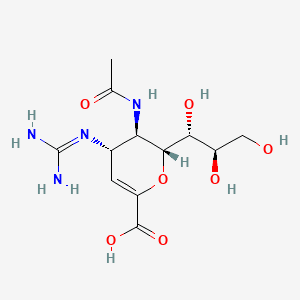
Zanamivirum 10 mg/ml
ATC Code
J05AH01
Source
URPL
Pharmacotherapeutic group: Antivirals for systemic use, neuraminidase inhibitors. ATC code: J05AH01
Mechanism of action
Zanamivir is an inhibitor of influenza virus neuraminidase, an enzyme that releases viral particles from the plasma membrane of infected cells and promotes viral spread within the respiratory tract.
In vitro activity
In vitro inhibition of neuraminidase occurred at very low concentrations of zanamivir, with median inhibitory values (IC50) of 0.33 nmol to 5.77 nmol against influenza A strains and influenza B strains, respectively.
Resistance
The emergence of resistance during zanamivir therapy is rare. Reduced susceptibility to zanamivir is associated with mutations resulting in amino acid changes in the viral neuraminidase, the viral haemagglutinin, or both. Neuraminidase substitutions conferring reduced susceptibility to zanamivir have arisen during zanamivir therapy in human influenza viruses and in viruses with zoonotic potential: E119D, E119G, I223R, R368G, G370D, N434S (A/H1N1); N294S, T325I (A/H3N2); R150K (B); R292K (A/H7N9). The neuraminidase substitution Q136K (A/H1N1 and A/H3N2) confers a higher level of resistance to zanamivir but has been detected during cell culture adaptation rather than during therapy. The clinical impact of reduced susceptibility of these viruses is unknown; the effect of specific substitutions on viral susceptibility to zanamivir may be strain-dependent.
Cross-resistance
Cross-resistance between zanamivir and oseltamivir or peramivir has been observed in neuraminidase inhibition assays. A number of neuraminidase amino acid substitutions that emerged during oseltamivir or peramivir therapy have resulted in reduced susceptibility to zanamivir. The clinical impact of substitutions associated with reduced susceptibility to zanamivir and other neuraminidase inhibitors varies and may be strain-dependent.
The most common neuraminidase substitution conferring resistance is H275Y, which is associated with reduced susceptibility to peramivir and oseltamivir. This substitution had no effect on zanamivir; therefore, viruses carrying the H275Y substitution retain full susceptibility to zanamivir.
Clinical efficacy
Experimental human challenge study
A double-blind, randomised study was conducted to evaluate the prophylactic antiviral efficacy of repeated doses of 600 mg zanamivir administered intravenously every 12 hours, compared with placebo, in male volunteers challenged with influenza A/Texas/91 (H1N1) virus. Zanamivir exerted a significant prophylactic effect against experimental influenza A challenge, as demonstrated by a low rate of infection (14% vs. 100% with positive serology in the placebo group, p < 0.005), viral isolation by viral culture (0% vs. 100% in the placebo group, p < 0.005), and reductions in fever (14% vs. 88% in the placebo group, p < 0.05), upper respiratory tract illness (0% vs. 100% in the placebo group, p < 0.005) and total symptom score (median score 1 vs. 44 in the placebo group, p < 0.001).
Bronchoalveolar lavage study
An open-label phase I study was conducted to assess the pharmacokinetics of zanamivir in serum and the lower respiratory tract following intravenous and inhaled administration in healthy volunteers using bronchoalveolar lavage fluid. A 600 mg intravenous dose most closely approximated the bronchial epithelial lining fluid concentrations achieved with the approved 10 mg dose of zanamivir inhalation powder, which has demonstrated efficacy in large clinical studies of uncomplicated influenza.
Phase III study in patients with complicated influenza
A double-blind phase III study was conducted to evaluate the antiviral efficacy and safety of 600 mg zanamivir twice daily intravenously, compared with oseltamivir 75 mg twice daily and 300 mg zanamivir twice daily intravenously, in hospitalised patients (> 16 years) with influenza. The median patient age was 57 years and 35% (218/615) of patients were aged ≥ 65 years, of whom 17% (n=103) were aged 65 to < 75 years, 14% (n=84) were aged 75 to < 85 years, and 5% (n=31) were aged ≥ 85 years. Patients were stratified at randomisation by the time from influenza symptom onset to initiation of therapy (≤ 4 days and 5 to 6 days). Eligible patients must not have received more than 3 days of prior antiviral therapy. The initial 5 days of treatment could be extended by up to 5 additional days if clinical signs or the patient's condition warranted further therapy. The primary endpoint was time to clinical response (TTCR), with clinical response defined as a composite of stabilisation of vital signs (temperature, oxygen saturation, respiratory status, heart rate and systolic blood pressure) or hospital discharge. The primary analysis was performed in the influenza-positive population (IPP) of 488 patients. The study did not meet its pre-specified primary objective of demonstrating superiority of 600 mg zanamivir over orally administered oseltamivir or over 300 mg zanamivir for TTCR. No significant differences in TTCR between treatment groups were observed in the overall IPP or in the two pre-specified subgroups (Table 6).
Table 6: Statistical comparison of TTCR for the 600 mg zanamivir group versus the other treatment groups (IPP)
Zanamivir infusion solution 300 mg
Zanamivir infusion solution 600 mg
Oseltamivir 75 mg
Influenza-positive population, N
163
162
163
Median TTCR, days / Median difference between treatments, days (95% CI) / p-value from Wilcoxon rank-sum test
5.87
5.14
5.63
-0.73 (-1.79; 0.75)
-0.48 (-2.11; 0.97)
0.25
0.39
Intensive care/mechanical ventilation subgroup, n
68
54
68
Median TTCR, days / Median difference between treatments, days (95% CI) / p-value from Wilcoxon rank-sum test
11.26
12.79
14.58
1.53 (-4.29; 8.34)
-1.79 (-11.1; 6.92)
0.87
0.51
Symptom onset ≤ 4 days subgroup, n
127
131
121
Median TTCR, days / Median difference between treatments, days (95% CI) / p-value from Wilcoxon rank-sum test
5.63
4.80
4.80
-0.83 (-1.98; 0.56)
0.00 (-1.05; 0.97)
0.09
0.82
This medicinal product has been authorised under "exceptional circumstances". This means that for scientific reasons it has not been possible to obtain complete information on the benefits and risks of this medicinal product. The European Medicines Agency will review any new information that becomes available every year, and this Summary of Product Characteristics will be updated as necessary.
Paediatric population
The European Medicines Agency has deferred the obligation to submit the results of studies with Dectova in one or more subsets of the paediatric population in the treatment and prevention of influenza (see section 4.2 for information on paediatric use).
⚠️ Warnings
Renal impairment
Zanamivir is eliminated by renal clearance; therefore, the intravenous dose of Dectova must be reduced in patients with renal impairment (see section 4.2). Renal function should be assessed in all patients at the start of therapy and monitored regularly thereafter.
Severe hypersensitivity reactions
Anaphylactic reactions and severe cutaneous reactions (including erythema multiforme, toxic epidermal necrolysis and Stevens-Johnson syndrome) have been reported with zanamivir (see section 4.8). If any hypersensitivity reaction occurs during a Dectova infusion, the infusion must be discontinued immediately and appropriate treatment instituted.
Neuropsychiatric events
Influenza can be associated with a range of neurological and behavioural symptoms. Neuropsychiatric events, including seizures, delirium, hallucinations and abnormal behaviour, have been reported in patients with influenza, particularly in children and adolescents. Patients should therefore be closely monitored for behavioural changes, and the benefits and risks of continued treatment should be evaluated for each patient (see section 4.8).
Resistance in immunocompromised patients
Resistance emerging during zanamivir therapy is rare (see section 5.1). Selection of resistant influenza viruses is more likely following antiviral therapy, including treatment with Dectova, in immunocompromised patients; it is therefore important to monitor for resistance and to consider switching to alternative therapy where appropriate.
Limited clinical data
The efficacy of Dectova in the treatment of complicated influenza A or B virus infection in adults and children aged 6 months and older has been derived from:
the in vitro activity of zanamivir;
the clinical and virological activity of zanamivir compared with placebo in a human influenza challenge study;
zanamivir concentrations in bronchial epithelial lining fluid and serum from the bronchoalveolar lavage study;
serum zanamivir concentrations in patients with complicated influenza (see section 5.1).
Risk of bacterial infection
Dectova has not been shown to reduce the risk of bacterial complications associated with influenza virus infection.
Excipients
This medicinal product contains 70.8 mg of sodium per vial, equivalent to 3.54% of the WHO-recommended maximum daily dietary intake of 2 g sodium for an adult.