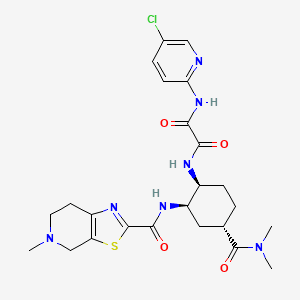
Pharmacotherapeutic group: antithrombotic agents, direct factor Xa inhibitors, ATC code: B01AF03. Mechanism of action
Edoxaban is a highly selective, direct and reversible inhibitor of FXa, the serine protease located in the final common pathway of the coagulation cascade. Edoxaban inhibits free FXa and prothrombinase activity. Inhibition of FXa in the coagulation cascade reduces thrombin generation, prolongs clotting time and reduces the risk of thrombus formation.
Pharmacodynamic effects
Edoxaban demonstrates a rapid onset of pharmacodynamic effects within 1–2 hours, which corresponds to peak edoxaban exposure (Cmax). Pharmacodynamic effects measured by anti-FXa activity are predictable and correlate with edoxaban dose and concentration. Edoxaban also prolongs clotting time in assays such as PT and aPTT as a result of FXa inhibition. The changes observed in these coagulation tests are expected at the therapeutic dose; however, they are small, subject to a high degree of variability and cannot be used to monitor the anticoagulant effect of edoxaban.
Effects on coagulation markers when switching from rivaroxaban, dabigatran or apixaban to edoxaban
In clinical pharmacology studies, healthy subjects received rivaroxaban 20 mg once daily, dabigatran 150 mg twice daily or apixaban 5 mg twice daily; on Day 4 a single 60 mg dose of edoxaban was administered. The effect on PT and other coagulation biomarkers (e.g. anti-FXa, aPTT) was assessed. The PT after switching to edoxaban on Day 4 was comparable to the PT during rivaroxaban and apixaban administration on Day 3. With dabigatran, higher aPTT activity was observed after administration of edoxaban following prior dabigatran therapy compared with aPTT activity after edoxaban alone. This is considered to reflect a residual effect of dabigatran therapy, but it did not result in prolongation of bleeding time.
Based on these data, when switching from these anticoagulants to edoxaban, the first dose of edoxaban may be administered at the time when the next scheduled dose of the previous anticoagulant would have been given (see section 4.2).
Clinical efficacy and safety
Prevention of stroke and systemic embolism
The edoxaban clinical programme in atrial fibrillation was designed to demonstrate the efficacy and safety of two different doses in the edoxaban arms versus warfarin for the prevention of stroke and systemic embolism in subjects with NVAF and moderate to high risk of stroke and systemic embolic events (SEE).
In the pivotal ENGAGE AF-TIMI 48 study (an event-driven, multicentre, randomised, double-blind, double-dummy, phase 3 trial with parallel groups), 21,105 subjects with a mean CHADS2 score (congestive heart failure, hypertension, age ≥ 75 years, diabetes mellitus, stroke) of 2.8 were randomised to either edoxaban 30 mg once daily, edoxaban 60 mg once daily, or warfarin. Subjects in both edoxaban arms received half the dose if any of the following clinical factors were present: moderate renal impairment (CrCl 30–50 mL/min), low body weight (≤ 60 kg) or concomitant use of specific P-gp inhibitors (verapamil, quinidine, dronedarone).
The primary efficacy endpoint was the composite of stroke and SEE. Secondary efficacy endpoints included: the composite of stroke, SEE and cardiovascular mortality; major adverse cardiovascular events (MACE), defined as the composite of non-fatal myocardial infarction (MI), non-fatal stroke, non-fatal SEE and death from cardiovascular causes or bleeding; and the composite of stroke, SEE and all-cause mortality.
The median exposure to study drug in both the 60 mg and 30 mg edoxaban arms was 2.5 years. The median follow-up in both edoxaban arms was 2.8 years. The median exposure expressed in patient-years was 15,471 in the 60 mg arm and 15,840 in the 30 mg arm, and the median follow-up expressed in patient-years was 19,191 in the 60 mg arm and 19,216 in the 30 mg arm.
In the warfarin arm, the median time in therapeutic range (TTR; INR 2.0 to 3.0) was 68.4%.
The principal efficacy analysis was designed to demonstrate non-inferiority of edoxaban to warfarin for the first stroke or SEE occurring during treatment or within 3 days of the last dose taken, in the modified intention-to-treat (mITT) population. Edoxaban 60 mg was non-inferior to warfarin for the primary efficacy endpoint of stroke or SEE (upper limit of the 97.5% confidence interval [CI] of the hazard ratio [HR] was below the pre-specified non-inferiority margin of 1.38) (Table 4).
Table 4: Stroke and SEE in the ENGAGE AF-TIMI 48 study (mITT, on-treatment)
Primary endpoint
Edoxaban 60 mg (reduced dose 30 mg) (n = 7,012)
Warfarin (n = 7,012)
First stroke/SEE
a
n
182
232
Event rate (%/year)
b
1.18
1.50
HR (97.5% CI)
0.79 (0.63; 0.99)
p-value for non-inferiority
c
<0.0001
First ischaemic stroke
n
135
144
Event rate (%/year)
b
0.87
0.93
HR (95% CI)
0.94 (0.75; 1.19)
First haemorrhagic stroke
n
40
76
Event rate (%/year)
b
0.26
0.49
HR (95% CI)
0.53 (0.36; 0.78)
First SEE
n (%/year)
a
8 (0.05)
13 (0.08)
HR (95% CI)
0.62 (0.26; 1.50)
Abbreviations: HR = hazard ratio versus warfarin, CI = confidence interval, n = number of events, mITT = modified intention-to-treat, n = number of subjects in the mITT population, SEE = systemic embolic event.
a A subject may be counted in more than one row.
b Event rate (%/year) is calculated as number of events/exposure in patient-years.
c Two-sided p-value based on the non-inferiority margin of 1.38.
Over the entire study period in the intention-to-treat (ITT) population (dataset used for the superiority analysis), an adjudicated stroke or SEE occurred in 296 subjects in the edoxaban 60 mg arm (1.57% per year) and in 337 subjects in the warfarin arm (1.80% per year). Compared with warfarin-treated subjects, the HR in the edoxaban 60 mg arm was 0.87 (99% CI: 0.71; 1.07; p = 0.08 for superiority).
In subgroup analyses of ENGAGE AF-TIMI 48, the event rate among subjects in the 60 mg arm whose dose was reduced to 30 mg (due to body weight ≤ 60 kg, moderate renal impairment or concomitant use of P-gp inhibitors) was 2.29% per year for the primary endpoint, compared with an event rate of 2.66% per year in matched subjects in the warfarin arm [HR (95% CI): 0.86 (0.66; 1.13)].
Efficacy endpoints in pre-specified major subgroups (with dose reduction as required), including age, body weight, sex, renal function, prior stroke or TIA, diabetes mellitus and P-gp inhibitors, were generally consistent with the primary efficacy endpoints for the overall study population.
The HR (edoxaban 60 mg versus warfarin) with 95% CI for the primary endpoint at centres with shorter mean time in INR therapeutic range (INR TTR) on warfarin was 0.73–0.80 for the 3 lowest quartiles (INR TTR ≤ 57.7% to ≤ 73.9%). At centres with the best warfarin control it was 1.07 (0.648; 1.751) (4th quartile with > 73.9% of INR values in therapeutic range).
A statistically significant interaction was identified between the effect of edoxaban on the principal study outcome (stroke/SEE) and renal function (p = 0.0042; mITT, overall study period) versus warfarin.
Table 5 presents ischaemic stroke/SEE events by CrCl category in patients with NVAF in ENGAGE AF-TIMI 48. In both treatment arms, event rates decrease with increasing CrCl.
Table 5: Ischaemic stroke/SEE by creatinine clearance category in ENGAGE AF-TIMI 48, mITT analysis set for the overall study period
CrCl subgroup (mL/min)
Edoxaban 60 mg (N = 7,012)
Warfarin (N = 7,012)
n
Events
Event rate (%/year)
n
Events
Event rate (%/year)
HR (95% CI)
≥ 30 to ≤ 50
1,302
63
1.89
1,305
67
2.05
0.93 (0.66; 1.31)
> 50 to ≤ 70
2,093
85
1.51
2,106
95
1.70
0.88 (0.66; 1.18)
> 70 to ≤ 90
1,661
45
0.99
1,703
50
1.08
0.92 (0.61; 1.37)
> 90 to ≤ 110
927
27
1.08
960
26
0.98
1.10 (0.64; 1.89)
> 110 to ≤ 130
497
14
1.01
469
10
0.78
1.27 (0.57; 2.85)
> 130
462
10
0.78
418
3
0.25
--
*
Abbreviations: CrCl = creatinine clearance, N = number of patients in the mITT population over the overall study period; mITT = modified intention-to-treat, n = number of patients in the subgroup, HR = hazard ratio versus warfarin, CI = confidence interval.
*Hazard ratio (HR) was not calculated if the number of events was < 5 in either treatment arm.
Within renal function subgroups, results for secondary efficacy endpoints were consistent with the results for the primary endpoint.
Superiority testing was performed over the overall study period (ITT).
Stroke and SEE occurred in fewer subjects in the edoxaban 60 mg arm than in the warfarin arm (1.57% versus 1.80% per year), with an HR of 0.87 (99% CI: 0.71; 1.07; p = 0.0807 for superiority).
For pre-specified composite endpoints comparing the edoxaban 60 mg arm with the warfarin arm, the HRs (99% CI) were 0.87 (0.76; 0.99) for stroke, SEE and cardiovascular mortality, 0.89 (0.78; 1.00) for major adverse cardiovascular events, and 0.90 (0.80; 1.01) for stroke, SEE and all-cause mortality.
Results for all-cause mortality (adjudicated deaths) in ENGAGE AF-TIMI 48 were 769 (3.99% per year) in subjects receiving edoxaban 60 mg (reduced dose 30 mg) versus 836 (4.35% per year) for warfarin [HR (95% CI): 0.91 (0.83; 1.01)].
All-cause mortality (adjudicated deaths) by renal subgroup (edoxaban vs warfarin): CrCl 30 to ≤ 50 mL/min [HR (95% CI): 0.81 (0.68; 0.97)]; CrCl > 50 to < 80 mL/min [HR (95% CI): 0.87 (0.75; 1.02)]; CrCl ≥ 80 mL/min [HR (95% CI): 1.15 (0.95; 1.40)].
Edoxaban 60 mg (reduced dose 30 mg) resulted in a lower rate of cardiovascular mortality compared with warfarin [HR (95% CI): 0.86 (0.77; 0.97)].
Adjudicated efficacy data for cardiovascular mortality by renal subgroup (edoxaban vs warfarin): CrCl 30 to ≤ 50 mL/min [HR (95% CI): 0.80 (0.65; 0.99)]; CrCl > 50 to < 80 mL/min [HR (95% CI): 0.75 (0.62; 0.90)]; CrCl ≥ 80 mL/min [HR (95% CI): 1.16 (0.92; 1.46)].
The primary safety endpoint was major bleeding.
A significant risk reduction was observed in the edoxaban 60 mg arm compared with the warfarin arm for major bleeding (2.75% versus 3.43% per year) [HR (95% CI): 0.80 (0.71; 0.91); p = 0.0009], intracranial haemorrhage (0.39% versus 0.85% per year) [HR (95% CI): 0.47 (0.34; 0.63); p < 0.0001] and other bleeding types (Table 6).
There was also a significant reduction in fatal bleeding in the edoxaban 60 mg arm compared with the warfarin arm (0.21% versus 0.38%) [HR (95% CI): 0.55 (0.36; 0.84); p = 0.0059 for superiority], driven primarily by a reduction in fatal intracranial haemorrhage [HR (95% CI): 0.58 (0.35; 0.95); p = 0.0312].
Table 6: Bleeding events in ENGAGE AF-TIMI 48 – on-treatment safety analysis
Edoxaban 60 mg (reduced dose 30 mg) (N = 7,012)
Warfarin (N = 7,012)
Major bleeding
n
418
524
Event rate (%/year)
a
2.75
3.43
HR (95% CI)
0.80 (0.71; 0.91)
p-value
0.0009
ICH
b
n
61
132
Event rate (%/year)
a
0.39
0.85
HR (95% CI)
0.47 (0.34; 0.63)
Fatal bleeding
n
32
59
Event rate (%/year)
a
0.21
0.38
HR (95% CI)
0.55 (0.36; 0.84)
CRNM bleeding
n
1,214
1,396
Event rate (%/year)
a
8.67
10.15
HR (95% CI)
0.86 (0.80; 0.93)
Any confirmed bleeding
c
n
1,865
2,114
Event rate (%/year)
a
14.15
16.40
HR (95% CI)
0.87 (0.82; 0.92)
Abbreviations: ICH = intracranial haemorrhage, HR = hazard ratio versus warfarin, CI = confidence interval, CRNM = clinically relevant non-major, n = number of subjects with an event, N = number of subjects in the safety population.
a Event rate (%/year) is calculated as number of events/exposure in patient-years.
b Intracranial haemorrhage includes primary haemorrhagic stroke, subarachnoid haemorrhage, epidural/subdural haemorrhage and ischaemic stroke with major haemorrhagic conversion. The ICH count includes all adjudicator-confirmed cases of ICH from the Adjudicated Cerebrovascular and Non-Intracranial bleed eCRF reported via electronic case report forms (eCRFs).
c "Any confirmed bleeding" includes bleeding defined by the adjudicator as clinically overt.
Note: a subject may be counted in several subcategories if events occurred in those categories. The first event in each category is included in the analysis.
Tables 7, 8 and 9 present events of major bleeding, fatal bleeding and intracranial haemorrhage by CrCl category in patients with NVAF in ENGAGE AF-TIMI 48. In both treatment arms, event rates decrease with increasing CrCl.
Table 7: Number of major bleeding events by CrCl category in ENGAGE AF-TIMI 48, on-treatment safety analysis
a
CrCl subgroup (mL/min)
Edoxaban 60 mg (N = 7,012)
Warfarin (N = 7,012)
n
Events
Event rate (%/year)
n
Events
Event rate (%/year)
HR (95% CI)
≥ 30 to ≤ 50
1,302
96
3.91
1,305
128
5.23
0.75 (0.58; 0.98)
> 50 to ≤ 70
2,093
148
3.31
2,106
171
3.77
0.88 (0.71; 1.10)
> 70 to ≤ 90
1,661
108
2.88
1,703
119
3.08
0.93 (0.72; 1.21)
> 90 to ≤ 110
927
29
1.33
960
56
2.48
0.54 (0.34; 0.84)
> 110 to ≤ 130
497
20
1.70
469
24
2.14
0.79 (0.44; 1.42)
> 130
462
13
1.18
418
21
2.08
0.58 (0.29; 1.15)
Table 8: Number of fatal bleeding events by CrCl category in ENGAGE AF-TIMI 48, on-treatment safety analysis
a
CrCl subgroup (mL/min)
Edoxaban 60 mg (N = 7,012)
Warfarin (N = 7,012)
n
Events
Event rate (%/year)
n
Events
Event rate (%/year)
HR (95% CI)
≥ 30 to ≤ 50
1,302
9
0.36
1,305
18
0.72
0.51 (0.23; 1.14)
> 50 to ≤ 70
2,093
8
0.18
2,106
23
0.50
0.35 (0.16; 0.79)
> 70 to ≤ 90
1,661
10
0.26
1,703
9
0.23
1.14 (0.46; 2.82)
> 90 to ≤ 110
927
2
0.09
960
3
0.13
--
*
> 110 to ≤ 130
497
1
0.08
469
5
0.44
--
*
> 130
462
2
0.18
418
0
0.00
--
*
Table 9: Number of intracranial haemorrhage events by CrCl category in ENGAGE AF-TIMI 48, on-treatment safety analysis
a
CrCl subgroup (mL/min)
Edoxaban 60 mg (N = 7,012)
Warfarin (N = 7,012)
n
Events
Event rate (%/year)
n
Events
Event rate (%/year)
HR (95% CI)
≥ 30 to ≤ 50
1,302
16
0.64
1,305
35
1.40
0.45 (0.25; 0.81)
> 50 to ≤ 70
2,093
19
0.42
2,106
51
1.10
0.38 (0.22; 0.64)
> 70 to ≤ 90
1,661
17
0.44
1,703
35
0.89
0.50 (0.28; 0.89)
> 90 to ≤ 110
927
5
0.23
960
6
0.26
0.87 (0.27; 2.86)
> 110 to ≤ 130
497
2
0.17
469
3
0.26
--
*
> 130
462
1
0.09
418
1
0.10
--
*
Abbreviations: N = number of patients; mITT population over the overall study period; mITT = modified intention-to-treat; n = number of patients in the subgroup; HR = hazard ratio versus warfarin; CI = confidence interval.
*Hazard ratio (HR) was not calculated if the number of events was < 5 in either treatment arm.
a On-treatment: time from the first dose of study drug to the last dose plus 3 days.
In subgroup analyses of ENGAGE AF-TIMI 48, among subjects in the 60 mg arm whose dose was reduced to 30 mg due to body weight ≤ 60 kg, moderate renal impairment or concomitant use of P-gp inhibitors, a major bleeding event occurred in 104 subjects receiving the reduced 30 mg edoxaban dose (3.05% per year) and in 166 subjects receiving a reduced warfarin dose (4.85% per year) [HR (95% CI): 0.63 (0.50; 0.81)].
In ENGAGE AF-TIMI 48, a significant improvement in net clinical outcome (first stroke, SEE, major bleeding or all-cause mortality; mITT population, overall study period) was observed in favour of edoxaban, HR (95% CI): 0.89 (0.83; 0.96); p = 0.0024, when comparing the edoxaban 60 mg arm with warfarin.
Treatment of DVT, treatment of PE and prevention of recurrent DVT and PE (VTE)
The edoxaban clinical programme in venous thromboembolism (VTE) was designed to demonstrate the efficacy and safety of edoxaban in the treatment of DVT and PE and in the prevention of recurrent DVT and PE.
In the pivotal Hokusai-VTE study, 8,292 subjects were randomised to initial therapy with heparin (enoxaparin or unfractionated heparin) followed by edoxaban 60 mg once daily, or to the comparator arm. In the comparator arm, patients received initial heparin therapy concurrently with warfarin, titrated to a target INR of 2.0 to 3.0, followed by warfarin alone. Treatment duration ranged from 3 to 12 months and was determined by the investigator based on the patient's clinical features.
Most patients treated with edoxaban were Caucasian (69.6%) and Asian (21.0%); 3.8% were Black and 5.3% were classified as "other race".
Therapy lasted at least 3 months in 3,718 (91.6%) edoxaban-treated subjects compared with 3,727 (91.4%) warfarin-treated subjects; at least 6 months in 3,495 (86.1%) edoxaban-treated subjects compared with 3,491 (85.6%) warfarin-treated subjects; and 12 months in 1,643 (40.5%) edoxaban-treated subjects compared with 1,659 (40.4%) warfarin-treated subjects.
The primary efficacy endpoint was recurrence of symptomatic VTE, defined as the composite of recurrent symptomatic DVT, non-fatal symptomatic PE and fatal PE in subjects during the 12-month study period. Secondary efficacy endpoints included a composite clinical endpoint comprising recurrent VTE and all-cause mortality.
Edoxaban 30 mg once daily was used in subjects with one or more of the following clinical factors: moderate renal impairment (CrCl 30–50 mL/min); body weight ≤ 60 kg; concomitant use of specific P-gp inhibitors.
In the Hokusai-VTE study (Table 10), edoxaban was shown to be non-inferior to warfarin for the primary efficacy endpoint of recurrent VTE, which occurred in 130 of 4,118 subjects (3.2%) in the edoxaban arm versus 146 of 4,122 subjects (3.5%) in the warfarin arm [HR (95% CI): 0.89 (0.70; 1.13); p < 0.0001 for non-inferiority]. In the warfarin arm, the median TTR (INR 2.0 to 3.0) was 65.6%. Among subjects with PE (with or without DVT), 47 (2.8%) in the edoxaban arm and 65 (3.9%) in the warfarin arm had recurrent VTE [HR (95% CI): 0.73 (0.50; 1.06)].
Table 10: Efficacy results from the Hokusai-VTE study – mITT population, overall study period
Primary endpoint
a
Edoxaban 60 mg (reduced dose 30 mg) (N = 4,118)
Warfarin (N = 4,122)
Edoxaban vs warfarin HR (95% CI)
b
p
c
-value
All subjects with symptomatic recurrent VTE, n (%)
130 (3.2)
146 (3.5)
0.89 (0.70; 1.13) p-value < 0.0001 (non-inferiority)
PE with or without DVT
73 (1.8)
83 (2.0)
Fatal PE or death where PE cannot be excluded
24 (0.6)
24 (0.6)
Non-fatal PE
49 (1.2)
59 (1.4)
DVT only
57 (1.4)
63 (1.5)
Abbreviations: CI = confidence interval; DVT = deep vein thrombosis; mITT = modified intention-to-treat; HR = hazard ratio versus warfarin; n = number of subjects with events; N = number of subjects in the mITT population; PE = pulmonary embolism; VTE = venous thromboembolism.
a The primary efficacy endpoint is adjudicated symptomatic recurrent VTE (i.e. the composite endpoint of DVT, non-fatal PE and fatal PE).
b HR and two-sided CI are based on a Cox proportional hazards regression model including treatment and the following randomisation stratification factors as covariates: primary diagnosis (PE with or without DVT, DVT only), baseline risk factors (transient factors, all other) and the need for an edoxaban/edoxaban placebo 30 mg dose at randomisation (yes/no).
c The p-value is for the pre-defined non-inferiority margin of 1.5.
Among subjects who received the dose reduced to 30 mg (predominantly low body weight or reduced renal function), recurrent VTE occurred in 15 (2.1%) subjects in the edoxaban arm and 22 (3.1%) subjects in the warfarin arm [HR (95% CI): 0.69 (0.36; 1.34)].
The secondary composite endpoint of recurrent VTE and all-cause mortality occurred in 138 subjects (3.4%) in the edoxaban arm and 158 subjects (3.9%) in the warfarin arm [HR (95% CI): 0.87 (0.70; 1.10)].
Results for all-cause mortality (adjudicated deaths) in the Hokusai-VTE study were 136 (3.3%) in subjects receiving edoxaban 60 mg (reduced dose 30 mg) versus 130 (3.2%) on warfarin.
In an analysis of the pre-specified subgroup of subjects with PE, 447 (30.6%) edoxaban-treated subjects and 483 (32.2%) warfarin-treated subjects had PE and an N-terminal pro-B-type natriuretic peptide (NT-proBNP) level ≥ 500 pg/mL. The primary efficacy endpoint occurred in 14 (3.1%) subjects on edoxaban and 30 (6.2%) subjects on warfarin [HR (95% CI): 0.50 (0.26; 0.94)].
Efficacy endpoints in pre-specified major subgroups (with dose reduction as required), including age, body weight, sex and renal function, were consistent with the primary efficacy endpoints for the overall study population.
The primary safety endpoint was clinically relevant bleeding (major or clinically relevant non-major).
Table 11 summarises adjudicated bleeding events in the on-treatment safety analysis set. A significant risk reduction was observed in the edoxaban arm compared with warfarin for the primary safety endpoint, clinically relevant bleeding, the composite of major bleeding or clinically relevant non-major (CRNM) bleeding, which occurred in 349 of 4,118 subjects (8.5%) in the edoxaban arm and 423 of 4,122 subjects (10.3%) in the warfarin arm [HR (95% CI): 0.81 (0.71; 0.94); p = 0.004 for superiority].
Table 11: Bleeding events in the Hokusai-VTE study – on-treatment safety analysis
a
Edoxaban 60 mg (reduced dose 30 mg) (N = 4,118)
Warfarin (N = 4,122)
Clinically relevant bleeding (major and CRNM)
b
, n (%)
n
349 (8.5)
423 (10.3)
HR (95% CI)
0.81 (0.71; 0.94)
p-value
0.004 (for superiority)
Major bleeding n (%)
n
56 (1.4)
66 (1.6)
HR (95% CI)
0.84 (0.59; 1.21)
Fatal ICH
0
6 (0.1)
Non-fatal ICH
5 (0.1)
12 (0.3)
CRNM bleeding
n
298 (7.2)
368 (8.9)
HR (95% CI)
0.80 (0.68; 0.93)
All bleeding events
n
895 (21.7)
1,056 (25.6)
HR (95% CI)
0.82 (0.75; 0.90)
Abbreviations: ICH = intracranial haemorrhage; HR = hazard ratio versus warfarin; CI = confidence interval; N = number of subjects in the safety population; n = number of events; CRNM = clinically relevant non-major.
a On-treatment: time from the first dose of study drug to the last dose plus 3 days.
b Primary safety endpoint: clinically relevant bleeding (composite of major and clinically relevant non-major bleeding).
In subgroup analyses of the Hokusai-VTE study, a major or clinically relevant non-major bleeding event occurred in 58 (7.9%) subjects receiving the reduced 30 mg edoxaban dose, in whom the dose had been reduced to 30 mg due to body weight ≤ 60 kg, moderate renal impairment or concomitant use of P-gp inhibitors, and in 92 (12.8%) subjects on warfarin [HR (95% CI): 0.62 (0.44; 0.86)].
In the Hokusai-VTE study, when comparing edoxaban with warfarin, the net clinical outcome (recurrent VTE, major bleeding or all-cause mortality; mITT population, overall study period) had an HR (95% CI) of 1.00 (0.85; 1.18).
Prevention of stroke and systemic embolism in NVAF patients with high CrCl (CrCl > 100 mL/min)
A dedicated randomised, double-blind study (E314) was conducted in 607 patients with NVAF and high CrCl (CrCl > 100 mL/min, measured using the Cockcroft-Gault formula) with the primary aim of evaluating the pharmacokinetics/pharmacodynamics (PK/PD) of edoxaban 60 mg once daily versus 75 mg once daily. In addition to the primary PK/PD endpoint, the study included evaluation of the clinical endpoints of stroke and bleeding over a 12-month treatment period.
Edoxaban 75 mg once daily in the high-CrCl subgroup (> 100 mL/min) provided, as expected, an approximately 25% increase in exposure compared with edoxaban 60 mg once daily.
The number of subjects experiencing the adjudicated composite efficacy endpoint of stroke/transient ischaemic attack (TIA)/systemic embolic event (SEE) was limited and included 2 stroke events in the edoxaban 60 mg arm (0.7%; 95% CI: 0.1–2.4%) and 3 strokes in the edoxaban 75 mg arm (1.0%; 95% CI: 0.2–2.9%).
Major bleeding events occurred in 2 subjects (0.7%; 95% CI: 0.1–2.4%) in the edoxaban 60 mg arm versus 3 subjects (1.0%; 95% CI: 0.2–2.9%) in the edoxaban 75 mg arm. Of the 2 major bleeds in the edoxaban 60 mg arm, one was in a critical site/organ (intraocular) and the other was an intramuscular bleed. Of the 3 major bleeds in the edoxaban 75 mg arm, 2 occurred in a critical site/organ (intracerebral/1 fatal outcome) and 1 was an upper gastrointestinal tract (GIT) bleed (life-threatening). There were also 9 (3.0%) clinically relevant non-major (CRNM) bleeds in the edoxaban 60 mg arm and 7 (2.3%) CRNM bleeds in the edoxaban 75 mg arm.
In addition to the E314 clinical trial, a prospective, multinational, multicentre, post-marketing observational study (ETNA-AF) was conducted in 10 European countries, enrolling 13,980 subjects. Within this population, 1,826 subjects had a CrCl > 100 mL/min and received edoxaban 60 mg in line with the dosing criteria specified in the SmPC. Annual rates of the composite of ischaemic stroke or systemic embolism were 0.39%/year, and major bleeding occurred at 0.73%/year.
Based on the pooled data from the ENGAGE AF, E314 and ETNA-AF studies, an annual rate of ischaemic stroke/systemic embolism ≤ 1% is expected in NVAF patients with high CrCl treated with edoxaban 60 mg. Dose escalation above 60 mg in NVAF patients with high CrCl (> 100 mL/min) is not expected to provide greater protection against stroke and may be associated with an increased number of adverse events. Therefore, after careful assessment of individual thromboembolic and bleeding risk, the regimen of edoxaban 60 mg once daily is recommended in these patients (see section 4.4).
Patients undergoing cardioversion
A multicentre, prospective, randomised, open-label trial with blinded endpoint evaluation (ENSURE-AF) was conducted, randomising 2,199 subjects (anticoagulant-naive and pre-treated) with NVAF scheduled for cardioversion, comparing edoxaban 60 mg once daily with enoxaparin/warfarin dose-adjusted to maintain INR in the therapeutic range of 2.0–3.0 (randomised 1:1); the mean TTR on warfarin was 70.8%. A total of 2,149 subjects were treated with either edoxaban (N = 1,067) or enoxaparin/warfarin (N = 1,082). Subjects in the edoxaban arm received 30 mg once daily if any of the following clinical factors were present: moderate renal impairment (CrCl 30–50 mL/min), low body weight (≤ 60 kg) or concomitant use of specific P-gp inhibitors. Most subjects in both the edoxaban and warfarin arms underwent cardioversion (83.7% and 78.9%, respectively) or spontaneously converted (6.6% and 8.6%, respectively). Either TEE-guided cardioversion (within 3 days of treatment initiation) or conventional cardioversion (after at least 21 days of prior therapy) was used. Subjects were treated for 28 days following cardioversion.
The primary efficacy endpoint was the composite of stroke, SEE, MI and death from cardiovascular causes. Among subjects in the edoxaban arm (N = 1,095), 5 (0.5%; 95% CI 0.15–1.06%) such events occurred, and among subjects in the warfarin arm (N = 1,104), 11 (1.0%; 95% CI 0.50–1.78%) events occurred; odds ratio (OR) 0.46 (95% CI 0.12–1.43); ITT analysis set over the overall study period, with a mean duration of 66 days.
The primary safety endpoint was the composite of major and clinically relevant non-major bleeding. Among subjects in the edoxaban arm (N = 1,067), 16 (1.5%; 95% CI 0.86–2.42%) such events occurred, and among subjects in the warfarin arm (N = 1,082), 11 (1.0%; 95% CI 0.51–1.81%) events occurred; OR 1.48 (95% CI 0.64–3.55); on-treatment safety analysis set.
This exploratory study demonstrated low rates of major and clinically relevant non-major bleeding and thromboembolism in both treatment arms in the setting of cardioversion.
Paediatric population
The safety, efficacy, pharmacokinetics and pharmacodynamics of edoxaban in paediatric subjects from birth to 18 years of age with VTE and with cardiac disease at risk of thrombotic events were evaluated in two phase 3 studies, Hokusai VTE PEDIATRICS and ENNOBLE-ATE (see section 4.2). The pivotal paediatric Hokusai VTE PEDIATRICS study is described below.
The pivotal study (Hokusai VTE PEDIATRICS) was an open-label, randomised, multicentre, controlled phase 3 trial designed to evaluate the pharmacokinetics and pharmacodynamics of edoxaban and to compare the efficacy and safety of edoxaban with standard anticoagulant therapy (control arm) in paediatric subjects from birth to less than 18 years of age with confirmed venous thromboembolic events (VTE).
The primary efficacy endpoint was a composite of symptomatic recurrent venous thromboembolic disease, death due to VTE and no change or extension of thrombotic burden during the first 3-month period (anticipated treatment duration was 6 to 12 weeks in paediatric patients from birth to less than 6 months of age).
The doses of edoxaban tested in the Hokusai VTE PEDIATRICS study were determined by age and body weight. Reduced doses were recommended on the basis of clinical factors including renal function and concomitant use of P-gp inhibitors (Table 12).
Table 12: Edoxaban dose tested in the Hokusai VTE PEDIATRICS study
Age at consent
Body weight
Dose (tablet)
a
Dose (suspension)
a
Dose reduction
b
12 years to <18 years
≥60 kg
60 mg
Not applicable
45 mg
≥30 and <60 kg
45 mg
Not applicable
30 mg
<5th percentile for age
30 mg
Not applicable
Not applicable
6 years to <12 years
<60 kg; mg/kg dosing
-
1.2 mg/kg (maximum 45 mg)
0.8 mg/kg (maximum 45 mg)
2 years to <6 years
mg/kg dosing
-
1.4 mg/kg (maximum 45 mg)
0.7 mg/kg (maximum 24 mg)
6 months to <2 years
mg/kg dosing
-
1.5 mg/kg (maximum 45 mg)
0.75 mg/kg (maximum 24 mg)
>28 days to <6 months
mg/kg dosing
-
0.8 mg/kg (maximum 12 mg)
0.4 mg/kg (maximum 6 mg)
Birth (gestational week 38) to ≤28 days
mg/kg dosing
-
0.4 mg/kg (maximum 6 mg)
0.4 mg/kg (maximum 6 mg)
a Subjects were instructed to take edoxaban (tablets or granules) orally once daily, at the same time each day, with or without food. Tablets were to be taken with a glass of water.
b Based on clinical factors including renal function (moderate to severe renal impairment with estimated glomerular filtration rate (eGFR) of 10–20, 20–35 and 30–50 mL/min/1.73 m2 in subjects aged > 4 and ≤ 8 weeks, > 8 weeks and ≤ 2 years, and > 2 and ≤ 12 years, respectively; eGFR 35–55 mL/min/1.73 m2 for boys aged > 12 and < 18 years and eGFR 30–50 mL/min/1.73 m2 for girls aged > 12 and < 18 years) and concomitant use of P-gp inhibitors (e.g. ciclosporin, dronedarone, erythromycin, ketoconazole).
A total of 290 subjects were randomised: 147 to the edoxaban arm and 143 to the control arm receiving standard therapy; of these, 286 received at least one dose of study drug (mITT); 145 subjects in the edoxaban arm and 141 in the control arm. Approximately half of all subjects were male (52.4%) and most treated subjects were Caucasian (177 [61.9%]). Mean body weight was 45.35 kg and mean BMI was 20.4 kg/m2. A total of 167 (58.4%) subjects were in the 12 to < 18 years cohort, 44 (15.4%) in the 6 to < 12 years cohort, 31 (10.8%) in the 2 to < 6 years cohort, 28 (9.8%) in the 6 months to < 2 years cohort and 16 (5.6%) in the 0 to < 6 months cohort. A total of 28 (19.3%) children in the edoxaban arm and 31 (22.0%) in the control arm had a history of malignancy. The index event was DVT with or without PE in 125 (86.2%) of 145 children in the edoxaban arm and 121 (85.8%) of 141 children in the control arm, while in the remaining cases, 20 (13.8%) in the edoxaban arm and 20 (14.2%) in the control arm, the event was PE without DVT. DVTs were most commonly located in the lower extremities (50 [34.5%] cases in the edoxaban arm and 44 [31.2%] in the control arm), upper extremities (22 [15.2%] vs 24 [17.0%]) and cerebral venous sinus (27 [18.6%] vs 21 [14.9%]).
The hazard ratio (HR) for the edoxaban arm versus the control standard-therapy arm was 1.01 (95% CI: 0.59 to 1.72). The upper bound of the 95% CI (1.72) exceeded the pre-defined non-inferiority margin of 1.5, and therefore non-inferiority of edoxaban versus standard therapy was not confirmed (see Table 13).
Table 13: Adjudicated composite primary efficacy endpoint – main treatment period (mITT analysis set)
Edoxaban (N = 145)
Standard therapy (N = 141)
Subjects with events (n, %)
26 (17.9)
31 (22.0)
Symptomatic recurrent VTE (n, %)
5 (3.4)
2 (1.4)
PE with or without DVT (n, %)
0
1 (0.7)
Fatal PE (n, %)
0
0
Non-fatal PE (n, %)
0
1 (0.7)
DVT only (n, %)
5 (3.4)
1 (0.7)
Fatal DVT (n, %)
0
0
Non-fatal DVT (n, %)
4 (2.8)
0
Death from unknown cause in which VTE cannot be excluded (n, %)
1 (0.7)
1 (0.7)
No change or extension of thrombotic burden detected by imaging (n, %)
21 (14.5)
29 (20.6)
Hazard ratio
a
1.01
-
Two-sided 95% CI for hazard ratio
(0.59; 1.72)
-
CI = confidence interval; DVT = deep vein thrombosis; mITT = modified intention-to-treat; PE = pulmonary embolism; VTE = venous thromboembolic events.
a Hazard ratio of edoxaban versus standard therapy.
Note: The adjudicated composite primary efficacy endpoint includes symptomatic recurrent VTE, death due to VTE and no change or extension of thrombotic burden detected by imaging.
Note: The main treatment period is defined as the period from randomisation to the month 3 visit + 3 days.
The primary safety endpoint was the composite of major and CRNM bleeding events occurring during the main treatment period (3 months + 3 days).
The safety analysis results were comparable between the edoxaban arm and the control standard-therapy arm. A total of 3 (2.1%) subjects in the edoxaban arm and 5 (3.5%) subjects in the control arm experienced at least 1 adjudicated, confirmed major or CRNM bleeding event during the main treatment period and while on treatment [HR (95% CI): 0.60 (0.139; 2.597)].
⚠️ Warnings
Edoxaban 15 mg is not indicated as monotherapy, as this may result in reduced efficacy. It is indicated only for the transition from edoxaban 30 mg (in patients with one or more clinical factors leading to increased exposure, see Table 1) to a vitamin K antagonist, together with an appropriate dose of the vitamin K antagonist (see Table 2, section 4.2).
Bleeding risk
Edoxaban increases the risk of bleeding and may cause serious, potentially fatal bleeding. As with other anticoagulants, edoxaban should be used with caution in patients with an increased risk of bleeding. If severe bleeding occurs, edoxaban therapy should be discontinued (see sections 4.8 and 4.9).
In clinical studies, mucosal bleeding (e.g. epistaxis, gastrointestinal, genitourinary) and anaemia were observed more frequently during long-term treatment with edoxaban compared with vitamin K antagonist therapy. Therefore, in addition to adequate clinical monitoring, laboratory testing of haemoglobin/haematocrit may be of value for detecting occult bleeding, where appropriate.
Several patient subgroups (detailed below) are at increased risk of bleeding. These patients should be carefully monitored for signs and symptoms of bleeding complications and anaemia after initiation of therapy (see section 4.8). Any unexplained fall in haemoglobin level or blood pressure should prompt a search for a bleeding site.
The anticoagulant effect of edoxaban cannot be reliably monitored using standard laboratory tests. A specific reversal agent for the anticoagulant effect of edoxaban is not available (see section 4.9).
Haemodialysis does not contribute significantly to the clearance of edoxaban (see section 5.2).
Elderly
In elderly patients, edoxaban should be used with caution in combination with acetylsalicylic acid (ASA) due to a potentially higher risk of bleeding (see section 4.5).
Renal impairment
The plasma area under the curve (AUC) in subjects with mild (CrCl > 50–80 mL/min), moderate (CrCl 30–50 mL/min) and severe (CrCl < 30 mL/min but not on dialysis) renal impairment was increased by 32%, 74% and 72%, respectively, compared with subjects with normal renal function (for dose reduction see section 4.2).
The use of Delianda in patients with end-stage renal disease or on dialysis is not recommended (see sections 4.2 and 5.2).
Renal function in NVAF
A trend towards decreasing efficacy with increasing CrCl was observed for edoxaban compared with well-managed warfarin therapy (see section 5.1, ENGAGE AF-TIMI 48 and further data from the E314 and ETNA-AF studies).
Edoxaban should be used in patients with NVAF and high CrCl only after careful assessment of the individual thromboembolic and bleeding risk for each case.
Assessment of renal function: CrCl should be monitored at the start of treatment in all patients and subsequently when clinically indicated (see section 4.2).
Hepatic impairment
Edoxaban is not recommended in patients with severe hepatic impairment (see sections 4.2 and 5.2).
Edoxaban should be used with caution in patients with mild or moderate hepatic impairment (see section 4.2).
Patients with elevated liver enzymes (ALT/AST > 2× upper limit of normal) or total bilirubin ≥ 1.5× upper limit of normal were excluded from clinical studies. Therefore, edoxaban should be used with caution in this population (see sections 4.2 and 5.2). Liver function tests should be performed prior to initiating edoxaban.
Periodic monitoring of liver function is recommended in patients treated with edoxaban for longer than 1 year.
Interruption of therapy for surgery and other interventions
If anticoagulation therapy must be interrupted to reduce the risk of bleeding for surgical or other procedures, edoxaban should be discontinued as soon as possible, preferably at least 24 hours before the procedure.
In deciding whether a procedure should be delayed until 24 hours after the last dose of edoxaban, the increased risk of bleeding should be weighed against the urgency of the intervention. Edoxaban should be restarted after the surgical or other procedure as soon as adequate haemostasis has been established, noting that the onset of edoxaban's anticoagulant therapeutic effect is 1–2 hours. If oral medicinal products cannot be administered during or after surgical intervention, consider administering a parenteral anticoagulant and then switching to oral edoxaban once daily (see section 4.2).
Interactions with other medicinal products affecting haemostasis
Concomitant use of medicinal products affecting haemostasis may increase the risk of bleeding. Such medicinal products include ASA, P2Y12 platelet inhibitors, other antithrombotic agents, fibrinolytic therapy, selective serotonin reuptake inhibitors (SSRIs) or serotonin norepinephrine reuptake inhibitors (SNRIs), and chronically administered non-steroidal anti-inflammatory drugs (NSAIDs) (see section 4.5).
Prosthetic heart valves and moderate to severe mitral stenosis
Edoxaban has not been evaluated in patients with mechanical heart valves, in patients during the first 3 months after implantation of a bioprosthetic heart valve with or without atrial fibrillation, or in patients with moderate to severe mitral stenosis. Therefore, the use of edoxaban is not recommended in these patients.
Haemodynamically unstable patients with PE or patients requiring thrombolysis or pulmonary embolectomy
Edoxaban is not recommended as an alternative to UFH in haemodynamically unstable patients with pulmonary embolism, or in those who may receive thrombolysis or pulmonary embolectomy, as the safety and efficacy of edoxaban have not been established in these clinical settings.
Patients with active malignancy
The efficacy and safety of edoxaban in the treatment and/or prevention of VTE in patients with active malignancy have not been established.
Patients with antiphospholipid syndrome
Direct-acting oral anticoagulants (DOACs), including edoxaban, are not recommended in patients with a history of thrombosis who are diagnosed with antiphospholipid syndrome. In particular, in patients with triple positivity (for lupus anticoagulant, anticardiolipin antibodies and anti-beta 2-glycoprotein I antibodies), DOAC therapy may be associated with an increased rate of recurrent thrombotic events compared with vitamin K antagonist therapy.
Laboratory coagulation parameters
Although edoxaban therapy does not require routine monitoring, the effect on anticoagulation can be estimated using a calibrated quantitative anti-factor Xa (anti-FXa) assay, which may assist in clinical decision-making in certain situations, such as overdose and emergency surgery (see also section 5.2).
Edoxaban prolongs standard coagulation tests, e.g. prothrombin time (PT), INR and activated partial thromboplastin time (aPTT), as a consequence of factor Xa (FXa) inhibition. The changes observed in these coagulation tests at the expected therapeutic dose are, however, small, highly variable and cannot be used to monitor the anticoagulant effect of edoxaban.
Excipients
This medicinal product contains dextrates (glucose). Patients with rare glucose-galactose malabsorption should not take this medicinal product.