This information is for educational purposes only. It is not intended as medical advice. Always consult a qualified healthcare professional.
Delamanid — Description, Dosage, Side Effects | PillsCard
OTC
Delamanid
25 mg, Tabletki do sporządzania zawiesiny doustnej
INN: Delamanidum
Data updated: 2026-04-13
Available in:
🇨🇿🇩🇪🇬🇧🇪🇸🇫🇷🇵🇱🇵🇹🇸🇰🇺🇦
Form
Tabletki do sporządzania zawiesiny doustnej
Dosage
25 mg
Route
doustna
Storage
—
User Reviews
Reviews reflect personal experiences and are not medical advice. Always consult your doctor.
About This Product
Manufacturer
Otsuka Novel Products GmbH (Niemcy)
Composition
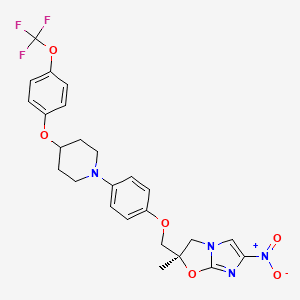
Delamanidum 25 mg
ATC Code
J04AK06
Source
URPL
Pharmacotherapeutic group: Antimycobacterials, drugs used for the treatment of tuberculosis, ATC code: J04AK06.
Mechanism of action
The pharmacological mechanism of action of delamanid involves inhibition of the synthesis of mycobacterial cell wall components, namely methoxymycolic and ketomycolic acids. The identified metabolites of delamanid do not exhibit antimycobacterial activity.
Activity against specific pathogens
Delamanid shows no in vitro activity against bacterial species other than mycobacteria.
Resistance
The presumed mechanism of mycobacterial resistance to delamanid is mutation in one of five genes encoding coenzyme F420. The rate of spontaneous mycobacterial resistance to delamanid in vitro is similar to that for isoniazid and higher than that for rifampicin. Emergence of resistance to delamanid during treatment has been observed (see section 4.4). Delamanid does not show cross-resistance with any currently used anti-tuberculosis agents, with the exception of pretomanid. In vitro studies have demonstrated cross-resistance with pretomanid, most likely owing to a shared activation pathway.
Susceptibility testing breakpoints
The European Committee on Antimicrobial Susceptibility Testing (EUCAST) has established the following interpretive criteria for delamanid minimum inhibitory concentration (MIC) susceptibility testing: https://www.ema.europa.eu/documents/other/minimum-inhibitory-concentration-mic-breakpoints_en.xlsx
Clinical trial data
Treatment of MDR-TB with delamanid was evaluated in two double-blind, placebo-controlled clinical trials. Sputum culture conversion analyses were performed in the modified intent-to-treat population, comprising patients with a positive culture at baseline whose isolate was resistant to both isoniazid and rifampicin, i.e. multidrug-resistant tuberculosis.
In the first clinical study (No. 204), sputum conversion at two months occurred in 64/141 (45.4%) patients randomised to delamanid 100 mg twice daily plus OBR and in 37/125 (29.6%) patients receiving placebo plus OBR (conversion defined as cessation of Mycobacterium tuberculosis growth at 2 months, sustained for a further month) (p = 0.0083). Time to conversion was also shorter in the group randomised to delamanid 100 mg twice daily than in the placebo plus OBR group (p = 0.0056).
In the second clinical study (No. 213), delamanid was administered orally at 100 mg twice daily as an adjunct to OBR for 2 months, followed by 200 mg once daily for 4 months. Median time to conversion was 51 days with delamanid plus OBR and 57 days with placebo plus OBR (p = 0.0562, calculated using the sequentially summing Gehan-Wilcoxon test with stratified Peto-Peto modification). The proportion of patients achieving sputum culture conversion (SCC) by six months of treatment was 87.6% (198/226) with delamanid plus OBR and 86.1% (87/101) with placebo plus OBR (p = 0.7131).
Cultures with missing data at the conversion assessment were considered positive in the primary analysis. Two sensitivity analyses were performed: imputation of missing data using last-observation-carried-forward (LOCF) and a bookending analysis (i.e. for a result to be considered negative, both the preceding and subsequent cultures had to be negative; otherwise the result was considered positive). Both analyses demonstrated a shorter median time to conversion (by 13 days) with delamanid plus OBR (p = 0.0281 for LOCF and p = 0.0052 for bookending).
Delamanid resistance (i.e. MIC ≥ 0.2 μg/ml) was observed at baseline in 2 of 316 patients in clinical study No. 204 and 2 of 511 patients in study No. 213 (4 of 827 patients – 0.48%). Resistance to delamanid also emerged during treatment in 4 of 341 patients (1.2%) randomised to receive delamanid for 6 months in study No. 213. In addition to delamanid, these four patients were receiving only two other medicinal products.
end-TB study (Evaluating Newly approved Drugs for multidrug resistant TB)
end-TB was an independent, investigator-initiated, open-label, randomised, controlled, multinational phase 3 non-inferiority study conducted in patients aged 15 years and older with pulmonary tuberculosis caused by Mycobacterium tuberculosis resistant to rifampicin and susceptible to fluoroquinolones. Five 9-month all-oral regimens were evaluated against the then-recommended WHO standard of care (SoC) (mostly individualised regimens of ≥ 18 months' duration). Three of the 9-month regimens contained delamanid: BDLLfxZ (bedaquiline, delamanid, linezolid, levofloxacin and pyrazinamide), DCLLfxZ (delamanid, clofazimine, linezolid, levofloxacin and pyrazinamide) and DCMZ (delamanid, clofazimine, moxifloxacin and pyrazinamide). The delamanid dose was 100 mg twice daily.
The primary efficacy outcome was the proportion of participants with a favourable outcome at week 73, defined as the absence of an unfavourable outcome and either two consecutive negative cultures (including one between weeks 65 and 73) or favourable bacteriological, radiological and clinical progression. Unfavourable outcomes included death (from any cause), substitution or addition of one drug in the experimental regimens or two drugs in the standard regimen, or initiation of new treatment for rifampicin-resistant tuberculosis. Maximum follow-up was 104 weeks.
The modified intent-to-treat (mITT) population included all participants who underwent randomisation, received at least one dose of study treatment and had a culture positive for Mycobacterium tuberculosis prior to randomisation.
In the mITT population, 37.8% were women. Median age was 32 years and 25 participants (3.6%) were under 18 years; 14.0% had HIV co-infection and 57.1% had cavitation on chest radiograph.
The primary efficacy analysis is shown in the table below.
Table 2. Primary efficacy analysis for end-TB (mITT)
BDLLfxZ (n = 122)
DCLLfxZ (n = 118)
DCMZ (n = 107)
Standard of care (n = 119)
Participants with favourable outcome – n (%)
104 (85.2)
93 (78.8)
89 (83.2)
96 (80.7)
Difference vs. standard therapy (95% CI)
4.6 (-4.9 to 14.1)
-1.9 (-12.1 to 8.4)
2.5 (-7.5 to 12.5)
Based on hierarchical testing, four experimental regimens were found to be non-inferior to standard therapy in the mITT analysis. Non-inferiority to standard therapy was established for two of the three delamanid-containing regimens (BDLLfxZ and DCMZ). Week 104 data confirmed these findings.
Analysis of WHO week 104 data showed that the DCMZ and DCLLfxZ regimens had higher rates of failure (failure of culture conversion or culture reversion) or relapse and higher rates of amplified resistance than the SoC group and are not preferred over SoC treatment. Failure or relapse rates were 2.5% for SoC, 1.6% for BDLLfxZ, 11.0% for DCLLfxZ and 11.2% for DCMZ. Amplification of drug resistance was demonstrated in 0.0% for SoC and BDLLfxZ, 4.0% for DCLLfxZ and 6.7% for DCMZ.
BEAT-TB study in South Africa
BEAT-TB was an independent, investigator-initiated, multicentre, open-label, pragmatic, randomised, controlled phase 3 non-inferiority study in patients aged 6 years and older with pulmonary TB caused by Mycobacterium tuberculosis resistant to at least rifampicin. Participants were randomised to a 6-month BDLLfxC regimen (bedaquiline, delamanid, linezolid, levofloxacin, clofazimine) or the then-current 9-month or longer control regimen in South Africa. Following receipt of fluoroquinolone susceptibility testing results, either levofloxacin (if fluoroquinolone-resistant) or clofazimine (if fluoroquinolone-susceptible) was removed from the regimen (i.e. discontinued or not initiated depending on when susceptibility results became available). The regimen could be administered for 6 months or extended to 9 months in the absence of clinical or bacteriological improvement.
The primary efficacy endpoint was successful end of treatment followed by successful end of follow-up. A successful treatment outcome measured at end of treatment was defined either as "cured", i.e. adequate treatment adherence (≥ 80% of doses taken) per protocol with no evidence of failure and the last 2 negative sputum samples at end of treatment (taken ≥ 14 days apart) being negative, or "treatment completed", i.e. adequate treatment adherence (as above) without evidence of failure but without evidence of ≥ 2 consecutive cultures taken ≥ 14 days apart being negative. A successful end-of-follow-up outcome measured 76 weeks after treatment initiation was defined either as "cured", i.e. culture-negative at end of follow-up, or "culture-negative" at the patient's last visit (if the patient was lost before end of follow-up, assuming a successful treatment outcome at the last available study visit).
In this study, 42% were women. Median age was 35.0 years and 30 patients (7%) were aged < 18 years. Half of the patients (51%) were HIV positive.
The primary efficacy analysis is shown in the table below.
Table 3. Primary efficacy analysis for BEAT-TB (ITT)
BDLLfxC (n = 202)
Control (n = 200)
Successful outcome at end of treatment and follow-up – n (%)
174 (86.1%)
172 (86.0%)
Adjusted risk difference (95% CI)
-0.2% (-6.9%, 6.5%)
In the ITT population, the BDLLfxC regimen was shown to be non-inferior to control. Rates of failure (failure of culture conversion or culture reversion) or relapse were 8.4% for BDLLfxC and 7.0% for the control group. Amplification of drug resistance was demonstrated in 2.5% in the BDLLfxC group and 3.0% in the control group.
Paediatric population
The pharmacokinetics, safety and efficacy of delamanid in combination with a background regimen (BR) were assessed in clinical studies 242-12-232 (10-day pharmacokinetics) and -233 (pharmacokinetics, efficacy and safety). Both were single-arm, open-label studies with 37 patients with a median age of 4.55 years (range 0.78 to 17.60 years), of whom 25 (67.6%) were Asian and 19 (51.4%) were female.
Paediatric patients were stratified into four groups:
Group 1: 12 to 17 years (7 patients); Group 2: 6 to 11 years (6 patients); Group 3: 3 to 5 years (12 patients); and Group 4: 0 to 2 years (12 patients). The mean body weight of all participants at baseline was 19.5 kg, and 38.4, 25.1, 14.8 and 10.3 kg in Groups 1, 2, 3 and 4, respectively.
Patients had confirmed or probable MDR-TB infection and received 26 weeks of delamanid plus OBR, followed by OBR alone (in accordance with WHO recommendations). Patients in Groups 1 and 2 received film-coated tablets. The delamanid dose was 100 mg twice daily in Group 1 and 50 mg twice daily in Group 2. These doses were higher than the currently recommended weight-based paediatric dose. Patients in Groups 3 and 4 received dispersible tablets. This paediatric formulation is not bioequivalent to the film-coated tablets. In Group 3, the dose was 25 mg twice daily; in Group 4, the dose ranged from 10 mg twice daily to 5 mg once daily according to body weight. The doses administered to Group 4 were lower than the currently recommended weight-based paediatric dose.
A population pharmacokinetic analysis was performed using data from the two paediatric studies in order to determine doses for paediatric subjects that would provide delamanid exposures comparable to those observed in adults with MDR-TB. Data from children with body weight below 10 kg were too limited to allow dose determination in this population.
⚠️ Warnings
No data are available on delamanid treatment continued beyond 24 consecutive weeks (see section 4.2).
No clinical data are available on the use of delamanid for the treatment of:
extrapulmonary tuberculosis (e.g. tuberculosis of the central nervous system, bones)
infections caused by mycobacterial species other than the M. tuberculosis complex
latent M. tuberculosis infection
No clinical data are available on the use of delamanid in combination regimens used to treat drug-susceptible M. tuberculosis infection.
Resistance to delamanid
Delamanid must be used only within an appropriate combination regimen for the treatment of MDR-TB as recommended by the World Health Organization, in order to avoid the emergence of resistance to delamanid.
QT interval prolongation
QT interval prolongation has been observed in patients treated with delamanid. This prolongation increases slowly over time during the first 6 to 10 weeks of treatment and then remains stable. QTc prolongation is very closely correlated with the main delamanid metabolite DM-6705. Formation and metabolism of DM-6705 are regulated by plasma albumin and CYP3A4 (see the Special warnings section below).
General recommendations
An ECG examination is recommended before starting delamanid and monthly throughout the entire course of delamanid treatment. If a QTcF > 500 ms is detected either before the first dose of delamanid or during delamanid treatment, treatment must not be initiated or must be discontinued. If the QTc interval exceeds 450 ms in male patients or 470 ms in female patients during treatment with delamanid, more frequent ECG monitoring is required. It is also recommended that baseline serum electrolyte concentrations, e.g. potassium, be determined and corrected if abnormal.
Special warnings
Cardiac risk factors
Treatment with delamanid should not be initiated in patients with the following risk factors unless the potential benefits of delamanid are considered to outweigh the potential risks. In such patients, very frequent ECG monitoring is required throughout delamanid treatment.
Known congenital QTc prolongation or any clinical condition known to prolong the QTc interval, or a QTc interval > 500 ms.
History of symptomatic cardiac arrhythmias or clinically relevant bradycardia.
Any cardiac disease predisposing to arrhythmia, such as severe hypertension, left ventricular hypertrophy (including hypertrophic cardiomyopathy) or congestive heart failure accompanied by reduced left ventricular ejection fraction.
Electrolyte disturbances, particularly hypokalaemia, hypocalcaemia or hypomagnesaemia.
Use of medicinal products that prolong the QTc interval. These include (but are not limited to):
Antiarrhythmics (e.g. amiodarone, disopyramide, dofetilide, ibutilide, procainamide, quinidine, hydroquinidine, sotalol).
Neuroleptics (e.g. phenothiazines, sertindole, sultopride, chlorpromazine, haloperidol, mesoridazine, pimozide or thioridazine) and antidepressants.
Certain antimicrobial agents, such as:
macrolides (e.g. erythromycin, clarithromycin)
moxifloxacin, sparfloxacin (for information on use with other fluoroquinolones, see section 4.4)
bedaquiline
triazole antifungals
pentamidine
saquinavir
Certain non-sedating antihistamines (e.g. terfenadine, astemizole, mizolastine).
Certain antimalarials with QT prolongation potential (e.g. halofantrine, quinine, chloroquine, artesunate/amodiaquine, artenimol/piperaquine).
Cisapride, droperidol, domperidone, bepridil, difemanil, probucol, levomethadyl, methadone, vinca alkaloids and arsenic trioxide.
Hypoalbuminaemia
In a clinical trial, the presence of hypoalbuminaemia was associated with an increased risk of QTc prolongation in patients treated with delamanid. Delamanid is contraindicated in patients with serum albumin < 2.8 g/dL (see section 4.3). In patients initiating delamanid with a serum albumin value < 3.4 g/dL or in whom serum albumin falls into this range during treatment, very frequent ECG monitoring is required throughout delamanid treatment.
Concomitant administration with strong CYP3A4 inhibitors
Co-administration of delamanid with a strong CYP3A4 inhibitor (lopinavir/ritonavir) has been associated with a 30% increase in exposure to the DM-6705 metabolite, which has been associated with QTc prolongation. Therefore, if co-administration of delamanid with any strong CYP3A4 inhibitor is considered necessary, very frequent ECG monitoring is recommended throughout delamanid treatment.
Co-administration of delamanid with quinolones
QTcF prolongation in excess of 60 ms was in all cases associated with concomitant use of a fluoroquinolone. Therefore, if concomitant administration is considered necessary in order to construct an adequate MDR-TB treatment regimen, very frequent ECG monitoring is recommended throughout delamanid treatment.
Hepatic impairment
The administration of Deltyba to patients with moderate to severe hepatic impairment is not recommended (see sections 4.2 and 5.2).
Renal impairment
Data on the use of delamanid in patients with severe renal impairment are not available and its use is not recommended (see sections 4.2 and 5.2).
Paradoxical drug reaction
Post-marketing cases of paradoxical drug reactions have been reported with Deltyba (clinical or radiological worsening of existing lesions, or development of new lesions, in a patient who had previously shown improvement on appropriate antimycobacterial therapy). Paradoxical drug reactions are often transient and should not be misinterpreted as failure to respond to treatment. If a paradoxical response is suspected, continuation of the planned combination therapy is recommended, and symptomatic treatment to suppress the exaggerated immune reaction should be initiated where required (see section 4.8).