This information is for educational purposes only. It is not intended as medical advice. Always consult a qualified healthcare professional.
Budipine hydrochloride — Description, Dosage, Side Effects | PillsCard
OTC
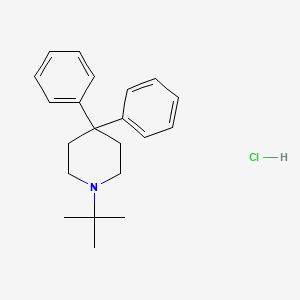
Budipine hydrochloride
INN: Budipine hydrochloride
Data updated: 2026-04-18
Available in:
🇩🇪🇬🇧🇫🇷🇵🇹
Form
—
Dosage
—
Route
—
Storage
—
About This Product
ATC Code
User Reviews
Reviews reflect personal experiences and are not medical advice. Always consult your doctor.
N04BX03
Source
KEGG
None
AU:legalCA: legalNZ: Prescription onlyUK:UnderPsychoactive Substances ActUS:Schedule IUN:Unscheduled
(1R,15R,17S,18S)-17-ethyl-7-methoxy-3,13-diazapentacyclo[13.3.1.02,10.04,9.013,18]nonadeca-2(10),4(9),5,7-tetraene
83-74-9Y
197060
170667Y
3S814I130U
CHEBI:5852
ChEMBL1215855Y
DTXSID20894069
Interactive image
CC[C@H]1C[C@@H]2C[C@H]3c4[nH]c5ccc(OC)cc5c4CC[N@@](C2)[C@@H]13
InChI=1S/C20H26N2O/c1-3-13-8-12-9-17-19-15(6-7-22(11-12)20(13)17)16-10-14(23-2)4-5-18(16)21-19/h4-5,10,12-13,17,20-21H,3,6-9,11H2,1-2H3/t12-,13+,17+,20+/m1/s1YKey:HSIBGVUMFOSJPD-CFDPKNGZSA-NY
Ibogaineis apsychoactiveindole alkaloidderived from plants such asTabernanthe iboga, characterized byhallucinogenicandoneirogeniceffects.Ibogaine exhibits complexpharmacologyby interacting with multipleneurotransmittersystems, notably affectingopioid,serotonin,sigma,NMDA, andnicotinic acetylcholinereceptors; its metabolitenoribogaineprimarily acts as aserotonin reuptake inhibitorandκ-opioid receptoragonist.
The psychoactivity of the root bark of the iboga tree,T. iboga, one of the plants from which ibogaine isextracted, was first discovered byforagertribes in Central Africa, who passed the knowledge to theBwititribe ofGabon. It was first documented in the 19th century for its spiritual use, later isolated and synthesized for its psychoactive properties, briefly marketed inEuropeas astimulant, and ultimately controversially researched for its potential in treating addiction despite being classified as a controlled substance. Ibogaine can besemisyntheticallyproduced fromvoacangine, with itstotal synthesisachieved in 1956 and its structure confirmed byX-ray crystallographyin 1960. Its clinical use and development have been limited due to regulatory barriers and serious safety risks, such astoxicity to the heart.
Ibogaine produces a two-phase experience—initially visionary anddream-likewith vivid imagery andaltered perception, followed by an introspective period marked by lingering side effects, such asnauseaand mood disturbances, which may persist for days. Long-term risks includemaniaand heart issues such aslong QT syndrome, and potentially fatalinteractionswith other drugs.
Only two randomized controlled trials have been conducted on ibogaine and noribogaine for substance use disorders, and while they show preliminary anti-addictive potential, their safety and efficacy are unconfirmed, with significant risks includingcardiotoxicityand fatalities.Ibogaine is federally illegal in the United States. It is used in treatment clinics abroad under legal gray areas, with growing media attention. It has inspired the development of non-hallucinogenic, non-cardiotoxic analogues like18-MCandtabernanthalogfor therapeutic use. In 2025, Texas allocated $50 million forclinical researchon ibogaine to developFDA-approved treatments foropioid use disorder, co-occurringsubstance use disorders, and other ibogaine-responsive conditions. A 2026 US executive order directed federal agencies to accelerate review of ibogaine.