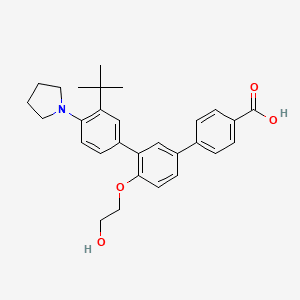
Trifarotene belongs to the 4th generation of retinoids and is a terphenyl acid derivative. It acts on specific receptors (RAR gamma receptors), thereby regulating keratinization and differentiation of keratinocytes (a group of cells in the epidermis responsible for keratin synthesis). Trifarotene facilitates desquamation of corneocytes (dead cells located in the stratum corneum of the epidermis) and stimulates collagen synthesis. It also affects sebaceous gland function (enhancing sebum clearance). It has comedolytic activity, meaning it reduces the number and size of comedones. Trifarotene also exhibits anti-inflammatory and depigmenting properties (reduces hyperpigmentation).
When applied topically to acne lesions, trifarotene has very minimal (negligible) systemic absorption into the bloodstream.
Trifarotene is 99.9% bound to plasma proteins.
Trifarotene is metabolized in the liver via microsomes and CYP 450 enzymes.
⚠️ Warnings
During treatment with trifarotene, the following may occur: erythema and skin dryness; burning or stinging of the skin; skin peeling. These symptoms can be alleviated by using moisturizing preparations. Trifarotene must not be applied to wounded, abraded, or eczematous skin, nor to sunburned skin. Trifarotene should not be applied to skin that has been waxed. During treatment with trifarotene, contact with the mucous membranes of the eyes and mouth should be avoided, as should excessive sun exposure or phototherapy. The use of tanning beds is prohibited during treatment.