Reference images only. Packaging and labels vary by country and batch. Always consult the leaflet supplied with your product.
Available in:
🇨🇿🇩🇪🇬🇧🇫🇷🇯🇵🇵🇱🇸🇰🇺🇦
Form
Maść
Dosage
20 mg/g
Route
—
Storage
Store in a dry place at 20 to 25°C (68 to 77°F) [see USP Controlled Room Temperature].
About This Product
Manufacturer
Almirall Hermal GmbH
ATC Code
D10AF02
Source
URPL
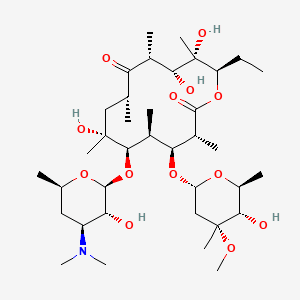
DESCRIPTION Erythromycin Topical Solution USP, 2% contains erythromycin for topical dermatologic use. Erythromycin is a macrolide antibiotic produced from a strain of Saccaropolyspora erythraea (formerly Streptomyces erythreus ). It is a base and readily forms salts with acids. Chemically, erythromycin is: (3 R *,4 S *,5 S *,6 R *,7 R *,9 R *,11 R *,12 R *,13 S *,14 R *)-4-[(2,6-Dideoxy-3- C -methyl-3- 0 -methyl-α-L- ribo -hexopyranosyl)oxy]-14-ethyl-7,12,13-trihydroxy -3,5,7,9,11,13-hexamethyl-6-[[3,4,6-trideoxy-3-(dimethylamino)-ß-D- xylo -hexopyranosyl]oxy]oxacyclotetradecane-2,10-dione. It has the following structural formula: Molecular Formula: C 37 H 67 NO 13 Molecular Weight: 733.94 Erythromycin is a white or slightly yellow crystalline powder that is slightly soluble in water, freely soluble in alcohols, acetone, chloroform, acetonitrile, ethyl acetate, and moderately soluble in ether, ethylene dichloride and amyl acetate. Each mL of Erythromycin Topical Solution USP, 2% contains 20 mg of erythromycin base in a vehicle consisting of alcohol (66%), citric acid, and propylene glycol.
⚠️ Warnings
WARNINGS Pseudomembranous colitis has been reported with nearly all antibacterial agents, including erythromycin, and may range in severity from mild to life-threatening. Therefore, it is important to consider this diagnosis in patients who present with diarrhea subsequent to the administration of antibacterial agents. Treatment with antibacterial agents alters the normal flora of the colon and may permit overgrowth of clostridia. Studies indicate that a toxin produced by Clostridium difficile is one primary cause of “antibiotic-associated colitis”. After the diagnosis of pseudomembranous colitis has been established, therapeutic measures should be initiated. Mild cases of pseudomembranous colitis usually respond to drug discontinuation alone. In moderate to severe cases, consideration should be given to management with fluids and electrolytes, protein supplementation and treatment with an antibacterial drug clinically effective against C. difficile colitis.
👨⚕️
Verified by medical editor
Dr. Ozarchuk, PharmD · April 2026
User Reviews
Reviews reflect personal experiences and are not medical advice. Always consult your doctor.