This information is for educational purposes only. It is not intended as medical advice. Always consult a qualified healthcare professional.
Duphaston — Description, Dosage, Side Effects | PillsCard
OTC
Duphaston
10 mg, Tabletki powlekane
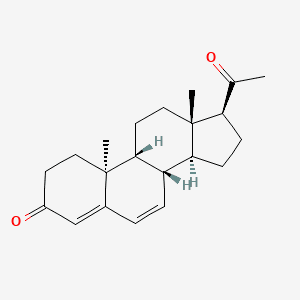
INN: Dydrogesteronum
Data updated: 2026-04-11
Available in:
🇨🇿🇬🇧🇫🇷🇵🇱🇵🇹🇷🇴🇸🇰🇹🇷🇺🇦
Form
Tabletki powlekane
Dosage
10 mg
Route
—
Storage
—
User Reviews
Reviews reflect personal experiences and are not medical advice. Always consult your doctor.
About This Product
Manufacturer
TDF SA
ATC Code
G03DB01
Source
URPL
The ATC code is G03FB08. (Oestrogens: urogenital system and sex hormones)
Sequential hormone replacement therapy (combined oestradiol and dydrogesterone).
Oestradiol
The active ingredient, synthetic 17β-oestradiol, is chemically and biologically identical to endogenous human oestradiol. It substitutes for the loss of oestrogen production in menopausal women, and alleviates menopausal symptoms. Oestrogens prevent bone loss following menopause or ovariectomy.
Dydrogesterone
Dydrogesterone is an orally-active progestogen having an activity comparable to parenterally administered progesterone. As oestrogens promote the growth of the endometrium, unopposed oestrogens increase the risk of endometrial hyperplasia and cancer. The addition of a progestogen greatly reduces the oestrogen-induced risk of endometrial hyperplasia in non-hysterectomised women.
Clinical trial information
Relief of oestrogen-deficiency symptoms and bleeding patterns.
- Relief of menopausal symptoms was achieved during the first few weeks of treatment.
- Regular withdrawal bleeding with Femoston 1/10 occurred in approximately 75-80% of women with a mean duration of 5 days.
Withdrawal bleeding usually started on the day of the last pill of the progestogen phase. Break-through bleeding and/or spotting occurred in approximately 10% of the women; amenorrhoea (no bleeding or spotting) occurred in 21-25% of the women for months 10 to 12 of treatment.
- With Femoston 2/10, approximately 90% of women had regular withdrawal bleeding. The start day and duration of bleeding, and the number of women with intermittent bleeding was the same as with Femoston 1/10, amenorrhoea occurred in 7-11% of the women for months 10 to 12 of treatment.
Prevention of osteoporosis
- Oestrogen deficiency at menopause is associated with an increasing bone turnover and decline in bone mass.
- The effect of oestrogens on the bone mineral density is dose-dependent. Protection appears to be effective for as long as treatment is continued. After discontinuation of HRT, bone mass is lost at a rate similar to that in untreated women.
- Evidence from the WHI trial and meta-analysed trials shows that current use of HRT, alone or in combination with a progestogen – given to predominantly healthy women – reduces the risk of hip, vertebral, and other osteoporotic fractures. HRT may also prevent fractures in women with low bone density and/or established osteoporosis, but the evidence for that is limited.
- After two years of treatment with Femoston 2/10, the increase in lumbar spine bone mineral density (BMD) was 6.7% ± 3.9% (mean ± SD). The percentage of women who maintained or gained BMD in lumbar zone during treatment was 94.5%. For Femoston 1/10 the increase in lumbar spine BMD was 5.2% ± 3.8% (mean ± SD), and the percentage of women with no change or an increase in lumbar spine BMD was 93%.
- Femoston also had an effect on hip BMD. The increase after two years of treatment with 1mg oestradiol was 2.7% ± 4.2% (mean ± SD) at femoral neck, 3.5% ± 5.0% (mean ± SD) at trochanter and 2.7%± 6.7% (mean ± SD) at Wards triangle. After two years of treatment with 2mg oestradiol these figures were respectively, 2.6% ± 5.0%; 4.6% ± 5.0% and 4.1% ± 7.4%. The percentage of women who maintained or gained BMD in the 3 hip areas after treatment with 1mg oestradiol was 67-78% and 71-88% after treatment with 2mg oestradiol.
⚠️ Warnings
This medicinal product may pose a risk to the aquatic environment. Medicines no longer required should not be disposed of via wastewater or household waste. Any unused product or waste material should be disposed of in accordance with local requirements or returned to the pharmacy.