This information is for educational purposes only. It is not intended as medical advice. Always consult a qualified healthcare professional.
Alecensa — Description, Dosage, Side Effects | PillsCard
Rx
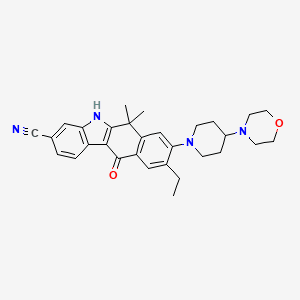
Alecensa
150 mg, Kapsułki twarde
INN: Alectinibum
Available in:
🇨🇿🇩🇪🇬🇧🇪🇸🇫🇷🇵🇱🇵🇹🇸🇰🇺🇦
Form
Kapsułki twarde
Dosage
150 mg
Route
doustna
Storage
—
About This Product
User Reviews
Reviews reflect personal experiences and are not medical advice. Always consult your doctor.
Manufacturer
Roche Registration GmbH (Niemcy)
Composition
Alectinibum 150 mg
ATC Code
L01ED03
Source
URPL
Pharmacotherapeutic group: anti-neoplastic agents, protein kinase inhibitor; ATC code: L01ED03.
Mechanism of action
Alectinib is a highly selective and potent ALK and rearranged during transfection (RET) tyrosine kinase inhibitor. In pre-clinical studies, inhibition of ALK tyrosine kinase activity led to blockage of downstream signalling pathways including signal transducer and activator of transcription 3 (STAT 3) and phosphoinositide 3-kinase (PI3K)/protein kinase B (AKT) and induction of tumour cell death (apoptosis).
Alectinib demonstrated
in vitro
and
in vivo
activity against mutant forms of the ALK enzyme, including mutations responsible for resistance to crizotinib. The major metabolite of alectinib (M4) has shown similar
in vitro
potency and activity.
Based on preclinical data, alectinib is not a substrate of P-gp or BCRP, which are both efflux transporters in the blood brain barrier, and is therefore able to distribute into and be retained within the central nervous system.
Clinical efficacy and safety
Adjuvant treatment of resected ALK-positive non-small cell lung cancer
The efficacy of Alecensa for the adjuvant treatment of patients with ALK-positive NSCLC following complete tumour resection was evaluated in a global randomised Phase III open-label clinical trial (BO40336 [ALINA]). Eligible patients were required to have resectable ALK-positive NSCLC Stage IB (tumours ≥ 4 cm) – Stage IIIA NSCLC per the Union for International Cancer Control/American Joint Committee on Cancer (UICC/AJCC) Staging System, 7th Edition ALK-positivity was identified by a locally performed CE-marked ALK test, or centrally performed by the Ventana ALK (D5F3) immunohistochemistry (IHC) assay.
Patients were randomised (1:1) to receive Alecensa or standard platinum-based adjuvant chemotherapy following tumour resection. Randomisation was stratified by race (Asian and non-Asian) and stage of disease (IB, II and IIIA). Alecensa was administered at a dose of 600 mg twice daily until disease recurrence or unacceptable toxicity or for a total of 2 years. Standard platinum-based adjuvant chemotherapy was administered for 4 cycles, with each cycle lasting 21 days, according to one of the following regimens:
Cisplatin 75 mg/m
2
on Day 1 plus vinorelbine 25 mg/m
2
on Days 1 and 8
Cisplatin 75 mg/m
2
on Day 1 plus gemcitabine 1250 mg/m
2
on Days 1 and 8
Cisplatin 75 mg/m
2
on Day 1 plus pemetrexed 500 mg/m
2
on Day 1
In the event of intolerance to a cisplatin-based regimen, carboplatin was administered instead of cisplatin in the above combinations at a dose of area under the free carboplatin plasma versus time curve (AUC) 5 mg/mL/min or AUC 6 mg/mL/min.
The primary efficacy endpoint was disease-free survival (DFS) as assessed by the Investigator. DFS was defined as the time from date of randomisation to the date of occurrence of any of the following: first documented recurrence of disease, new primary NSCLC, or death due to any cause, whichever occurred first. Secondary efficacy endpoint was overall survival (OS), Exploratory endpoints included time to CNS recurrence or death (CNS-DFS).
A total of 257 patients were studied: 130 patients were randomised to the Alecensa arm, and 127 patients were randomised to the chemotherapy arm. Baseline demographic and disease characteristics for Alecensa were: median age 54 years (57 years for chemotherapy), 58% female (47% for chemotherapy), 55% Asian (56% for chemotherapy), 65% never smokers (55% for chemotherapy), 55% ECOG PS of 0 (51% for chemotherapy), 11% of patients Stage IB (9% for chemotherapy), 36% Stage II (35% for chemotherapy) and 53% Stage IIIA disease (55% for chemotherapy).
ALINA demonstrated a statistically significant improvement in DFS for patients treated with Alecensa compared to patients treated with chemotherapy in the Stage II-IIIA and the Stage IB-IIIA (ITT) patient populations. OS data were not mature at the time of DFS analysis with 2.3% of deaths reported overall. The median duration of follow-up was 27.8 months in the Alecensa arm and 28.4 months in the chemotherapy arm.
The DFS efficacy results are summarised in Table 4 and Figure 1.
Table 4: Investigator Assessed DFS Results in ALINA
Efficacy Parameter
Stage II-IIIA
ITT Population
Alecensa
N=116
Chemotherapy
N=115
Alecensa
N=130
Chemotherapy
N=127
Number of DFS Events (%)
14 (12.1)
45 (39.1)
15 (11.5)
50 (39.4)
Median DFS, months
(95% CI)
NE
(NE, NE)
44.4
(27.8, NE)
NE
(NE, NE)
41.3
(28.5, NE)
HR
(95% CI)
*
0.24
(0.13, 0.45)
0.24
(0.13, 0.43)
p-value (log-rank)
*
<0.0001
<0.0001
2 Year Event Free Rate, %
(95% CI)
93.8
(89.4, 98.3)
63.0
(53.3, 72.7)
93.6
(89.4, 97.9)
63.7
(54.6, 72.9)
3 Year Event Free Rate, %
(95% CI)
88.3
(80.8, 95.8)
53.3
(42.3, 64.2)
88.7
(81.8, 95.6)
54.0
(43.7, 64.2)
DFS = Disease-Free Survival; ITT = Intent-to-Treat; CI = Confidence Interval; NE = Not Estimable; HR = Hazard Ratio
*
Stratified by race in Stage II-IIIA, stratified by race and stage in Stage IB-IIIA.
Figure 1: Kaplan-Meier Curve of Investigator Assessed DFS in the ITT Population BO40336 (ALINA)
An exploratory analysis of CNS-DFS for patients receiving Alecensa compared to patients receiving chemotherapy showed a HR of 0.22 (95% CI: 0.08, 0.58) in the ITT population. An exploratory analysis of the site(s) of relapse showed the proportion of patients with brain involvement at the time of disease recurrence was 4 patients (3.1%) in the Alecensa arm and 14 patients (11.0%) in the chemotherapy arm in the ITT population.
Treatment of advanced ALK positive non-small cell lung cancer
Treatment-naïve patients
The safety and efficacy of Alecensa were studied in a global randomised Phase III open label clinical trial (BO28984, ALEX) in ALK-positive NSCLC patients who were treatment naïve. Central testing for ALK protein expression positivity of tissue samples from all patients by Ventana anti-ALK (D5F3) immunohistochemistry was required before randomisation into the study.
A total of 303 patients were included in the Phase III trial, 151 patients randomised to the crizotinib arm and 152 patients randomised to the Alecensa arm receiving Alecensa orally, at the recommended dose of 600 mg twice daily.
Eastern Cooperative Oncology Group performance status [(ECOG PS) (0/1 vs. 2)], race (Asian vs. non-Asian), and central nervous system (CNS) metastases at baseline (yes vs. no) were stratification factors for randomisation. The primary endpoint of the trial was to demonstrate superiority of Alecensa versus crizotinib based on Progression Free survival (PFS) as per investigator assessment using Response Evaluation Criteria in Solid Tumors (RECIST) version 1.1. Baseline demographic and disease characteristics for Alecensa were median age 58 years (54 years for crizotinib), 55% female (58% for crizotinib), 55% non-Asian (54% for crizotinib), 61% with no smoking history (65% for crizotinib), 93% ECOG PS of 0 or 1 (93% for crizotinib), 97% Stage IV disease (96% for crizotinib), 90% adenocarcinoma histology (94% for crizotinib), 40% CNS metastases at baseline (38% for crizotinib) and 17% having received prior CNS radiation (14% for crizotinib).
The trial met its primary endpoint at the primary analysis, demonstrating a statistically significant improvement in PFS by investigator. Efficacy data are summarised in Table 5 and the Kaplan-Meier curve for investigator assessed PFS is shown in Figure 2.
Table 5 Summary of efficacy results from study BO28984 (ALEX)
Crizotinib
N=151
Alecensa
N=152
Median duration of follow-up (months)
17.6
(range 0.3 – 27.0)
18.6
(range 0.5 – 29.0)
Primary efficacy parameter
PFS (INV)
Number of patients with event n (%)
Median (months)
[95% CI]
102 (68%)
11.1
[9.1; 13.1]
62 (41%)
NE
[17.7; NE]
HR
[95% CI]
Stratified log-rank p-value
0.47
[0.34, 0.65]
p <0.0001
Secondary efficacy parameters
PFS (IRC)*
Number of patients with event n (%)
Median (months)
[95% CI]
92 (61%)
10.4
[7.7; 14.6]
63 (41%)
25.7
[19.9; NE]
HR
[95% CI]
Stratified log-rank p-value
0.50
[0.36; 0.70]
p < 0.0001
Time to CNS progression (IRC)*, **
Number of patients with event n (%)
68 (45%)
18 (12%)
Cause-specific HR
[95% CI]
Stratified log-rank p-value
0.16
[0.10; 0.28]
p < 0.0001
12-month cumulative incidence of CNS progression (IRC)
[95% CI]
41.4%
[33.2; 49.4]
9.4%
[5.4; 14.7]
ORR (INV)*, ***
Responders n (%)
[95% CI]
114 (75.5%)
[67.8; 82.1]
126 (82.9%)
[76.0; 88.5]
Overall survival*
Number of patients with event n (%)
Median (months)
[95% CI]
40 (27%)
NE
[NE; NE]
35 (23%)
NE
[NE; NE]
HR
[95% CI]
0.76
[0.48; 1.20]
Duration of response (INV)
Median (months)
[95 % CI]
N=114
11.1
[7.9; 13.0]
N=126
NE
[NE; NE]
CNS-ORR in patients with measurable CNS metastases at baseline
CNS responders n (%)
[95% CI]
CNS-CR n (%)
CNS-DOR, median (months)
[95% CI]
N=22
11 (50.0%)
[28.2; 71.8]
1 (5%)
5.5
[2.1, 17.3]
N=21
17 (81.0%)
[58.1; 94.6]
8 (38%)
17.3
[14.8, NE]
CNS-ORR in patients with measurable and non-measurable CNS metastases at baseline (IRC)
CNS responders n (%)
[95% CI]
CNS-CR n (%)
CNS-DOR, median (months)
[95% CI]
N=58
15 (25.9%)
[15.3; 39.0]
5 (9%)
3.7
[3.2, 6.8]
N=64
38 (59.4%)
[46.4; 71.5]
29 (45%)
NE
[17.3, NE]
* Key secondary endpoints part of the hierarchical testing
** Competing risk analysis of CNS progression, systemic progression and death as competing events
*** 2 patients in the crizotinib arm and 6 patients in the alectinib arm had CR
CI = confidence interval; CNS = central nervous system; CR = complete response; DOR = duration of response; HR = hazard ratio; IRC = Independent Review Committee; INV = investigator; NE = not estimable; ORR = objective response rate; PFS = progression free survival
The PFS benefit was consistent for patients with CNS metastases at baseline (hazard ratio (HR) = 0.40, 95% confidence interval (CI): 0.25-0.64, median PFS for Alecensa = not estimable (NE), 95% CI: 9.2-NE, median PFS for crizotinib = 7.4 months, 95%CI: 6.6-9.6) and without CNS metastases at baseline (HR = 0.51, 95% CI: 0.33-0.80, median PFS for Alecensa = NE, 95% CI: NE, NE, median PFS for crizotinib = 14.8 months, 95% CI:10.8-20.3), indicating benefit of Alecensa over crizotinib in both subgroups.
Figure 2: Kaplan Meier plot of INV assessed PFS in BO28984 (ALEX)
Crizotinib pre-treated patients
The safety and efficacy of Alecensa in ALK-positive NSCLC patients pre-treated with crizotinib were studied in two Phase I/II clinical trials (NP28673 and NP28761).
NP28673
Study NP28673 was a Phase I/II single arm, multicentre study conducted in patients with ALK-positive advanced NSCLC who have previously progressed on crizotinib treatment. In addition to crizotinib, patients may have received previous treatment with chemotherapy. A total of 138 patients were included in the phase II part of the study and received Alecensa orally, at the recommended dose of 600 mg twice daily.
The primary endpoint was to evaluate the efficacy of Alecensa by Objective Response Rate (ORR) as per central Independent Review Committee (IRC) assessment using RECIST version 1.1 in the overall population (with and without prior exposure of cytotoxic chemotherapy treatments). The co-primary endpoint was to evaluate the ORR as per central IRC assessment using RECIST 1.1 in patients with prior exposure of cytotoxic chemotherapy treatments. A lower confidence limit for the estimated ORR above the pre-specified threshold of 35% would achieve a statistically significant result.
Patient demographics were consistent with that of a NSCLC ALK positive population. The demographic characteristics of the overall study population were 67% Caucasian, 26% Asian, 56% females, and the median age was 52 years. The majority of patients had no history of smoking (70%). The ECOG PS at baseline was 0 or 1 in 90.6% of patients and 2 in 9.4% of patients. At the time of entry in the study, 99% of patients had stage IV disease, 61% had brain metastases and in 96% of patients tumours were classified as adenocarcinoma. Among patients included in the study, 20% of the patients had previously progressed on crizotinib treatment only, and 80% had previously progressed on crizotinib and at least one chemotherapy treatment.
Study NP28761
Study NP28761 was a Phase I/II single arm multicentre study conducted in patients with ALK positive advanced NSCLC who have previously progressed on crizotinib treatment. In addition to crizotinib, patients may have received previous treatment with chemotherapy. A total of 87 patients were included in the phase II part of the study and received Alecensa orally, at the recommended dose of 600 mg twice daily.
The primary endpoint was to evaluate the efficacy of Alecensa by ORR as per central IRC assessment using RECIST version 1.1. A lower confidence limit for the estimated ORR above the pre-specified threshold of 35% would achieve a statistically significant result.
Patient demographics were consistent with that of a NSCLC ALK positive population. The demographic characteristics of the overall study population were 84% Caucasian, 8% Asian, 55% females. The median age was 54 years. The majority of patients had no history of smoking (62%). The ECOG PS at baseline was 0 or 1 in 89.7% of patients and 2 in 10.3% of patients. At the time of entry in the study, 99% of patients had stage IV disease, 60% had brain metastases and in 94% of patients tumours were classified as adenocarcinoma. Among the patients included in the study, 26% of the patients had previously progressed on crizotinib treatment only, and 74% had previously progressed on crizotinib and at least one chemotherapy treatment.
The main efficacy results from studies NP28673 and NP28761 are summarised in Table 6. A summary of pooled analysis of CNS endpoints is presented in Table 7.
Table 6 Efficacy results from studies NP28673 and NP28761
NP28673
Alecensa 600 mg twice daily
NP28761
Alecensa 600 mg twice daily
Median duration of follow-up (months)
21
(range 1 – 30)
17
(range 1 – 29)
Primary efficacy parameters
ORR (IRC) in RE population
Responders N (%)
[95% CI]
N=122
a
62 (50.8%)
[41.6%, 60.0%]
N = 67
b
35 (52.2%)
[39.7%, 64.6%]
ORR (IRC) in patients pre-treated with chemotherapy
Responders N (%)
[95% CI]
N = 96
43 (44.8%)
[34.6%, 55.3%]
Secondary efficacy parameters
DOR (IRC)
Number of patients with events N (%)
Median (months)
[95% CI]
N = 62
36 (58.1%)
15.2
[11.2, 24.9]
N = 35
20 (57.1%)
14.9
[6.9, NE]
PFS (IRC)
Number of patients with events N (%)
Median duration (months)
[95% CI]
N = 138
98 (71.0%)
8.9
[5.6, 12.8]
N = 87
58 (66.7%)
8.2
[6.3, 12.6]
CI = confidence interval; DOR = duration of response; IRC = independent review committee; NE = not estimable; ORR = objective response rate; PFS= progression free survival; RE = response evaluable
a
16 patients did not have measurable disease at baseline according to the IRC and were not included in the IRC response evaluable population.
b
20 patients did not have measurable disease at baseline according to the IRC and were not included in the IRC response evaluable population
ORR results for studies NP28673 and NP28761 were consistent across subgroups of baseline patient characteristics such as age, gender, race, ECOG PS, CNS metastasis and prior chemotherapy use, especially when considering the small number of patients in some subgroups.
Table 7 Summary of the pooled analysis of CNS endpoints from studies NP28673 and NP28761
CNS Parameters (NP28673 and NP28761)
Alecensa 600 mg twice daily
Patients with measurable CNS lesions at baseline
CNS ORR (IRC)
Responders (%)
[95% CI]
Complete response
Partial response
CNS DOR (IRC)
Number of patients with events (%)
Median (months)
[95%CI]
N = 50
32 (64.0%)
[49.2%, 77.1%]
11 (22.0%)
21 (42.0%)
N=32
18 (56.3%)
11.1
[7.6, NE]
CI = confidence interval; DOR = duration of response; IRC = independent review committee; ORR = objective response rate; NE = not estimable
Paediatric population
The licensing authority has waived the obligation to submit the results of studies with Alecensa in all subsets of the paediatric population in lung carcinoma (small cell and non-small cell carcinoma) (see section 4.2 for information on paediatric use).
⚠️ Warnings
Any unused medicinal product or waste material should be disposed of in accordance with local requirements.