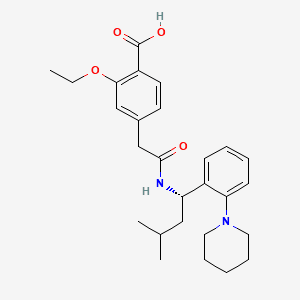
This information is for educational purposes only. It is not intended as medical advice. Always consult a qualified healthcare professional.
Enyglid — Description, Dosage, Side Effects | PillsCard
Rx
Enyglid
2 mg, Tabletki
INN: Repaglinidum
Data updated: 2026-04-24
Available in:
🇨🇿🇩🇪🇬🇧🇵🇱🇸🇰
Form
Tabletki
Dosage
2 mg
Route
doustna
Storage
—
About This Product
Manufacturer
User Reviews
Reviews reflect personal experiences and are not medical advice. Always consult your doctor.
Krka, d.d., Novo mesto (Słowenia)
Composition
Repaglinidum 2 mg
ATC Code
A10BX02
Source
URPL
Pharmaco-therapeutic group: Drugs used in diabetes, other blood glucose lowering drugs, excl. insulins, ATC code: A10BX02
Mechanism of action
Repaglinide is a short-acting oral secretagogue. Repaglinide lowers the blood glucose levels acutely by stimulating the release of insulin from the pancreas, an effect dependent upon functioning β-cells in the pancreatic islets.
Repaglinide closes ATP-dependent potassium channels in the β-cell membrane via a target protein different from other secretagogues. This depolarises the βcell and leads to an opening of the calcium channels. The resulting increased calcium influx induces insulin secretion from the β-cell.
Pharmacodynamic effects
In type 2 diabetic patients, the insulinotropic response to a meal occurred within 30 minutes after an oral dose of repaglinide. This resulted in a blood glucose-lowering effect throughout the meal period. The elevated insulin levels did not persist beyond the time of the meal challenge. Plasma repaglinide levels decreased rapidly, and low concentrations were seen in the plasma of Type 2 diabetic patients 4 hours post-administration.
Clinical efficacy and safety
A dose-dependent decrease in blood glucose was demonstrated in Type 2 diabetic patients when administered in doses from 0.5 to 4 mg repaglinide.
Clinical study results have shown that repaglinide is optimally dosed in relation to main meals (preprandial dosing).
Doses are usually taken within 15 minutes of the meal, but the time may vary from immediately preceding the meal to as long as 30 minutes before the meal.
One epidemiological study suggested an increased risk of acute coronary syndrome in repaglinide treated patients as compared to sulfonylurea treated patients (see sections 4.4 and 4.8).