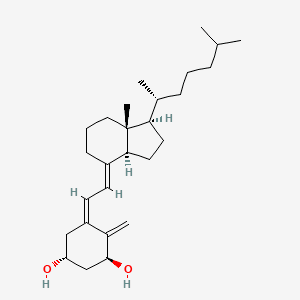
Pharmacotherapeutic group: Vitamin D and analogues. ATC code: A11CC03
Clinical efficacy and safety
Impaired 1α-hydroxylation by the kidneys reduces endogenous 1,25-dihydroxyvitamin D production. This contributes to the disturbances in mineral metabolism found in several disorders, including renal bone disease, hypoparathyroidism and vitamin D dependent rickets.
These disorders, which require high doses of parent vitamin D for their correction, will respond to small doses of Alfacalcidol.
The delay in response and high dosage required in treating these disorders with parent vitamin D makes dosage adjustment difficult. This can result in unpredictable hypercalcaemia which may take weeks or months to reverse. The major advantage of Alfacalcidol is the more rapid onset of response, which allows a more accurate titration of dosage. Should inadvertent hypercalcaemia occur, it can be reversed within days of stopping treatment.
In patients with renal failure, 1 - 5 microgram/day of 1α- hydroxyvitamin D (1α-OHD3) increased intestinal calcium and phosphorus absorption in a dose-related manner. This effect was observed within 3 days of starting the drug and conversely, it was reversed within 3 days of its discontinuation.
Patients with chronic renal failure have shown increased serum calcium levels within 5 days of receiving 1α-OHD3 in a dose of 0.5- 1.0 microgram/day. As serum calcium rose, PTH levels and alkaline phosphatase decreased toward normal.
In patients with nutritional osteomalacia, increases in calcium absorption were noted within 6 hours of giving 1 µg 1α-OHD3 orally and usually peaked at 24 hours. 1α- OHD3 also produced increases in plasma inorganic phosphorus due to increased intestinal absorption and renal tubular re-absorption. This latter effect is a result of PTH suppression by 1α-OHD3. The effect of the drug on calcium was about double its effect on phosphorus absorption.