This information is for educational purposes only. It is not intended as medical advice. Always consult a qualified healthcare professional.
Rx
Erleada
60 mg, Tabletki powlekane
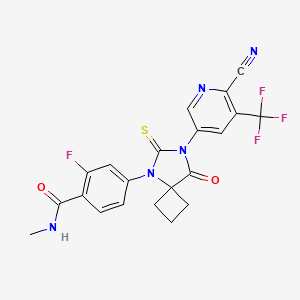
INN: Apalutamidum
Data updated: 2026-04-13
Available in:
🇨🇿🇩🇪🇬🇧🇫🇷🇵🇱🇸🇰🇺🇦
Form
Tabletki powlekane
Dosage
60 mg
Route
doustna
Storage
—
About This Product
User Reviews
Reviews reflect personal experiences and are not medical advice. Always consult your doctor.
Manufacturer
Janssen-Cilag International N.V. (Włochy)
Composition
Apalutamidum 60 mg
ATC Code
L02BB05
Source
URPL
Pharmacotherapeutic group: Endocrine therapy, anti-androgens, ATC code: L02BB05
Mechanism of action
Apalutamide is an orally administered, selective Androgen Receptor (AR) inhibitor that binds directly to the ligand‑binding domain of the AR. Apalutamide prevents AR nuclear translocation, inhibits DNA binding, impedes AR‑mediated transcription, and lacks androgen receptor agonist activity. Apalutamide treatment decreases tumour cell proliferation and increases apoptosis leading to potent antitumour activity. A major metabolite, N‑desmethyl apalutamide, exhibited one‑third the
in vitro
activity of apalutamide.
Prostate Specific Antigen (PSA) reduction
Apalutamide 240 mg daily in combination with ADT in patients with mHSPC (in TITAN study) reduced PSA to undetectable levels (<0.2 ng/mL) at any time in 68% of patients compared to 32% of patients taking ADT alone. Median time to undetectable PSA for patients receiving apalutamide in combination with ADT was 1.9 months. Apalutamide in combination with ADT led to a ≥ 50% PSA reduction from baseline at any time in 90% of patients compared to 55% of patients taking ADT alone.
Apalutamide 240 mg daily in combination with ADT in patients with nmCRPC (in SPARTAN study) reduced PSA to undetectable levels (<0.2 ng/mL) at any time in 38% of patients compared to no patients (0%) taking ADT alone. Median time to undetectable PSA for patients receiving apalutamide in combination with ADT was 2.8 months. Apalutamide in combination with ADT led to a ≥ 50% PSA reduction from baseline at any time in 90% of patients compared to 2.2% of patients taking ADT alone.
Cardiac electrophysiology
The effect of apalutamide 240 mg once daily on the QTc interval was assessed in an open-label, uncontrolled, multi-centre, single-arm dedicated QT study in 45 patients with CRPC. At steady-state, the maximum mean QTcF change from baseline was 12.4 ms (2-sided 90% upper CI: 16.0 ms). An exposure-QT analysis suggested a concentration-dependent increase in QTcF for apalutamide and its active metabolite.
Clinical efficacy and safety
The efficacy and safety of apalutamide has been established in two Phase 3 randomised, placebo-controlled studies, Study ARN-509-003 (nmCRPC) and 56021927PCR3002 (mHSPC).
TITAN: Metastatic Hormone-sensitive Prostate Cancer (mHSPC)
TITAN was a randomised, double-blind, placebo-controlled, multinational, multicentre clinical study in which 1052 patients with mHSPC were randomised (1:1) to receive either apalutamide orally at a dose of 240 mg once daily (N = 525) or placebo once daily (N = 527). All patients were required to have at least one bone metastasis on Technetium
99m
bone scan. Patients were excluded if the site of metastases was limited to either the lymph nodes or viscera (e.g., liver or lung). All patients in the TITAN study received concomitant GnRH analog or had prior bilateral orchiectomy. Around 11% of patients received prior treatment with docetaxel (maximum of 6 cycles, last dose ≤2 months prior to randomisation and maintained response prior to randomisation). The exclusion criteria included known brain metastases; prior treatment with other next generation anti-androgens (eg, enzalutamide), CYP17 inhibitors (eg, abiraterone acetate), immunotherapy (eg, sipuleucel-T), radiopharmaceutical agents or other treatments for prostate cancer; or history of seizure or condition that may predispose to seizure. Patients were stratified by Gleason score at diagnosis, prior docetaxel use, and region of the world. Patients with both high- and low-volume mHSPC were eligible for the study. High-volume disease was defined as either visceral metastases and at least 1 bone lesion or at least 4 bone lesions, with at least 1 bone lesion outside of the vertebral column or pelvis. Low-volume disease was defined as the presence of bone lesion(s) not meeting the definition of high-volume.
The following patient demographics and baseline disease characteristics were balanced between the treatment arms. The median age was 68 years (range 43-94) and 23% of patients were 75 years of age or older. The racial distribution was 68% Caucasian, 22% Asian, and 2% Black. Sixty-three percent (63%) of patients had high-volume disease and 37% had low-volume disease. Sixteen percent (16%) of patients had prior surgery, radiotherapy of the prostate or both. A majority of patients had a Gleason score of 7 or higher (92%). Sixty-eight percent (68%) of patients received prior treatment with a first‑generation anti-androgen in the non-metastatic setting. Although criteria for castration resistance were not determined at baseline, 94% of patients demonstrated a decrease in prostate specific antigen (PSA) from initiation of androgen deprivation therapy (ADT) to first dose of apalutamide or placebo. All patients except one in the placebo group, had an Eastern Cooperative Oncology Group Performance Status (ECOG PS) score of 0 or 1 at study entry. Among the patients who discontinued study treatment (N = 271 for placebo and N = 170 for Erleada), the most common reason for discontinuation in both arms was disease progression. A greater proportion (73%) of patients treated with placebo received subsequent anti-cancer therapy compared to patients treated with Erleada (54%).
The major efficacy outcome measures of the study were overall survival (OS) and radiographic progression-free survival (rPFS). Efficacy results of TITAN are summarised in Table 2 and Figures 1 and 2.
Table 2: Summary of efficacy results – Intent-to-treat mHSPC population (TITAN)
Endpoint
Erleada
N=525
Placebo
N=527
Primary overall survival
a
Deaths (%)
83 (16%)
117 (22%)
Median, months (95% CI)
NE (NE, NE)
NE (NE, NE)
Hazard ratio (95% CI)
b
0.671 (0.507, 0.890)
p-value
c
0.0053
Updated overall survival
d
Deaths (%)
170 (32%)
235 (45%)
Median, months (95% CI)
NE (NE, NE)
52 (42, NE)
Hazard Ratio (95% CI)
b
0.651 (0.534, 0.793)
p-value
c,e
<0.0001
Radiographic progression-free survival
Disease progression or death (%)
134 (26%)
231 (44%)
Median, months (95% CI)
NE (NE, NE)
22.08 (18.46, 32.92)
Hazard ratio (95% CI)
b
0.484 (0.391, 0.600)
p-value
c
<0.0001
a
This is based on the pre-specified interim analysis with a median follow‑up time of 22 months.
b
Hazard ratio is from stratified proportional hazards model. Hazard ratio < 1 favours active treatment.
c
p-value is from the log-rank test stratified by Gleason score at diagnosis (≤ 7 vs. > 7), Region (NA/EU vs. Other Countries) and Prior docetaxel use (Yes vs. No).
d
Median follow‑up time of 44 months.
e
This p‑value is nominal instead of being used for formal statistical testing.
NE=Not Estimable
A statistically significant improvement in OS and rPFS was demonstrated in patients randomised to receive Erleada compared with patients randomised to receive placebo in the primary analysis. An updated OS analysis was conducted at the time of final study analysis when 405 deaths were observed with a median follow-up of 44 months. Results from this updated analysis were consistent with those from the pre‑specified interim analysis. The improvement in OS was demonstrated even though 39% of patients in the placebo arm crossed over to receive Erleada, with a median treatment of 15 months on Erleada crossover.
Consistent improvement in rPFS was observed across patient subgroups including high- or low-volume disease, metastasis stage at diagnosis (M0 or M1), prior docetaxel use (yes or no), age (< 65, ≥ 65, or ≥ 75 years old), baseline PSA above median (yes or no), and number of bone lesions (≤ 10 or > 10).
Consistent improvement in OS was observed across patient subgroups including high- or low-volume disease, metastasis stage at diagnosis (M0 or M1), and Gleason score at diagnosis (≤ 7 vs. > 7).
Figure 1: Kaplan-Meier plot of updated overall survival (OS); Intent-to-treat mHSPC population (TITAN)
Figure 2: Kaplan-Meier plot of radiographic progression-free survival (rPFS); Intent-to-treat mHSPC population (TITAN)
Treatment with Erleada statistically significantly delayed the initiation of cytotoxic chemotherapy (HR = 0.391, CI = 0.274, 0.558; p < 0.0001), resulting in a 61% reduction of risk for subjects in the treatment arm compared to the placebo arm.
SPARTAN: Non-Metastatic Castration Resistant Prostate Cancer (nmCRPC)
A total of 1207 subjects with NM‑CRPC were randomised 2:1 to receive either apalutamide orally at a dose of 240 mg once daily in combination with androgen deprivation therapy (ADT) (medical castration or prior surgical castration) or placebo with ADT in a multicentre, double‑blind, clinical study (Study ARN‑509‑003). Subjects enrolled had a Prostate Specific Antigen (PSA) Doubling Time (PSADT) ≤ 10 months, considered to be at high risk of imminent metastatic disease and prostate cancer‑specific death. All subjects who were not surgically castrated received ADT continuously throughout the study. PSA results were blinded and were not used for treatment discontinuation. Subjects randomised to either arm were to continue treatment until disease progression defined by blinded central imaging review (BICR), initiation of new treatment, unacceptable toxicity or withdrawal.
The following patient demographics and baseline disease characteristics were balanced between the treatment arms. The median age was 74 years (range 48‑97) and 26% of subjects were 80 years of age or older. The racial distribution was 66% Caucasian, 5.6% Black, 12% Asian, and 0.2% Other. Seventy‑seven percent (77%) of subjects in both treatment arms had prior surgery or radiotherapy of the prostate. A majority of subjects had a Gleason score of 7 or higher (81%). Fifteen percent (15%) of subjects had < 2 cm pelvic lymph nodes at study entry. Seventy‑three percent (73%) of subjects received prior treatment with a first generation anti‑androgen; 69% of subjects received bicalutamide and 10% of subjects received flutamide. All subjects enrolled were confirmed to be non‑metastatic by blinded central imaging review and had an Eastern Cooperative Oncology Group Performance Status (ECOG PS) performance status score of 0 or 1 at study entry.
Metastasis‑free survival (MFS) was the primary endpoint, defined as the time from randomisation to the time of first evidence of BICR‑confirmed bone or soft tissue distant metastasis or death due to any cause, whichever occurred first. Treatment with Erleada significantly improved MFS. Erleada decreased the relative risk of distant metastasis or death by 70% compared to placebo (HR = 0.30; 95% CI: 0.24, 0.36; p < 0.0001). The median MFS for Erleada was 41 months and was 16 months for placebo (see Figure 3). Consistent improvement in MFS with Erleada was observed for all pre‑specified subgroups, including age, race, region of the world, nodal status, prior number of hormonal therapies, baseline PSA, PSA doubling time, baseline ECOG status and use of bone-sparing agents.
Figure 3: Kaplan‑Meier metastasis‑free survival (MFS) curve in Study ARN-509-003
Taking account of all data, subjects treated with Erleada and ADT showed significant improvement over those treated with ADT alone for the following secondary endpoints of time to metastasis (HR = 0.28; 95% CI: 0.23, 0.34; p < 0.0001), progression‑free survival (PFS) (HR = 0.30; 95% CI: 0.25, 0.36; p < 0.0001); time to symptomatic progression (HR = 0.57; 95% CI: 0.44, 0.73; p < 0.0001); overall survival (OS) (HR = 0.78; 95% CI: 0.64, 0.96; p = 0.0161) and time to initiation of cytotoxic chemotherapy (HR = 0.63; 95% CI: 0.49, 0.81; p = 0.0002).
Time to symptomatic progression was defined as time from randomisation to development of a skeletal related event, pain/symptoms requiring initiation of a new systemic anti-cancer therapy, or loco-regional tumour progression requiring radiation/surgery. While the overall number of events was small, the difference between the two arms was sufficiently large to reach statistical significance. Treatment with Erleada decreased the risk of symptomatic progression by 43% compared with placebo (HR = 0.567; 95% CI: 0.443, 0.725; p < 0.0001). The median time to symptomatic progression was not reached in either treatment group.
With median follow-up time of 52.0 months, results showed that treatment with Erleada significantly decreased the risk of death by 22% compared with placebo (HR = 0.784; 95% CI: 0.643, 0.956; 2‑sided p = 0.0161). The median OS was 73.9 months for the Erleada arm and 59.9 months for the placebo arm. The pre-specified alpha boundary (p ≤ 0.046) was crossed and statistical significance was achieved. This improvement was demonstrated even though 19% of patients in the placebo arm received Erleada as subsequent therapy.
Figure 4: Kaplan‑Meier overall survival (OS) curve in Study ARN-509-003 at final analysis
Treatment with Erleada significantly decreased the risk of initiating cytotoxic chemotherapy by 37% compared with placebo (HR = 0.629; 95% CI: 0.489, 0.808; p = 0.0002) demonstrating statistically significant improvement for Erleada versus placebo. The median time to the initiation of cytotoxic chemotherapy was not reached for either treatment arm.
PFS‑2, defined as the time to death or disease progression by PSA, radiographic, or symptomatic progression on or after first subsequent therapy was longer for subjects treated with Erleada compared to those treated with placebo. Results demonstrated a 44% reduction in risk of PFS-2 with Erleada versus placebo (HR = 0.565, 95% CI: 0.471, 0.677; p < 0.0001).
There were no detrimental effects to overall health-related quality of life with the addition of Erleada to ADT and a small but not clinically meaningful difference in change from baseline in favour of Erleada observed in the analysis of the Functional Assessment of Cancer Therapy‑Prostate (FACT‑P) total score and subscales.
Paediatric population
The European Medicines Agency has waived the obligation to submit the results of studies with Erleada in all subsets of the paediatric population in advanced prostate cancer. See section 4.2 for information on paediatric use.
⚠️ Warnings
Any unused medicinal product or waste material should be disposed of in accordance with local requirements.