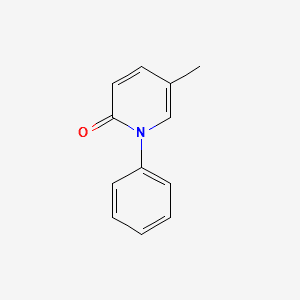
This information is for educational purposes only. It is not intended as medical advice. Always consult a qualified healthcare professional.
Rx
Esbriet
267 mg, Tabletki powlekane
INN: Pirfenidonum
Data updated: 2026-04-11
Available in:
🇨🇿🇩🇪🇬🇧🇵🇱🇸🇰
Form
Tabletki powlekane
Dosage
267 mg
Route
doustna
Storage
—
About This Product
User Reviews
Reviews reflect personal experiences and are not medical advice. Always consult your doctor.
Manufacturer
Roche Registration GmbH (Niemcy)
Composition
Pirfenidonum 267 mg
ATC Code
L04AX05
Source
URPL
Pharmacotherapeutic group: Immunosuppressants, other immunosuppressants, ATC code: L04AX05
The mechanism of action of pirfenidone has not been fully established. However, existing data suggest that pirfenidone exerts both antifibrotic and anti-inflammatory properties in a variety of
in vitro
systems and animal models of pulmonary fibrosis (bleomycin- and transplant-induced fibrosis).
IPF is a chronic fibrotic and inflammatory pulmonary disease affected by the synthesis and release of pro-inflammatory cytokines including tumour necrosis factor-alpha (TNF-α) and interleukin-1-beta (IL-1β) and pirfenidone has been shown to reduce the accumulation of inflammatory cells in response to various stimuli.
Pirfenidone attenuates fibroblast proliferation, production of fibrosis-associated proteins and cytokines, and the increased biosynthesis and accumulation of extracellular matrix in response to cytokine growth factors such as, transforming growth factor-beta (TGF-β) and platelet-derived growth factor (PDGF).
Clinical efficacy
The clinical efficacy of Esbriet has been studied in four Phase 3, multicentre, randomised, double-blind, placebo-controlled studies in patients with IPF. Three of the Phase 3 studies (PIPF-004, PIPF-006, and PIPF-016) were multinational, and one (SP3) was conducted in Japan.
PIPF-004 and PIPF-006 compared treatment with Esbriet 2403 mg/day to placebo. The studies were nearly identical in design, with few exceptions including an intermediate dose group (1,197 mg/day) in PIPF-004. In both studies, treatment was administered three times daily for a minimum of 72 weeks. The primary endpoint in both studies was the change from Baseline to Week 72 in percent predicted Forced Vital Capacity (FVC). In the combined PIPF-004 and PIPF-006 population treated with the dose of 2,403 mg/d comprising in total 692 patients, the median baseline percent predicted FVC values were 73.9% in the Esbriet group and 72.0% in the placebo group (range: 50-123% and 48-138%, respectively), and the median baseline percent predicted Carbon Monoxide Diffusing Capacity (DLco) 45.1% in the Esbriet group and 45.6% in the placebo group (range: 25-81% and 21-94%, respectively). In PIPF-004, 2.4% in the Esbriet group and 2.1% in the placebo group had percent predicted FVC below 50% and/or percent predicted DLco below 35% at Baseline. In PIPF-006, 1.0% in the Esbriet group and 1.4% in the placebo group had percent predicted FVC below 50% and/or percent predicted DLco below 35% at Baseline.
In study PIPF-004, the decline of percent predicted FVC from Baseline at Week 72 of treatment was significantly reduced in patients receiving Esbriet (N=174) compared with patients receiving placebo (N=174; p=0.001, rank ANCOVA). Treatment with Esbriet also significantly reduced the decline of percent predicted FVC from Baseline at Weeks 24 (p=0.014), 36 (p<0.001), 48 (p<0.001), and 60 (p<0.001). At Week 72, a decline from baseline in percent predicted FVC of ≥10% (a threshold indicative of the risk of mortality in IPF) was seen in 20% of patients receiving Esbriet compared to 35% receiving placebo (Table 2)
.
Table 2 Categorical assessment of change from Baseline to Week 72 in percent predicted FVC in study PIPF-004
Pirfenidone
2,403 mg/day
(N = 174)
Placebo
(N = 174)
Decline of ≥10% or death or lung transplant
35 (20%)
60 (34%)
Decline of less than 10%
97 (56%)
90 (52%)
No decline (FVC change >0%)
42 (24%)
24 (14%)
Although there was no difference between patients receiving Esbriet compared to placebo in change from Baseline to Week 72 of distance walked during a six minute walk test (6MWT) by the prespecified rank ANCOVA, in an
ad hoc
analysis, 37% of patients receiving Esbriet showed a decline of ≥50 m in 6MWT distance, compared to 47% of patients receiving placebo in PIPF-004.
In study PIPF-006, treatment with Esbriet (N=171) did not reduce the decline of percent predicted FVC from Baseline at Week 72 compared with placebo (N=173; p=0.501). However, treatment with Esbriet reduced the decline of percent predicted FVC from Baseline at Weeks 24 (p<0.001), 36 (p=0.011), and 48 (p=0.005). At Week 72, a decline in FVC of ≥10% was seen in 23% of patients receiving Esbriet and 27% receiving placebo (Table 3).
Table 3 Categorical assessment of change from Baseline to Week 72 in percent predicted FVC in study PIPF-006
Pirfenidone
2,403 mg/day
(N = 171)
Placebo
(N = 173)
Decline of ≥10% or death or lung transplant
39 (23%)
46 (27%)
Decline of less than 10%
88 (52%)
89 (51%)
No decline (FVC change >0%)
44 (26%)
38 (22%)
The decline in 6MWT distance from Baseline to Week 72 was significantly reduced compared with placebo in study PIPF-006 (p<0.001, rank ANCOVA). Additionally, in an
ad hoc
analysis, 33% of patients receiving Esbriet showed a decline of ≥50 m in 6MWT distance, compared to 47% of patients receiving placebo in PIPF-006.
In a pooled analysis of survival in PIPF-004 and PIPF-006 the mortality rate with Esbriet 2403 mg/day group was 7.8% compared with 9.8% with placebo (HR 0.77 [95% CI, 0.47–1.28]).
PIPF-016 compared treatment with Esbriet 2,403 mg/day to placebo. Treatment was administered three times daily for 52 weeks. The primary endpoint was the change from Baseline to Week 52 in percent predicted FVC. In a total of 555 patients, the median baseline percent predicted FVC and %DL
CO
were 68% (range: 48–91%) and 42% (range: 27–170%), respectively. Two percent of patients had percent predicted FVC below 50% and 21% of patients had a percent predicted DL
CO
below 35% at Baseline.
In study PIPF-016, the decline of percent predicted FVC from Baseline at Week 52 of treatment was significantly reduced in patients receiving Esbriet (N=278) compared with patients receiving placebo (N=277; p<0.000001, rank ANCOVA). Treatment with Esbriet also significantly reduced the decline of percent predicted FVC from Baseline at Weeks 13 (p<0.000001), 26 (p<0.000001), and 39 (p=0.000002). At Week 52, a decline from Baseline in percent predicted FVC of ≥10% or death was seen in 17% of patients receiving Esbriet compared to 32% receiving placebo (Table 4).
Table 4 Categorical assessment of change from Baseline to Week 52 in percent predicted FVC in study PIPF-016
Pirfenidone
2,403 mg/day
(N = 278)
Placebo
(N = 277)
Decline of ≥10% or death
46 (17%)
88 (32%)
Decline of less than 10%
169 (61%)
162 (58%)
No decline (FVC change >0%)
63 (23%)
27 (10%)
The decline in distance walked during a 6MWT from Baseline to Week 52 was significantly reduced in patients receiving Esbriet compared with patients receiving placebo in PIPF-016 (p=0.036, rank ANCOVA); 26% of patients receiving Esbriet showed a decline of ≥50 m in 6MWT distance compared to 36% of patients receiving placebo.
In a pre-specified pooled analysis of studies PIPF-016, PIPF-004, and PIPF-006 at Month 12, all-cause mortality was significantly lower in Esbriet 2403 mg/day group (3.5%, 22 of 623 patients) compared with placebo (6.7%, 42 of 624 patients), resulting in a 48% reduction in the risk of all-cause mortality within the first 12 months (HR 0.52 [95% CI, 0.31–0.87], p=0.0107, log-rank test).
The study (SP3) in Japanese patients compared pirfenidone 1800 mg/day (comparable to 2403 mg/day in the US and European populations of PIPF-004/006 on a weight-normalised basis) with placebo (N=110, N=109, respectively). Treatment with pirfenidone significantly reduced mean decline in vital capacity (VC) at Week 52 (the primary endpoint) compared with placebo (-0.09±0.02 l versus -0.16±0.02 l respectively, p=0.042).
IPF patients with advanced lung function impairment
In pooled post-hoc analyses of studies PIPF-004, PIPF-006 and PIPF-016, in the population of advanced IPF (n = 170) with FVC < 50% at baseline and/or DLco < 35% at baseline, the annual decline of FVC in patients receiving Esbriet (n=90) compared with patients receiving placebo (n=80) was -150.9 mL and -277.6 mL, respectively.
In MA29957, a supportive 52-week Phase IIb, multicentre, randomised, double-blind, placebo-controlled clinical trial in IPF patients with advanced lung function impairment (DLco < 40% of predicted) and at high risk of grade 3 pulmonary hypertension, 89 patients treated with Esbriet monotherapy had a similar decline in FVC as Esbriet-treated patients in the post-hoc analysis of the pooled phase 3 trials PIPF-004, PIPF-006, and PIPF-016.
Paediatric population
The European Medicines Agency has waived the obligation to submit the results of studies with Esbriet in all subsets of the paediatric population in IPF (see section 4.2 for information on paediatric use).
⚠️ Warnings
Any unused medicinal product or waste material should be disposed of in accordance with local requirements.