This information is for educational purposes only. It is not intended as medical advice. Always consult a qualified healthcare professional.
Rx
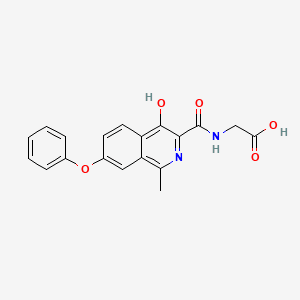
Evrenzo
20 mg, Tabletki powlekane
INN: Roxadustatum
Data updated: 2026-04-13
Available in:
🇨🇿🇩🇪🇬🇧🇪🇸🇫🇷🇵🇱🇵🇹🇸🇰
Form
Tabletki powlekane
Dosage
20 mg
Route
doustna
Storage
—
About This Product
User Reviews
Reviews reflect personal experiences and are not medical advice. Always consult your doctor.
Manufacturer
Astellas Pharma Europe B.V. (Holandia)
Composition
Roxadustatum 20 mg
ATC Code
B03XA05
Source
URPL
Pharmacotherapeutic group: anti-anaemic preparations, other anti-anaemic preparations, ATC code: B03XA05.
Mechanism of action
Roxadustat is a hypoxia-inducible factor, prolyl hydroxylase inhibitor (HIF-PHI). The activity of HIF-PH enzymes controls intracellular levels of HIF, a transcription factor that regulates the expression of genes involved in erythropoiesis. Activation of the HIF pathway is important in the adaptative response to hypoxia to increase red blood cell production. Through the reversible inhibition of HIF-PH, roxadustat stimulates a coordinated erythropoietic response that includes the increase of plasma endogenous erythropoietin (EPO) levels, regulation of iron transporter proteins and reduction of hepcidin (an iron regulator protein that is increased during inflammation in CKD). This results in improved iron bioavailability, increased Hb production and increased red cell mass.
Pharmacodynamic effects
Effects on QTc and heart rate
A thorough QT (TQT) study in healthy subjects with roxadustat at a single therapeutic dose of 2.75 mg/kg and a single supratherapeutic dose of 5 mg/kg (up to 510 mg) did not show a prolongation of the QTc interval. The same thorough QT study demonstrated a placebo-corrected heart rate increase of up to 9 to 10 bpm at 8 to 12 h post-dose for the 2.75 mg/kg dose and 15 to 18 bpm at 6 to 12 h post-dose for the dose of 5 mg/kg.
Clinical efficacy and safety
Development program in anaemia with CKD
Efficacy and safety of roxadustat were evaluated for at least 52 weeks in a globally conducted phase 3 program comprising of 8 multicentre and randomized studies in non-dialysis dependent (NDD) and dialysis-dependent (DD) CKD patients with anaemia (see Table 4).
Three studies in stage 3-5 CKD NDD patients were double-blind and placebo-controlled studies (ALPS, 1517-CL-0608; ANDES, FGCL-4592-060; OLYMPUS, D5740C00001) and one study was open-label ESA-controlled (DOLOMITES, 1517-CL-0610) using darbepoetin alfa as comparator. All NDD studies assessed efficacy and safety in ESA-untreated patients by correcting and thereafter maintaining Hb in the target range of 10 to 12 g/dL (Hb correction setting).
Four open-label ESA-controlled DD studies (control: epoetin alfa and/or darbepoetin alfa) in patients on haemodialysis or peritoneal dialysis assessed the efficacy and safety in different settings:
• in a Hb correction setting (HIMALAYAS, FGCL-4592-063).
• in an ESA conversion setting converting patients from treatment with an ESA to maintain Hb in the target range (PYRENEES, 1517-CL-0613; SIERRAS, FGCL-4592-064).
• or combining the Hb correction and ESA conversion approaches (ROCKIES, D5740C00002).
Patients in the NDD studies had CKD stage 3 to 5 and were not receiving dialysis. All patients had an average Hb ≤10.0 g/dL except patients in the DOLOMITES study (1517-CL-0610), which allowed an average Hb ≤10.5 g/dL. Ferritin levels were required to be ≥30 ng/mL (ALPS, 1517-CL-0608; ANDES, FGCL-4592-060), ≥50 ng/mL (OLYMPUS, D5740C00001) or ≥100 ng/mL (DOLOMITES, 1517-CL-0610). Except for those in the (OLYMPUS, D5740C00001) study, which allowed ESA treatment until 6 weeks prior to randomization, patients could not have received any ESA treatment within 12 weeks of randomization.
Patients in the DD studies had to be on dialysis: stable DD for patients in the PYRENEES study (1517-CL-0613), which was defined as dialysis for longer than 4 months; or incident (ID), DD for patients in the HIMALAYAS study (FGCL-4592-063), which was defined as dialysis ≥2 weeks but ≤4 months. Patients in the SIERRAS (FGCL-4592-064) and ROCKIES studies (D5740C00002) included both stable (approximately 80% to 90%) and ID (approximately 10% to 20%) DD patients. Ferritin was required to be ≥100 ng/mL in all patients. All patients required intravenous or subcutaneous ESA for at least 8 weeks prior to randomization, except those patients in the HIMALAYAS study (FGCL-4592-063) which excluded patients who had received any ESA treatment within 12 weeks prior to randomization.
Treatment with roxadustat followed the principles of dosing instructions as described in section 4.2.
Demographics and all baseline characteristics across individual studies were comparable between the roxadustat and control groups. The median age at randomization was 55 to 69 years, with between 16.6% and 31.1% in the 65-74 age range, and between 6.8% and 35% who were ≥75 years of age. The percentage of female patients ranged from 40.5% to 60.7%. The most commonly represented races across the studies were White, Black or African American and Asian. The most common CKD aetiologies were diabetic and hypertensive nephropathy. Median Hb levels ranged from 8.60 to 10.78 g/dL. Approximately 50-60% of NDD patients and 80-90% of DD patients were iron replete at baseline.
Data from seven phase 3 studies were pooled in two separate populations (three NDD and four DD) (see Table 4).
Three placebo-controlled NDD Studies (2,386 patients on roxadustat; 1,884 patients on placebo) were included in the NDD pool. Data from the phase 3 ESA-controlled NDD DOLOMITES study (1517-CL-0610; 323 patients on roxadustat and 293 patients on darbepoetin alfa) are not included in the NDD pooled analyses as this study is the only open-label, active-controlled study in the NDD population.
Four ESA-controlled DD Studies (2,354 patients on roxadustat; 2,360 patients on ESA [epoetin alfa and/or darbepoetin alfa]) were included in the DD pool. Within the DD pool, two sub pools were established to reflect the two different treatment settings:
• Patients in the DD population who were on dialysis for greater than 2 weeks and less than 4 months were termed incident (ID) DD patients (ID DD pool) reflective of the Hb correction setting.
• The DD patients who were on dialysis after this threshold of four months were termed stable DD patients (Stable DD pool) reflective of the ESA conversion setting.
Table 4. Overview on Roxadustat phase 3 development program in anaemia with CKD
Studies in NDD patients
Placebo-controlled studies (NDD pool)
ESA-control (Darbepoetin alfa)
Setting
Hb correction
Study
ALPS
(1517-CL-0608)
ANDES
(FGCL-4592-060)
OLYMPUS
(D5740C00001)
DOLOMITES
(1517-CL-0610)
Randomized
(roxadustat/comparator)
594
(391/203)
916
(611/305)
2760
(1384/1376)
616
(323/293)
Studies in DD patients
ESA-controlled studies (DD pool)
(Epoetin alfa or Darbepoetin alfa)
Setting
ESA conversion
Hb correction
ESA conversion and Hb correction
Study
PYRENEES
(1517-CL-0613)
SIERRAS
(FGCL-4592-064)
HIMALAYAS
(FGCL-4592-063)
ROCKIES
(D5740C00002)
Randomized
(roxadustat/comparator)
834
(414/420)
740
(370/370)
1039
(522/517)
2101
(1048/1053)
DD: dialysis dependent; ESA: erythropoiesis-stimulating agent; Hb: haemoglobin; NDD: non-dialysis dependent
.
NDD CKD patients
Efficacy results
Course of Hb during treatment
In clinical studies, roxadustat was effective in achieving and maintaining target Hb levels (10-12 g/dL) in patients with CKD anaemia not on dialysis (see Figure 1).
Figure 1. Mean (SE) Hb (g/dL) over time up to week 52 (FAS); NDD pool (Hb correction)
FAS: full analysis set; Hb: haemoglobin; NDD: non-dialysis dependent; SE: standard error.
Key Hb efficacy endpoints in NDD CKD patients
In NDD patients in need of anaemia treatment for Hb correction, the proportion of patients who achieved Hb response during the first 24 weeks was higher in the roxadustat group (80.2%) compared with placebo (8.7%). There was a statistically significant increase in Hb from baseline to weeks 28 to 36 in the roxadustat group (1.91 g/dL) compared with placebo (0.14 g/dL) and the lower limit of the 95% confidence interval is above 1. In the NDD studies, an increase in Hb of at least 1 g/dL was achieved with a median time of 4.1 weeks (see Table 5).
In the open-label ESA-controlled NDD DOLOMITES (1517-CL-0610) study, the proportion of patients who achieved Hb response during the first 24 weeks was non-inferior in the roxadustat group (89.5%) compared with darbepoetin alfa (78%) (see Table 5).
Table 5. Key Hb efficacy endpoints (NDD)
Population
NDD CKD patients
Setting
Hb correction
Hb correction
Endpoint/
Parameter
NDD pool (FAS)
DOLOMITES (PPS)
1517-CL-0610
Roxadustat
n = 2368
Placebo
n = 1865
Roxadustat
n = 286
Darbepoetin alfa
n = 273
Proportion of patients who achieved Hb response
1
Responders, n (%)
[95% CI]
1,899 (80.2)
[78.5, 81.8]
163 (8.7)
[7.5, 10.1]
256 (89.5)
[85.4, 92.8]
213 (78.0)
[72.6, 82.8]
Difference of proportions [95% CI]
71.5 [69.40, 73.51]
11.51 [5.66, 17.36]
Odds ratio [95% CI]
40.49 [33.01, 49.67]
2.48 [1.53, 4.04]
P value
< 0.0001
ND
Change from baseline in Hb (g/dL)
2
Mean (SD) baseline
9.10 (0.74)
9.10 (0.73)
9.55 (0.76)
9.54 (0.69)
Mean (SD) CFB
1.85 (1.07)
0.17 (1.08)
1.85 (1.08)
1.84 (0.97)
LS mean
1.91
0.14
1.85
1.84
LS mean difference [95% CI]
1.77 [1.69, 1.84]
0.02 [-0.13, 0.16]
P value
< 0.0001
0.844
CFB: change from baseline; CI: confidence interval; CKD: chronic kidney disease; FAS: full analysis set; Hb: haemoglobin; LS: Least squares; ND: not done; NDD: non-dialysis dependent; PPS: per protocol set; SD: standard deviation.
1
Hb response within the first 24 weeks.
2
Change from baseline in Hb to Weeks 28 to 36.
DD CKD patients
Course of Hb during treatment
In clinical studies, roxadustat was effective in achieving and maintaining target Hb levels (10-12 g/dL) in CKD patients on dialysis, irrespective of prior ESA treatment (see Figures 2 and 3).
Figure 2. Mean (SE) Hb up to week 52 (FAS); ID DD subpool (Hb correction)
DD: dialysis-dependent; FAS: full analysis set; Hb: haemoglobin; ID: incident; SE: standard error.
Figure 3. Mean (SE) Hb (g/dL) over time up to week 52 (FAS); stable DD subpool (ESA conversion)
DD: dialysis dependent; ESA: erythropoiesis
-
stimulating agent; FAS: full analysis set; Hb: haemoglobin; SE: standard error.
Key Hb efficacy endpoints in DD CKD patients
In DD patients in need of anaemia treatment for Hb correction and those converted from ESA treatment, there was an increase in Hb from baseline to weeks 28 to 36 in the roxadustat group; this increase was comparable to that observed in the ESA group and was above the prespecified noninferiority margin of -0.75 g/dL. The proportion of patients who achieved Hb response during the first 24 weeks was similar in the roxadustat and ESA groups (see Table 6).
Table 6. Key Hb efficacy endpoints (DD)
Population
DD Patients
Setting
Hb Correction
ESA Conversion
Endpoint/
Parameter
ID DD pool (FAS/PPS)
Stable DD Pool (PPS)
Roxadustat
n = 756
ESA
n = 759
Roxadustat
n = 1379
ESA
n = 1417
Change from baseline in Hb (g/dL)
Mean (SD) baseline
8.77 (1.20)
8.82 (1.20)
10.32 (0.99)
10.37 (0.99)
Mean (SD) CFB
2.37 (1.57)
2.12 (1.46)
0.65 (1.15)
0.36 (1.23)
LS mean
2.17
1.89
0.58
0.28
LS mean difference [95% CI]
0.28 [0.110, 0.451]
0.30 [0.228, 0.373]
P value
0.0013
< 0.0001
Proportion of patients who achieved Hb response
1,2
Responders, n (%)
[95% CI]
453 (59.9)
[56.3, 63.4]
452 (59.6)
[56.0, 63.1]
978 (70.9)
[68.4, 73.3]
959 (67.7)
[65.2, 70.1]
Difference of proportions [95% CI]
0.3 [-4.5, 5.1]
2.7 [-0.7, 6.0]
Odds ratio [95% CI]
ND
ND
P value
ND
ND
CFB: change from baseline; CI: confidence interval; CKD: chronic kidney disease; DD: dialysis dependent; ESA: erythropoiesis-stimulating agent; FAS: full analysis set; Hb: haemoglobin; ID: incident; LS: Least squares; ND: not done; PPS: per protocol set; SD: standard deviation.
1
Hb within the target range of 10.0 to 12.0 g/dL during weeks 28 to 36 without having received rescue therapy within 6 weeks prior to and during this 8-week evaluation period.
2
Data in the ID DD pool were only analysed for weeks 28 to 52.
Rescue therapy, RBC transfusion and intravenous iron
The effects of treatment with roxadustat on use of rescue therapy, RBC transfusion and intravenous iron are presented in Table 7 (NDD) and Table 8 (DD). In clinical studies, roxadustat reduced hepcidin (regulator of iron metabolism), reduced ferritin, increased serum iron while transferrin saturation was stable, all which were assessed over time as indicators of iron status.
Low-density lipoprotein (LDL) cholesterol
The effects of treatment with roxadustat on LDL cholesterol are presented in Tables 7 and 8. There was a reduction in mean LDL and high density lipoprotein (HDL) cholesterol levels in roxadustat-treated patients compared with placebo or ESA-treated patients. The effect on LDL cholesterol was more pronounced, leading to a reduction of the LDL/HDL ratio and was observed regardless of the use of statins.
Table 7. Other efficacy endpoints: use of rescue therapy, monthly intravenous iron use and change from baseline in LDL cholesterol (NDD)
Population
NDD CKD patients
Intervention
Correction
Correction
Endpoint/
Parameter
NDD pool (FAS)
DOLOMITES (1517-CL-0610)
Roxadustat
n = 2368
Placebo
n = 1865
Roxadustat
n = 322
Darbepoetin alfa
n = 292
Number of patients with rescue therapy, n (%)
1
211 (8.9)
580 (31.1)
ND
RBC
118 (5.0)
240 (12.9)
IV iron
50 (2.1)
90 (4.8)
ESA
48 (2.0)
257 (13.8)
IR
10.4
41.0
Hazard ratio
0.19
ND
95% CI
0.16, 0.23
P value
< 0.0001
Number of Patients with IV Iron, n (%)
2
ND
20 (6.2)
37 (12.7)
IR
9.9
21.2
Hazard ratio
0.45
95% CI
0.26, 0.78
P value
0.004
Change from baseline in LDL cholesterol (mmol/L) to weeks 12 to 28
3
Analysis using ANCOVA
LS mean
-0.446
0.066
-0.356
0.047
95% CI
-0.484, -0.409
0.017, 0.116
-0.432, -0.280
-0.033, 0.127
LS mean difference (R-comparator)
-0.513
-0.403
95% CI
-0.573, -0.453
-0.510, -0.296
P value
< 0.0001
< 0.001
P values presented for the NDD pool are nominal p values.
ANCOVA: analysis of covariance; CI: confidence interval; ESA: erythropoiesis-stimulating agent; FAS: full analysis set; IR: incidence rate (per 100 patient-years at risk); IV: intravenous; LDL: low density lipoprotein; LS: least squares; ND: not done; NDD: non-dialysis-dependent; R: roxadustat; RBC: red blood cell;
1
For use of rescue therapy the NDD pool was analysed up to week 52.
2
During weeks 1-36.
3
Change from baseline in LDL cholesterol was assessed only through week 24 for study OLYMPUS (D5740C00001).
Table 8. Other efficacy endpoints: use of rescue therapy, monthly intravenous iron use and change from baseline in LDL cholesterol (DD)
Population
DD CKD patients
Intervention
Correction
Conversion
Endpoint/
Parameter
ID DD pool (FAS)
Stable DD pool (FAS)
Roxadustat
n = 756
ESA
n = 759
Roxadustat
n = 1586
ESA
n = 1589
Mean monthly IV iron over weeks 28 - 52 (mg)
1
n
606
621
1414
1486
Mean (SD)
53.57
(143.097)
70.22
(173.33)
42.45
(229.80)
61.99
(148.02)
Change from baseline in LDL cholesterol (mmol/L) to weeks 12 to 28
Analysis using ANCOVA
LS mean
-0.610
-0.157
-0.408
-0.035
95% CI
-0.700, -0.520
-0.245, -0.069
-0.449, -0.368
-0.074, 0.003
LS mean difference
(R-comparator)
-0.453
-0.373
95% CI
-0.575, -0.331
-0.418, -0.328
P value
<0.0001
<0.0001
P values presented for the ID DD and stable DD pools are nominal p values.
ANCOVA: analysis of covariance; CI: confidence interval; CKD: chronic kidney disease; DD: dialysis-dependent; ESA: erythropoiesis-stimulating agent; FAS: full analysis set; ID: incident dialysis; IV: intravenous; LDL: low density lipoprotein; LS: least squares; R: roxadustat.
1
Time period for PYRENEES (1517-CL-0613) study was up to week 36, and the time period for ROCKIES (D5740C0002) study was from week 36 through end of study.
In the dialysis study SIERRAS (FGCL-4592-064) a significantly lower proportion of patients received a red blood cell transfusion during treatment in the roxadustat group compared with the EPO-alfa group (12.5% versus 21.1%); the numerical reduction was not statistically significant in the ROCKIES (D5740C00002) study (9.8% versus 13.2%).
Patient reported outcomes not on dialysis
In the DOLOMITES study (1517-CL-0610) noninferiority of roxadustat to darbepoetin was established with regards to SF-36 PF and SF-36 VT.
Patient reported outcomes on dialysis
In the PYRENEES study (1517-CL-0613), non-inferiority of roxadustat to ESAs was established regarding SF-36 PF and SF-36 VT changes from baseline to weeks 12 to 28.
Clinical safety
Meta-analysis of pooled, adjudicated cardiovascular events
A meta-analysis, of adjudicated major adverse cardiovascular events (MACE; a composite of all-cause mortality [ACM], myocardial infarction, stroke) and MACE+ (a composite of ACM, myocardial infarction, stroke, and hospitalisation for either unstable angina or congestive heart failure), from the phase 3 study program was conducted in 8984 patients.
MACE, MACE+ and ACM outcomes are presented for three datasets using the pooled hazard ratio (HR) and its 95% confidence interval (CI). The three datasets include:
• A pooled placebo-controlled Hb correction dataset in NDD patients [includes patients from studies OLYMPUS (D5740C00001), ANDES (FGCL-4592-060) and ALPS (1517-CL-0608); see Table 4]
• A pooled ESA-controlled Hb correction dataset in NDD and ID-DD patients [includes patients from studies DOLOMITES (1517-CL-0610), HIMALAYAS (FGCL-4592-063), and the ID-DD patients of studies SIERRAS (FGCL-4592-064) and ROCKIES (D5740C00002); see Table 4]
• A pooled ESA-controlled ESA conversion dataset in Stable DD patients [includes patients from study PYRENEES (1517-CL-0613) and Stable DD patients from studies ROCKIES (D5740C00002) and SIERRAS (FGCL-4592-064); see Table 4]
MACE, MACE+ and ACM in the placebo-controlled Hb correction set of non-dialysis-dependent CKD patients
In NDD patients the analysis for MACE, MACE+ and ACM of the on-treatment analyses included all data from the start of study treatment until 28 days of the end of treatment follow-up. The on-treatment analyses used a Cox model weighted inversely for the probability of censoring (IPCW method) which aims to correct for follow-up time differences between roxadustat and placebo including identified contributors to increased risk and early discontinuation, in particular estimated glomerular filtration rate (eGFR) determinants and Hb at baseline and over time. Whether any residual confounding is present with this model remains uncertain. The HRs for the on-treatment analyses were 1.26, 1.17 and 1.16 (see Table 9). The ITT analyses included all data from the start of study treatment until the end of posttreatment safety follow-up. The ITT analysis has been included to illustrate an imbalance in risk distribution favouring placebo in the on-treatment analysis, however, ITT analyses generally demonstrate a dilution of study drug treatment effect and in these ITT analyses bias cannot be completely excluded, especially as ESA rescue therapy was introduced after study treatment discontinuation. The HRs were 1.10, 1.07 and 1.08, with upper limits of the 95% CIs of 1.27, 1.21 and 1.26, respectively.
Table 9. CV safety and mortality in placebo-controlled Hb correction NDD pool
MACE
MACE+
ACM
Roxadustat
n = 2386
Placebo
n = 1884
Roxadustat
n = 2386
Placebo
n = 1884
Roxadustat
n = 2386
Placebo
n = 1884
On-treatment
Number of patients with events (%)
344 (14.4)
166 (8.8)
448 (18.8)
242 (12.8)
260 (10.9)
122 (6.5)
FAIR
8.7
6.8
11.6
10.1
6.4
5.0
HR (95% CI)
1.26 (1.02, 1.55)
1.17 (0.99, 1.40)
1.16 (0.90, 1.50)
ITT
Number of patients with events (%)
480 (20.1)
350 (18.6)
578 (24.2)
432 (22.9)
400 (16.8)
301 (16)
FAIR
10.6
10.3
13.2
13.2
8.3
8.1
HR (95% CI)
1.10 (0.96, 1.27)
1.07 (0.94, 1.21)
1.08 (0.93, 1.26)
ACM: all-cause mortality; ACM is a component of MACE/MACE+, CI: confidence interval; FAIR: follow-up adjusted incidence rate (number of patients with event/100 patient years); HR: hazard ratio; ITT: intent-to-treat; MACE: major adverse cardiovascular event (death, non-fatal myocardial infarction and/or stroke); MACE+: major adverse cardiovascular event including hospitalisations for either unstable angina and/or congestive heart failure.
MACE, MACE+ and ACM in the ESA-controlled Hb correction set of non-dialysis-dependent and incident dialysis-dependent CKD patients
In the Hb correction setting of NDD and ID-DD patients baseline characteristics and treatment discontinuation rates were comparable between the pooled roxadustat and pooled ESA patients. The analysis for MACE, MACE+ and ACM observed on treatment showed HRs of 0.79, 0.78 and 0.78, with upper limits of the 95% CIs of 1.02, 0.98 and 1.05, respectively (see Table 10). The on-treatment analyses support no evidence of increased cardiovascular safety or mortality risk with roxadustat compared with ESA in CKD patients requiring Hb correction.
Table 10. CV safety and mortality in ESA-controlled Hb correction pool
MACE
MACE+
ACM
Roxadustat
n = 1083
ESA
n = 1059
Roxadustat
n = 1083
ESA
n = 1059
Roxadustat
n = 1083
ESA
n = 1059
On-treatment
Number of patients with events (%)
105 (9.7)
136 (12.8)
134 (12.4)
171 (16.1)
74 (6.8)
99 (9.3)
IR
6.5
8.2
8.3
10.3
4.6
6.0
HR (95% CI)
0.79 (0.61, 1.02)
0.78 (0.62, 0.98)
0.78 (0.57, 1.05)
ACM: all-cause mortality; ACM is a component of MACE/MACE+, CI: confidence interval; ESA: erythropoiesis-stimulating agent; HR: hazard ratio; IR: incidence rate (number of patients with event/100 patient years); MACE: major adverse cardiovascular event (death, non-fatal myocardial infarction and/or stroke); MACE+: major adverse cardiovascular event including hospitalisations for either unstable angina and/or congestive heart failure.
MACE, MACE+ and ACM in ESA-controlled ESA conversion set of stable dialysis-dependent CKD patients
In stable DD patients converting from ESA analysis results for MACE, MACE+ and ACM observed on treatment showed HRs of 1.18, 1.03 and 1.23, with upper limits of the 95% CIs for HRs of 1.38, 1.19 and 1.49, respectively (see Table 11). The results in Table 11 should be interpreted with caution as patients allocated to roxadustat were switched from ESA at the start of the study and the impact of an inherent risk in switching to any new treatment versus remaining on a treatment with a stabilised Hb may confound the observed results and thus any comparison of treatment effect estimates cannot be reliably established.
Table 11. CV safety and mortality in ESA-controlled ESA conversion stable DD pool
MACE
MACE+
ACM
Roxadustat
n = 1594
ESA
n = 1594
Roxadustat
n = 1594
ESA
n = 1594
Roxadustat
n = 1594
ESA
n = 1594
On-treatment
Number of patients with events (%)
297 (18.6)
301 (18.9)
357 (22.4)
403 (25.3)
212 (13.3)
207 (13.0)
IR
10.4
9.2
12.5
12.3
7.4
6.3
HR (95% CI)
1.18 (1.00, 1.38)
1.03 (0.90, 1.19)
1.23 (1.02, 1.49)
ACM: all-cause mortality; ACM is a component of MACE/MACE+, CI: confidence interval; ESA: erythropoiesis-stimulating agent; HR: hazard ratio; IR: incidence rate (number of patients with event/100 patient years); MACE: major adverse cardiovascular event (death, non-fatal myocardial infarction and/or stroke); MACE+: major adverse cardiovascular event including hospitalisations for either unstable angina and/or congestive heart failure.
⚠️ Warnings
No special requirements for disposal.
Any unused medicinal product or waste material should be disposed of in accordance with local requirements.