This information is for educational purposes only. It is not intended as medical advice. Always consult a qualified healthcare professional.
Rx
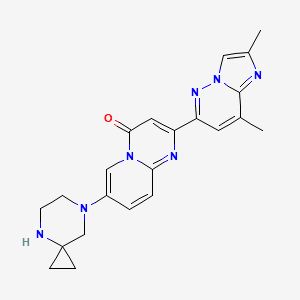
Evrysdi
0,75 mg/ml, Proszek do sporządzania roztworu doustnego
INN: Risdiplamum
Data updated: 2026-04-13
Available in:
🇨🇿🇩🇪🇬🇧🇫🇷🇵🇱🇵🇹🇸🇰
Form
Proszek do sporządzania roztworu doustnego
Dosage
0,75 mg/ml
Route
doustna
Storage
—
About This Product
User Reviews
Reviews reflect personal experiences and are not medical advice. Always consult your doctor.
Manufacturer
Roche Registration GmbH (Niemcy)
Composition
Risdiplamum 0,75 mg/ml
ATC Code
M09AX10
Source
URPL
Pharmacotherapeutic group: Other drugs for disorders of the musculo-skeletal system
ATC code: M09AX10
Mechanism of action
Risdiplam is a survival of motor neuron 2 (
SMN2
) pre-mRNA splicing modifier designed to treat SMA caused by mutations of the
SMN1
gene in chromosome 5q that lead to SMN protein deficiency. Functional SMN protein deficiency is directly linked to the SMA pathophysiology which includes progressive loss of motor neurons and muscle weakness. Risdiplam corrects the splicing of
SMN2
to shift the balance from exon 7 exclusion to exon 7 inclusion into the mRNA transcript, leading to an increased production of functional and stable SMN protein. Thus, risdiplam treats SMA by increasing and sustaining functional SMN protein levels.
Pharmacodynamic effects
In the studies FIREFISH (patients aged 2-7 months at enrolment), SUNFISH (patients aged 2-25 years at enrolment), and JEWELFISH (patients aged 1-60 years at enrolment) in infantile-onset SMA and later-onset SMA patients, risdiplam led to an increase in SMN protein in blood with a greater than 2-fold median change from baseline within 4 weeks of treatment initiation across all SMA types studied. The increase was sustained throughout the treatment period (of at least 24 months).
Cardiac electrophysiology
The effect of risdiplam on the QTc interval was evaluated in a study in 47 healthy adult subjects. At the therapeutic exposure, risdiplam did not prolong the QTc interval.
Clinical efficacy and safety
The efficacy of Evrysdi for the treatment of SMA patients with infantile-onset (SMA Type 1) and later-onset SMA (SMA type 2 and 3) was evaluated in 2 pivotal clinical studies, FIREFISH and SUNFISH. Efficacy data of Evrysdi for the treatment of pre-symptomatic SMA patients was evaluated in the RAINBOWFISH clinical study. Patients with a clinical diagnosis of Type 4 SMA have not been studied in clinical trials.
Infantile-onset SMA
Study BP39056 (FIREFISH) is an open-label, 2-part study to investigate the efficacy, safety, PK and pharmacodynamics (PD) of Evrysdi in symptomatic Type 1 SMA patients (all patients had genetically confirmed disease with 2 copies of the
SMN2
gene). Part 1 of FIREFISH was designed as a dose-finding part of the study. The confirmatory Part 2 of the FIREFISH study assessed the efficacy of Evrysdi. Patients from Part 1 did not take part in Part 2.
The key efficacy endpoint was the ability to sit without support for at least 5 seconds, as measured by Item 22 of the Bayley Scales of Infant and Toddler Development – Third Edition (BSID-III) gross motor scale, after 12 months of treatment.
FIREFISH Part 2
In FIREFISH Part 2, 41 patients with Type 1 SMA were enrolled. The median age of onset of clinical signs and symptoms of Type 1 SMA was 1.5 months (range: 1.0-3.0 months), 54% were female, 54% Caucasian and 34% Asian. The median age at enrolment was 5.3 months (range: 2.2-6.9 months) and the median time between onset of symptoms and first dose was 3.4 months (range: 1.0-6.0 months). At baseline, the median Children's Hospital of Philadelphia Infant Test for Neuromuscular Disease (CHOP-INTEND) score was 22.0 points (range: 8.0-37.0) and the median Hammersmith Infant Neurological Examination Module 2 (HINE-2) score was 1.0 (range: 0.0-5.0).
The primary endpoint was the proportion of patients with the ability to sit without support for at least 5 seconds after 12 months of treatment (BSID-III gross motor scale, Item 22). The key efficacy endpoints of Evrysdi treated patients are shown in Table 3.
Table 3. Summary of key efficacy results at month 12 and month 24 (FIREFISH Part 2)
Efficacy Endpoints
Proportion of Patients
N=41 (90% CI)
Month 12
Month 24
Motor function and development milestones
BSID-III: sitting without support for at least 5 seconds
29.3%
(17.8%, 43.1%)
p <0.0001
a
61.0%
(46.9%, 73.8%)
CHOP-INTEND: score of 40 or higher
56.1%
(42.1%, 69.4%)
75.6%
(62.2%, 86.1%)
CHOP-INTEND: increase of ≥4 points from baseline
90.2%
(79.1%, 96.6%)
90.2%
(79.1%, 96.6%)
HINE-2: motor milestone responders
b
78.0%
(64.8%, 88.0%)
85.4%
(73.2%, 93.4%)
HINE-2: sitting without support
c
24.4%
(13.9%, 37.9%)
53.7%
(39.8%, 67.1%)
Survival and event-free survival
Event-free survival
d
85.4%
(73.4%, 92.2%)
82.9%
(70.5%, 90.4%)
Alive
92.7%
(82.2%, 97.1%)
92.7%
(82.2%, 97.1%)
Feeding
Ability to feed orally
e
82.9%
(70.3%, 91.7%)
85.4%
(73.2%, 93.4%)
Abbreviations: CHOP-INTEND=Children's Hospital of Philadelphia Infant Test of Neuromuscular Disorders; HINE-2=Module 2 of the Hammersmith Infant Neurological Examination.
a
p-value is based on a one-sided exact binomial test. The result is compared to a threshold of 5%.
b
According to HINE-2: ≥2 point increase [or maximal score] in ability to kick, OR ≥1 point increase in the motor milestones of head control, rolling, sitting, crawling, standing or walking, AND improvement in more categories of motor milestones than worsening is defined as a responder for this analysis.
c
Sitting without support includes patients that achieved “stable sit” (24%, 10/41) and “pivots (rotates)” (29%, 12/41) as assessed by the HINE-2 at Month 24.
d
An event is meeting the endpoint of permanent ventilation defined as tracheostomy or ≥16 hours of non-invasive ventilation per day or intubation for > 21 consecutive days in the absence of, or following the resolution of, an acute reversible event. Three patients died within the first 3 months following study enrolment and 4 patients met the endpoint of permanent ventilation before Month 24. These 4 patients achieved an increase of at least 4 points in their CHOP-INTEND score from baseline.
e
Includes patients who were fed exclusively orally (29 patients overall) and those who were fed orally in combination with a feeding tube (6 patients overall) at Month 24.
At Month 24, 44% of patients achieved sitting without support for 30 seconds (BSID-III, Item 26). Patients continued to achieve additional motor milestones as measured by the HINE-2; 80.5% were able to roll, and 27% of patients achieved a standing measure (12% supporting weight and 15% standing with support).
Untreated patients with infantile-onset SMA would never be able to sit without support and only 25% would be expected to survive without permanent ventilation beyond 14 months of age.
Figure 1. Kaplan-Meier plot of event-free survival (FIREFISH Part 1 and Part 2)
+ Censored: two patients in Part 2 were censored because the patients attended the Month 24 visit early, one patient in Part 1 was censored after discontinuing treatment and died 3.5 months later
Figure 2. Mean change from baseline in CHOP-INTEND total score (FIREFISH Part 2)
FIREFISH Part 1
The efficacy of Evrysdi in Type 1 SMA patients is also supported by results from FIREFISH Part 1. For the 21 patients from Part 1, the baseline characteristics were consistent with symptomatic patients with Type 1 SMA. The median age at enrollment was 6.7 months (range: 3.3-6.9 months) and the median time between onset of symptoms and first dose was 4.0 months (range: 2.0-5.8 months).
A total of 17 patients received the therapeutic dose of Evrysdi (dose selected for Part 2). After 12 months of treatment, 41% (7/17) of these patients were able to sit independently for at least 5 seconds (BSID-III, Item 22). After 24 months of treatment, 3 more patients receiving the therapeutic dose were able to sit independently for at least 5 seconds, leading to a total of 10 patients (59%) achieving this motor milestone.
After 12 months of treatment, 90% (19/21) of patients were alive and event-free (without permanent ventilation) and reached 15 months of age or older. After a minimum of 33 months of treatment, 81% (17/21) of patients were alive and event-free and reached an age of 37 months or older (median 41months; range 37 to 53 months), see Figure 1. Three patients died during treatment and one patient died 3.5 months after discontinuing treatment.
Later Onset SMA
Study BP39055 (SUNFISH), is a 2-part, multicentre study to investigate the efficacy, safety, PK and PD of Evrysdi in SMA Type 2 or Type 3 patients between 2-25 years of age. Part 1 was the exploratory dose-finding portion and Part 2 was the randomized, double-blind, placebo-controlled confirmatory portion. Patients from Part 1 did not take part in Part 2.
The primary endpoint was the change from baseline score at Month 12 on the Motor Function Measure-32 (MFM32). The MFM32 has the ability to assess a wide range of motor function across a broad range of SMA patients. The total MFM32 score is expressed as a percentage (range: 0-100) of the maximum possible score, with higher scores indicating greater motor function.
SUNFISH Part 2
SUNFISH Part 2 is the randomized, double-blinded, placebo-controlled portion of the SUNFISH study in 180 non-ambulant patients with Type 2 (71%) or Type 3 (29%) SMA. Patients were randomized with 2:1 ratio to receive either Evrysdi at the therapeutic dose (see section 4.2) or placebo. Randomization was stratified by age group (2 to 5, 6 to 11, 12 to 17, 18 to 25 years old).
The median age of patients at the start of treatment was 9.0 years old (range 2-25 years old), the median time between onset of initial SMA symptoms to first treatment was 102.6 (1-275) months. Overall, 30% were 2 to 5 years of age, 32% were 6 to 11 years of age, 26% were 12-17 years of age, and 12% were 18 to 25 years of age at study enrolment. Of the 180 patients included in the study, 51% were female, 67% Caucasian and 19% Asian. At baseline, 67% of patients had scoliosis (32% of patients with severe scoliosis). Patients had a mean baseline MFM32 score of 46.1 and Revised Upper Limb Module (RULM) score of 20.1. The baseline demographic characteristics were balanced between Evrysdi and placebo arms with the exception of scoliosis (63% of patients in the Evrysdi arm and 73% of patients in the placebo control).
The primary analysis for SUNFISH Part 2, the change from baseline in MFM32 total score at Month 12, showed a clinically meaningful and statistically significant difference between patients treated with Evrysdi and placebo. The results of the primary analysis and key secondary endpoints are shown in Table 4, Figure 3, and Figure 4.
Table 4. Summary of efficacy in patients with later-onset SMA at month 12 of treatment (SUNFISH Part 2)
Endpoint
Evrysdi
(N = 120)
Placebo
(N = 60)
Primary Endpoint:
Change from baseline in MFM32 total score
1
at Month 12
LS mean (95%, CI)
1.36
(0.61, 2.11)
-0.19
(-1.22, 0.84)
Difference from placebo
Estimate (95% CI)
p-value
2
1.55
(0.30, 2.81)
0.0156
Secondary Endpoints:
Proportion of patients with a change from baseline in MFM32 total score
1
of 3 or more at Month 12 (95% CI)
1
38.3%
(28.9, 47.6)
23.7%
(12.0, 35.4)
Odds ratio for overall response (95% CI)
Adjusted(unadjusted) p-value
3,4
2.35 (1.01, 5.44)
0.0469 (0.0469)
Change from baseline in RULM total score
5
at Month 12
LS mean (95% CI)
1.61
(1.00, 2.22)
0.02
(-0.83, 0.87)
Difference from placebo estimate (95% CI)
Adjusted (unadjusted) p-value
2,4
1.59 (0.55, 2.62)
0.0469 (0.0028)
LS=least squares
1.
Based on the missing data rule for MFM32, 6 patients were excluded from the analysis (Evrysdi n=115; placebo control n=59).
2.
Data analysed using a mixed model repeated measure with baseline total score, treatment, visit, age group, treatment-by-visit and baseline-by-visit.
3.
Data analysed using logistic regression with baseline total score, treatment and age group.
4.
The adjusted p-value was obtained for the endpoints included in the hierarchical testing and was derived based on all the p-values from endpoints in order of the hierarchy up to the current endpoint
5.
Based on the missing data rule for RULM, 3 patients were excluded from the analysis (Evrysdi n=119; placebo control n=58).
Upon completion of 12 months of treatment, 117 patients continued to receive Evrysdi. At the time of the 24 month analysis, these patients who were treated with Evrysdi for 24 months overall experienced maintenance of improvement in motor function between month 12 and month 24. The mean change from baseline for MFM32 was 1.83 (95% CI: 0.74, 2.92) and for RULM was 2.79 (95% CI: 1.94, 3.64).
Figure 3. Mean change from baseline in MFM32 total score over 12 months in SUNFISH Part 2
1
1
The least squares (LS) mean difference for change from baseline in MFM32 score [95% CI]
Figure 4. Mean change from baseline in RULM total score over 12 months in SUNFISH Part 2
1
1
The least squares (LS) mean difference for change from baseline in RULM score [95% CI]
SUNFISH Part 1
Efficacy in later-onset SMA patients was also supported by results from Part 1, the dose-finding part of SUNFISH. In Part 1, 51 patients with Type 2 and 3 SMA (including 7 ambulatory patients) between 2 to 25 years of age were enrolled. After 1 year of treatment there was a clinically meaningful improvement in motor function as measured by MFM32, with a mean change from baseline of 2.7 points (95% CI: 1.5, 3.8). The improvement in MFM32 was maintained up to 2 years on treatment (mean change of 2.7 points [95% CI: 1.2, 4.2]).
Use in patients previously treated with other SMA-modifying therapies (JEWELFISH)
Study BP39054 (JEWELFISH, n = 174) is a single arm, open-label study to investigate the safety, tolerability, PK and PD of Evrysdi in patients with infantile-onset and later-onset SMA (median age 14 years [range 1 - 60 years]), who had previously received treatment with other approved (nusinersen n = 76, onasemnogene abeparvovec n = 14) or investigational SMA modifying therapies. At baseline, out of the 168 patients aged 2 - 60 years, 83% of patients had scoliosis and 63% had a Hammersmith Functional Motor Scale Expanded (HFMSE) score < 10 points.
At the analysis at month 24 of treatment, patients 2 - 60 years of age showed overall stabilization in motor function in MFM-32 and RULM (n = 137 and n = 133, respectively). Patients less than 2 years (n = 6) maintained or gained motor milestones such as head control, rolling and sitting independently. All ambulatory patients (aged 5 - 46 years, n = 15) retained their ability to walk.
Pre-symptomatic SMA (RAINBOWFISH)
Study BN40703 (RAINBOWFISH) is an open-label, single-arm, multicenter clinical study to investigate the efficacy, safety, pharmacokinetics, and pharmacodynamics of Evrysdi in infants from birth to 6 weeks of age (at first dose) who have been genetically diagnosed with SMA but do not yet present with symptoms.
The efficacy in pre-symptomatic SMA patients was evaluated at Month 12 in 26 patients [intent-to-treat (ITT) population] treated with Evrysdi: eight patients, 13 patients, and 5 patients had 2, 3, and ≥4 copies of the
SMN2
gene, respectively. The median age of these patients at first dose was 25 days (range: 16 to 41 days), 62% were female, and 85% were Caucasian. At baseline, the median CHOP-INTEND score was 51.5 (range: 35.0 to 62.0), the median HINE-2 score was 2.5 (range: 0 to 6.0), and the median ulnar nerve compound muscle action potential (CMAP) amplitude was 3.6 mV (range: 0.5 to 6.7 mV).
The primary efficacy population (N=5) included patients with 2
SMN2
copies and a baseline CMAP amplitude ≥ 1.5 mV. In these patients, the median CHOP-INTEND score was 48.0 (range: 36.0 to 52.0), the median HINE-2 score was 2.0 (range 1.0 to 3.0), and the median CMAP amplitude was 2.6 mV (range: 1.6 to 3.8 mV) at baseline.
The primary endpoint was the proportion of patients in the primary efficacy population with the ability to sit without support for at least 5 seconds (BSID-III gross motor scale, Item 22) at Month 12; a statistically significant and clinically meaningful proportion of patients achieved this milestone compared to the predefined performance criterion of 5%.
The key efficacy endpoints of Evrysdi treated patients are shown in Table 5 and 6, and in Figure 5.
Table 5. Sitting ability as defined by BSID-III Item 22 for pre-symptomatic patients at Month 12
Efficacy Endpoint
Population
Primary Efficacy (N=5)
Patients with 2
SMN2
copies
a
(N=8)
ITT
(N=26)
Proportion of patients sitting without support for at least 5 seconds (BSID-III, Item 22); (90% CI)
80%
(34.3%, 99.0%)
p
< 0.0001
b
87.5%
(52.9%, 99.4%)
96.2%
(83.0%, 99.8%)
Abbreviations: BSID-III = Bayley Scales of Infant and Toddler Development – Third Edition; CI=Confidence Interval; ITT=Intent-to-treat.
a
Patients with 2
SMN2
copies had a median CMAP amplitude of 2.0 (range 0.5 – 3.8) at baseline.
b
p-value is based on a one-sided exact binomial test. The result is compared to a threshold of 5%.
Additionally, 80% (4/5) of the primary efficacy population, 87.5% (7/8) of patients with 2
SMN2
copies, and 80.8% (21/26) of patients in the ITT population achieved sitting without support for 30 seconds (BSID-III, Item 26).
Patients in the ITT population also achieved motor milestones as measured by the HINE-2 at Month 12 (N=25). In this population 96.0% of patients could sit [1 patient (1/8 patients with 2
SMN2
copies) achieved stable sit and 23 patients (6/8, 13/13, 4/4 of patients with 2, 3, and ≥4
SMN2
copies, respectively) could pivot/rotate]. In addition, 84% of patients could stand; 32% (N=8) patients could stand with support (3/8, 3/13 and 2/4 patients with 2, 3, and ≥4
SMN2
copies, respectively) and 52% (N=13) patients could stand unaided (1/8, 10/13 and 2/4 of patients with 2, 3, and ≥4
SMN2
copies, respectively). Furthermore, 72% of patients could bounce, cruise or walk; 8% (N=2) patients could bounce (2/8 patients with 2
SMN2
copies), 16% (N=4) could cruise (3/13 and 1/4 patients with 3 and ≥4
SMN2
copies, respectively) and 48% (N=12) could walk independently (1/8, 9/13 and 2/4 patients with 2, 3, and ≥4
SMN2
copies, respectively). Seven patients were not tested for walking at Month 12.
Table 6. Summary of key efficacy endpoints for pre-symptomatic patients at Month 12
Efficacy Endpoints
ITT population (N=26)
Motor Function
Proportion of patients who achieve a Total score of 50 or higher in the CHOP-INTEND (90 CI%)
92%
a
(76.9%, 98.6%)
Proportion of patients who achieve a Total score of 60 or higher in the CHOP-INTEND (90 CI%)
80%
a
(62.5%, 91.8%)
Feeding
Proportion of patients with the ability to feed orally (90 CI%)
96.2%
b
(83.0%, 99.8%)
Healthcare Utilization
Proportion of patients with no hospitalisations
c
(90 CI%)
92.3%
(77.7%, 98.6%)
Event-Free Survival
d
Proportion of patients with Event-Free Survival (90 CI%)
100%
(100%, 100%)
Abbreviations: CHOP-INTEND=Children's Hospital of Philadelphia Infant Test of Neuromuscular Disorders; CI=Confidence Interval
a
Based on N=25
b
One patient was not assessed.
c
Hospitalisations include all hospital admissions which spanned at least two days, and which are not due to study requirements.
d
An event refers to death or permanent ventilation; permanent ventilation is defined as tracheostomy or ≥16 hours of non-invasive ventilation per day or intubation for > 21 consecutive days in the absence of, or following the resolution of, an acute reversible event.
Figure 5. Median Total CHOP-INTEND Scores by Visit and
SMN2
copy number (ITT population)
Abbreviations: IQR = Interquartile range; SMN2 = Survival of Motor Neuron 2.
⚠️ Warnings
Evrysdi powder must be constituted to the oral solution by a HCP (eg. pharmacist) prior to being dispensed.
Preparation
Caution should be exercised in the handling of Evrysdi powder for oral solution (see section 4.4). Avoid inhalation and direct contact with skin or mucous membranes with the dry powder and the constituted solution.
Wear disposable gloves during constitution and while wiping the outer surface of the bottle/cap and cleaning the working surface after constitution. If contact occurs, wash thoroughly with soap and water; rinse eyes with water.
Instructions for constitution:
1. Gently tap the bottom of the closed glass bottle to loosen the powder.
2. Remove the cap. Do not throw away the cap.
3. Carefully pour 79 mL of purified water or water for injection into the Evrysdi bottle to yield the 0.75 mg/mL oral solution.
4. Hold the medicine bottle on the table with one hand. Insert the press-in bottle adaptor into the opening by pushing it down with the other hand. Ensure the adaptor is completely pressed against the bottle lip.
5. Put the cap back on the bottle and close the bottle tightly. Ensure it is completely closed and then shake well for 15 seconds. Wait for 10 minutes. You should have obtained a clear solution. Afterwards, shake well again for another 15 seconds.
6. Write the “Discard after” date of the solution on the bottle label and carton. (The “Discard after” date is calculated as 64 days after constitution, the day of constitution is counted as day 0). Put the bottle back in its original carton with syringes (in pouches), Package Leaflet, and Instructions for Use booklet. Store the carton in the refrigerator (2 to 8°C).
Discard any unused portion 64 days after constitution.
Any unused medicinal product or waste material should be disposed of in accordance with local requirements.