This information is for educational purposes only. It is not intended as medical advice. Always consult a qualified healthcare professional.
OTC
Fampridine Accord
10 mg, Tabletki o przedłużonym uwalnianiu
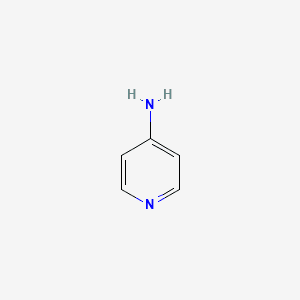
INN: Fampridinum
Data updated: 2026-04-13
Available in:
🇨🇿🇩🇪🇬🇧🇫🇷🇵🇱🇵🇹🇸🇰🇺🇦
Form
Tabletki o przedłużonym uwalnianiu
Dosage
10 mg
Route
doustna
Storage
—
User Reviews
Reviews reflect personal experiences and are not medical advice. Always consult your doctor.
About This Product
Manufacturer
Accord Healthcare S.L.U. (Polska)
Composition
Fampridinum 10 mg
ATC Code
N07XX07
Source
URPL
Pharmacotherapeutic group: Other nervous system drugs, ATC code: N07XX07.
Pharmacodynamic effects
Fampyra is a potassium channel blocker. By blocking potassium channels, fampridine reduces the leakage of ionic current through these channels, thereby prolonging repolarization and thus enhancing action potential formation in demyelinated axons and neurological function. Presumably, by enhancing action potential formation, more impulses might be conducted in the central nervous system.
Clinical efficacy and safety
Three phase III, randomised, double-blind, placebo controlled confirmatory studies, (MS-F203 and MS-F204 and 218MS305) have been performed. The proportion of responders was independent of concomitant immunomodulatory therapy (including interferons, glatiramer acetate, fingolimod and natalizumab). The Fampyra dose was 10 mg twice a day (BID).
Studies MS-F203 and MS-F204
The primary endpoint in studies MS-F203 and MS-F204 was the responder rate in walking speed as measured by the Timed 25-foot Walk (T25FW). A responder was defined as a patient who consistently had a faster walking speed for at least three visits out of a possible four during the double blind period as compared to the maximum value among five off-treatment visits.
A significantly greater proportion of Fampyra treated patients were responders as compared to placebo (MS-F203: 34.8% vs. 8.3%, p< 0.001; MS-F204: 42.9% vs. 9.3%, p< 0.001).
Patients who responded to Fampyra increased their walking speed on average by 26.3% vs 5.3% on placebo (p< 0.001) (MS-F203) and 25.3% vs 7.8% (p< 0.001) (MS-F204). The improvement appeared rapidly (within weeks) after starting the treatment.
Statistically and clinically meaningful improvements in walking were seen, as measured by the 12- item Multiple Sclerosis Walking Scale.
Table 2: Studies MS-F203 and MS-F204
STUDY *
MS-F203
MS-F204
Placebo
Fampyra
10 mg BID
Placebo
Fampyra
10 mg BID
n of subjects
72
224
118
119
Consistent improvement
8.3%
34.8%
9.3%
42.9%
Difference
26.5%
33.5%
CI
95%
P-value
17.6%, 35.4%
< 0.001
23.2%, 43.9%
< 0.001
≥ 20% improvement
11.1%
31.7%
15.3%
34.5%
Difference
20.6%
19.2%
CI
95%
P-value
11.1%,30.1%
< 0.001
8.5%,29.9%
< 0.001
Walking speed Feet/sec
Ft per sec
Ft per sec
Ft per sec
Ft per sec
Baseline
2.04
2.02
2.21
2.12
Endpoint
2.15
2.32
2.39
2.43
Change
0.11
0.30
0.18
0.31
Difference
0.19
0.12
p-value
0.010
0.038
Average % Change
5.24
13.88
7.74
14.36
Difference
8.65
6.62
p-value
< 0.001
0.007
MSWS-12-score (mean, sem)
Baseline
69.27 (2.22)
71.06 (1.34)
67.03 (1.90)
73.81 (1.87)
Average change
-0.01 (1.46)
-2.84 (0.878)
0.87 (1.22)
-2.77 (1.20)
Difference
2.83
3.65
p-value
0.084
0.021
LEMMT (mean, sem)
(Lower Extremity Manual Muscle Test)
Baseline
3.92 (0.070)
4.01 (0.042)
4.01 (0.054)
3.95 (0.053)
Average change
0.05 (0.024)
0.13 (0.014)
0.05 (0.024)
0.10 (0.024)
Difference
0.08
0.05
p-value
0.003
0.106
Ashworth Score
(A test for muscle spasticity)
Baseline
0.98 (0.078)
0.95 (0.047)
0.79 (0.058)
0.87 (0.057)
Average change
-0.09 (0.037)
-0.18 (0.022)
-0.07 (0.033)
-0.17 (0.032)
Difference
0.10
0.10
p-value
0.021
0.015
BID = twice a day
Study 218MS305
Study 218MS305 was conducted in 636 subjects with multiple sclerosis and walking disability. Duration of double-blind treatment was 24 weeks with a 2 week post–treatment follow-up. The primary endpoint was improvement in walking ability, measured as the proportion of patients achieving a mean improvement of ≥ 8 points from baseline MSWS-12 score over 24 weeks. In this study there was a statistically significant treatment difference, with a greater proportion of Fampyra treated patients demonstrating an improvement in walking ability, compared to placebo-controlled patients (relative risk of 1.38 (95% CI: [1.06, 1.70]). Improvements generally appeared within 2 to 4 weeks of initiation of treatment, and disappeared within 2 weeks of treatment cessation.
Fampridine treated patients also demonstrated a statistically significant improvement in the Timed Up and Go (TUG) test, a measure of static and dynamic balance and physical mobility. In this secondary endpoint, a greater proportion of fampridine treated patients achieved ≥ 15% mean improvement from baseline TUG speed over a 24 week period, compared to placebo. The difference in the Berg Balance Scale (BBS; a measure of static balance), was not statistically significant.
In addition, patients treated with Fampyra demonstrated a statistically significant mean improvement from baseline compared to placebo in the Multiple Sclerosis Impact Scale (MSIS-29) physical score (LSM difference -3.31, p<0.001).
Table 3: Study 218MS305
Over 24 weeks
Placebo
N = 318*
Fampyra 10 mg BID
N = 315*
Difference (95% CI)
p
- value
Proportion of patients with mean improvement of ≥ 8 points from baseline MSWS-12 score
34%
43%
Risk difference: 10.4%
(3% ; 17.8%)
0.006
MSWS-12 score
Baseline
Improvement from baseline
65.4
-2.59
63.6
-6.73
LSM: -4.14
(-6.22 ; -2.06)
< 0.001
TUG
Proportion of patients with mean improvement of ≥ 15% in TUG speed
35%
43%
Risk difference: 9.2%
(0.9% ; 17.5%)
0.03
TUG
Baseline
Improvement from baseline (sec)
27.1
-1.94
24.9
-3.3
LSM: -1.36
(-2.85 ; 0.12)
0.07
MSIS-29 physical score
Baseline
Improvement from baseline
55.3
-4.68
52.4
-8.00
LSM: -3.31
(-5.13 ; -1.50)
< 0.001
BBS score
Baseline
Improvement from baseline
40.2
1.34
40.6
1.75
LSM: 0.41
(-0.13 ; 0.95)
0.141
*Intent to treat population = 633; LSM = Least square mean, BID = twice a day
The European Medicines Agency has waived the obligation to submit the results of studies with Fampyra in all subsets of the paediatric population in treatment of multiple sclerosis with walking disability (see section 4.2 for information on paediatric use).