Reviews reflect personal experiences and are not medical advice. Always consult your doctor.
About This Product
Manufacturer
Shionogi B.V. (Włochy)
Composition
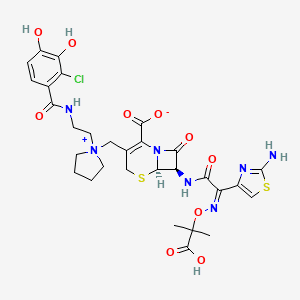
Cefiderocolum 1 g
ATC Code
J01DI04
Source
URPL
Pharmacotherapeutic group: Antibacterials for systemic use. ATC code: J01DI04
Mechanism of action
Cefiderocol is a siderophore cephalosporin. In addition to passive diffusion through outer membrane porin channels, cefiderocol is able to bind to extracellular free iron via its siderophore side chain, allowing active transport into the periplasmic space of Gram-negative bacteria through siderophore uptake systems. Cefiderocol subsequently binds to penicillin binding proteins (PBPs), inhibiting bacterial peptidoglycan cell wall synthesis which leads to cell lysis and death.
Resistance
Mechanisms of bacterial resistance that may lead to resistance to cefiderocol include mutant or acquired PBPs; beta-lactamase enzymes with ability to hydrolyse cefiderocol; mutations affecting regulation of bacterial iron uptake; mutations in siderophore transport proteins; overexpression of native bacterial siderophores
The
in vitro
antibacterial activity effect of cefiderocol against normally susceptible species is not affected by the majority of beta-lactamases, including metallo-enzymes. Due to the siderophore-mediated mode of cell entry, the
in vitro
activity of cefiderocol activity is generally less affected by porin loss or efflux-mediated resistance compared to many other beta-lactam agents.
Cefiderocol has little or no activity against Gram-positive or anaerobic bacteria due to intrinsic resistance.
Antibacterial activity in combination with other antibacterial agents
In vitro
studies demonstrated no antagonism between cefiderocol and amikacin, ceftazidime/avibactam, ceftolozane/tazobactam, ciprofloxacin, clindamycin, colistin, daptomycin, linezolid, meropenem, metronidazole, tigecycline, or vancomycin.
Susceptibility testing breakpoints
Minimum Inhibitory Concentration (MIC) breakpoints established by the European Committee on Antimicrobial Susceptibility Testing (EUCAST) for cefiderocol are as follows:
Minimum inhibitory concentrations (mg/L)
Organisms
Susceptible
Resistant
Enterobacterales
≤2
>2
Pseudomonas aeruginosa
≤2
>2
Pharmacokinetic/pharmacodynamic relationship
The time that unbound plasma concentrations of cefiderocol exceeds the minimum inhibitory concentration (%
f
T
>MIC
) against the infecting organism has been shown to best correlate with efficacy.
Antibacterial activity against specific pathogens
In-vitro studies suggest that the following pathogens would be susceptible to cefiderocol in the absence of acquired mechanisms of resistance:
Aerobic Gram-negative organisms
Achromobacter
spp.
Acinetobacter baumannii complex
Burkholderia cepacia complex
Citrobacter freundii complex
Citrobacter koseri
Escherichia coli
Enterobacter cloacae complex
Klebsiella (Enterobacter) aerogenes
Klebsiella pneumoniae
Klebsiella oxytoca
Morganella morganii
Proteus mirabilis
Proteus vulgaris
Providencia rettgeri
Serratia
spp.
Pseudomonas aeruginosa
Serratia marcescens
Stenotrophomonas maltophilia
In vitro
studies indicate that the following species are not susceptible to cefiderocol:
Aerobic Gram-positive organisms
Anaerobic organisms
Paediatric population
The European Medicines Agency has deferred the obligation to submit the results of studies with Fetcroja in one or more subsets of the paediatric population in the treatment of infections due to aerobic Gram-negative bacteria (see section 4.2 for information on paediatric use).
⚠️ Warnings
Each vial is for single use only.
The powder should be reconstituted with 10 mL of either sodium chloride 9 mg/ml (0.9%) solution for injection or 5% dextrose injection taken from the 100 mL bags that will be used to prepare the final infusion solution and should be gently shaken to dissolve. The vial(s) should be allowed to stand until the foaming generated on the surface has disappeared (typically within 2 minutes). The final volume of the reconstituted solution in the vial will be approximately 11.2 mL (caution: the reconstituted solution is not for direct injection).
To prepare the required doses, the appropriate volume of reconstituted solution should be withdrawn from the vial according to Table 4. Add the withdrawn volume to the infusion bag containing the remainder of the 100 mL of sodium chloride 9 mg/ml (0.9%) solution for injection, or 5% dextrose injection, inspect the resulting diluted drug product solution in the infusion bag visually for particulate matter and discoloration prior to use. Do not use discoloured solutions or solutions with visible particles.
Table
4 Preparation of cefiderocol doses
Cefiderocol dose
Number of 1 g cefiderocol vials to be reconstituted
Volume to withdraw from reconstituted vial(s)
Total volume of cefiderocol solution required for further dilution in at least 100 mL of 0.9% sodium chloride injection or 5% dextrose injection
2 g
2 vials
11.2 mL (entire contents) from both vials
22.4 mL
1.5 g
2 vials
11.2 mL (entire contents) from first vial AND 5.6 mL from second vial
16.8 mL
1 g
1 vial
11.2 mL (entire contents)
11.2 mL
0.75 g
1 vial
8.4 mL
8.4 mL
Standard aseptic techniques should be used for solution preparation and administration.
Any unused medicinal product or waste material should be disposed of in accordance with local requirements.