This information is for educational purposes only. It is not intended as medical advice. Always consult a qualified healthcare professional.
Finlee — Description, Dosage, Side Effects | PillsCard
OTC
Finlee
10 mg, Tabletki do sporządzania zawiesiny doustnej
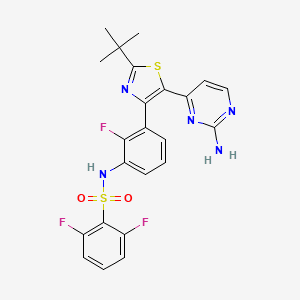
INN: Dabrafenibum
Data updated: 2026-04-13
Available in:
🇨🇿🇩🇪🇬🇧🇫🇷🇵🇱🇵🇹🇸🇰🇺🇦
Form
Tabletki do sporządzania zawiesiny doustnej
Dosage
10 mg
Route
doustna
Storage
—
User Reviews
Reviews reflect personal experiences and are not medical advice. Always consult your doctor.
About This Product
Manufacturer
Novartis Europharm Limited (Słowenia)
Composition
Dabrafenibum 10 mg
ATC Code
L01EC02
Source
URPL
Pharmacotherapeutic group: Antineoplastic agents, protein kinase inhibitors, B-Raf serine-threonine kinase (BRAF) inhibitors, ATC code: L01EC02
Mechanism of action
Dabrafenib is an inhibitor of RAF kinases. Oncogenic mutations in BRAF lead to constitutive activation of the RAS/RAF/MEK/ERK pathway. The most commonly observed BRAF mutation is V600E, which has been identified in 19% of paediatric LGG and approximately 5% of paediatric HGG.
Combination with trametinib
Trametinib is a reversible, highly selective, allosteric inhibitor of mitogen-activated extracellular signal regulated kinase 1 (MEK1) and MEK2 activation and kinase activity. MEK proteins are components of the extracellular signal-related kinase (ERK) pathway. In human cancers, this pathway is often activated by mutated forms of BRAF which activates MEK. Trametinib inhibits activation of MEK by BRAF and inhibits MEK kinase activity.
Thus, trametinib and dabrafenib inhibit two kinases in this pathway, MEK and RAF, and therefore the combination provides concomitant inhibition of the pathway. The combination of dabrafenib with trametinib has shown anti-tumour activity in BRAF V600 mutation-positive cancer cell lines
in vitro
and delays the emergence of resistance
in vivo
in BRAF V600 mutation-positive xenografts.
Pharmacodynamic effects
Preclinical data generated in biochemical assays demonstrated that dabrafenib inhibits BRAF kinases with activating codon 600 mutations (Table 5).
Table 5 Kinase inhibitory activity of dabrafenib against RAF kinases
Kinase
Inhibitory concentration 50 (nM)
BRAF V600E
0.65
BRAF WT
3.2
CRAF WT
5.0
Clinical efficacy and safety
Paediatric population
The clinical efficacy and safety of dabrafenib plus trametinib combination therapy in paediatric patients aged 1 to <18 years with BRAF V600 mutation-positive glioma was evaluated in a multi-centre, open-label, Phase II clinical study (EudraCT 2015-004015-20). Patients with low-grade glioma (WHO 2016 Grades 1 and 2) who required first systemic therapy were randomised in a 2:1 ratio to dabrafenib plus trametinib or carboplatin plus vincristine, and patients with relapsed or refractory high-grade glioma (WHO 2016 Grades 3 and 4) were enrolled into a single-arm dabrafenib plus trametinib cohort.
BRAF mutation status was identified prospectively via a local test, or a central laboratory real-time polymerase chain reaction (PCR) test when a local test was not available. In addition, retrospective testing of available tumour samples by the central laboratory was performed to confirm the BRAF V600E mutation.
Dabrafenib and trametinib dosing in the clinical study was age- and weight-dependent, with dabrafenib dosed orally at 2.625 mg/kg twice daily for ages <12 years and at 2.25 mg/kg twice daily for ages 12 years and older; trametinib was dosed orally at 0.032 mg/kg once daily for ages <6 years and at 0.025 mg/kg once daily for ages 6 years and older. Dabrafenib doses were capped at 150 mg twice daily and trametinib doses at 2 mg once daily. Carboplatin and vincristine were dosed based on age and body surface area at doses of 175 mg/m
2
and 1.5 mg/m
2
, respectively, as weekly infusions. Carboplatin and vincristine were administered in one 10-week induction course followed by eight 6-week cycles of maintenance therapy.
The primary efficacy endpoint in both cohorts was overall response rate (ORR, sum of confirmed complete/CR and partial responses/PR) by independent review based on RANO (2017) criteria for the LGG cohort and RANO (2010) criteria for the HGG cohort. The primary analysis was performed when all patients in both cohorts had completed at least 32 weeks of therapy. The final analysis was performed 2 years after completion of enrolment in both cohorts.
BRAF mutation-positive paediatric low-grade glioma (WHO Grades 1 and 2)
In the low-grade glioma cohort, 110 patients were randomised to dabrafenib plus trametinib (n=73) or carboplatin plus vincristine (n=37). Median age was 9.5 years, with 34 patients (30.9%) aged 12 months to <6 years, 36 patients (32.7%) aged 6 to <12 years and 40 patients (36.4%) aged 12 to <18 years; 60% were female. The majority of patients (80%) had Grade 1 glioma at initial diagnosis. The most common pathologies were pilocytic astrocytoma (30.9%), ganglioglioma (27.3%) and LGG not otherwise specified (NOS) (18.2%). Metastatic sites were present in 9 patients (8.2%). Prior surgery was reported in 91 patients (82.7%), among those patients the procedure at last surgery was resection in 28 patients (25.5%). Systemic corticosteroid use was reported in 44 patients (41.5%).
At the time of the primary analysis, the ORR in the dabrafenib plus trametinib arm showed a statistically significant improvement over carboplatin plus vincristine. The subsequent hierarchical testing also demonstrated a statistically significant improvement in progression-free survival (PFS) over chemotherapy (Table 6).
At the time of the primary analysis, conducted after all patients had completed at least 32 weeks of treatment or had discontinued earlier, the overall survival (OS) data were still immature (one death was reported in the carboplatin plus vincristine (C+V) arm).
Table 6 Response and progression-free survival based on independent review in the pivotal study G2201 (LGG cohort, primary analysis)
Dabrafenib + Trametinib
(D+T)
N=73
Carboplatin + Vincristine
(C+V)
N=37
Best overall response
Complete response (CR), n (%)
2 (2.7)
1 (2.7)
Partial response (PR), n (%)
32 (43.8)
3 (8.1)
Stable disease (SD), n (%)
30 (41.1)
15 (40.5)
Progressive disease (PD), n (%)
8 (11.0)
12 (32.4)
Unknown, n (%)
1 (1.4)
6 (16.2)
1
Overall response rate
ORR (CR+PR), (95% CI)
46.6% (34.8 - 58.6%)
10.8% (3.0 - 25.4%)
Odds ratio
2
, p-value
7.19 (2.3 - 22.4), p<0.001
Risk difference
35.8% (20.6 - 51.0)
Progression-free survival (PFS)
Median (months), (95% CI)
20.1 (12.8 - NE)
7.4 (3.6 - 11.8)
Hazard ratio (95% CI), p-value
0.31 (0.17 - 0.55), p<0.001
NE=not estimable
1
4 patients randomised to C+V discontinued prior to receiving treatment.
2
Odds ratio (D+T vs C+V) and 95% CI are from a logistic regression with treatment as the only covariate, i.e. it is the odds of observing a response in the D+T arm compared to the odds of observing a response in the C+V arm. Odds ratio >1 favours D+T.
At the time of the final analysis (median duration of follow-up: 39.0 months), the ORR based on independent review was 54.8% in the D+T arm and 16.2% in the C+V arm with an odds ratio of 6.26. The analysis also confirmed improved PFS over chemotherapy based on independent review with an estimated 64% risk reduction in progression/death (hazard ratio 0.36). The median PFS was 24.9 months in the D+T arm and 7.2 months in the C+V arm. No additional deaths were reported in either arm at the time of the final analysis.
Figure 1 Kaplan-Meier curves for progression-free survival based on independent review in the pivotal study G2201 (LGG cohort, final analysis)
BRAF mutation-positive paediatric high-grade glioma (WHO Grades 3 and 4)
In the single-arm high-grade glioma cohort, 41 patients with relapsed or refractory HGG were enrolled and treated with dabrafenib plus trametinib. Median age was 13.0 years, with 5 patients (12.2%) aged 12 months to <6 years, 10 patients (24.4%) aged 6 to <12 years and 26 patients (63.4%) aged 12 to <18 years; 56% were female. The histological grade at initial diagnosis was Grade 4 in 20 patients (48.8%), Grade 3 in 13 patients (31.7%), Grade 2 in 4 patients (9.8%), Grade 1 in 3 patients (7.3%) and missing in 1 patient (2.4%). The most common pathologies were glioblastoma multiforme (31.7%), anaplastic pleomorphic xanthoastrocytoma (14.6%), HGG NOS (9.8%) and pleomorphic xanthoastrocytoma (9.8%). Prior surgery was reported in 40 patients (97.6%), among those patients the procedure at last surgery was resection in 24 patients (58.5%). Prior antineoplastic chemotherapy was reported for 33 patients (80.5%). Prior radiotherapy was reported for 37 patients (90.2%). Systemic corticosteroid use while on study treatment was reported in 24 patients (58.5%).
At the time of the final analysis (median duration of follow-up: 45.2 months), the ORR based on independent review was 56.1% (23/41), (95% CI: 39.7, 71.5): CR in 14 patients (34.1%) and PR in 9 patients (22.0%). The median duration of response (DoR) was 27.4 months (95% CI: 9.2, NE).
⚠️ Warnings
Preparation of the dispersible tablet suspension
• The prescribed dose of Finlee dispersible tablets should be placed in the dosing cup containing approximately 5 ml or 10 ml of still drinking water.
• The amount of still drinking water depends on the prescribed number of dispersible tablets. For a dose of 1 to 4 dispersible tablets, use approximately 5 ml of water; for a dose of 5 to 15 dispersible tablets, use approximately 10 ml of water.
• It may take 3 minutes (or more) to fully disperse the tablets.
• The contents should be gently stirred with the handle of a stainless steel teaspoon and then administered immediately.
• Administer the suspension no later than 30 minutes after preparation (after the tablets have fully dispersed). If more than 30 minutes have passed, do not use the suspension.
• After administration of the prepared suspension, there will be tablet residue inside the dosing cup. The residue may be difficult to see. Add approximately 5 ml of still drinking water to the empty dosing cup and stir with the handle of the stainless steel teaspoon to re-suspend any remaining particles. The entire contents of the dosing cup should be administered.
Administration using a feeding tube or an oral syringe
• Once the suspension is prepared, withdraw all of the suspension from the dosing cup into a syringe compatible with a feeding tube or oral administration.
• If administering via a feeding tube, flush the feeding tube with still drinking water before administering, and dispense the suspension into the feeding tube as per the manufacturer's instructions, and flush the feeding tube with still drinking water after administering.
• If administering via an oral syringe, place the end of the oral syringe inside the mouth with the tip touching the inside of either cheek. Slowly push the plunger all the way down to deliver the full dose.
A complete and illustrated set of instructions for use is provided at the end of the package leaflet “Instructions for use”.
Disposal
The dosing cup can be used for up to 4 months after first use. After 4 months, the dosing cup can be thrown away in the household waste.
Any unused medicinal product or waste material should be disposed of in accordance with local requirements.