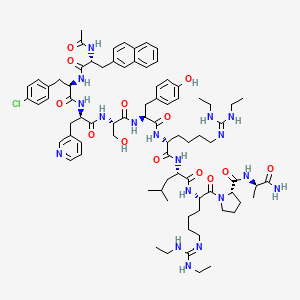
Pharmacotherapeutic group: Pituitary and hypothalamic hormones and analogues, anti-gonadotrophin releasing-hormones, ATC code: H01CC01.
Mechanism of action
Ganirelix is a GnRH antagonist, which modulates the hypothalamic-pituitary-gonadal axis by competitive binding to the GnRH receptors in the pituitary gland. As a result a rapid, profound, reversible suppression of endogenous gonadotrophins occurs, without initial stimulation as induced by GnRH agonists. Following administration of multiple doses of 0.25 mg ganirelix to female volunteers serum LH, FSH and E2 concentrations were maximally decreased by 74 %, 32 % and 25 % at 4, 16 and 16 hours after injection, respectively. Serum hormone levels returned to pre-treatment values within two days after the last injection.
Pharmacodynamic effects
In patients undergoing controlled ovarian stimulation the median duration of ganirelix treatment was 5 days. During ganirelix treatment the average incidence of LH rises (>10 IU/l) with concomitant progesterone rise (>1 ng/ml) was 0.3 - 1.2 % compared to 0.8 % during GnRH agonist treatment. There was a tendency towards an increased incidence of LH and progesterone rises in women with a higher body weight (>80 kg), but no effect on clinical outcome was observed. However, based on the small number of patients treated so far, an effect cannot be excluded.
In case of a high ovarian response, either as a result of a high exposure to gonadotrophins in the early follicular phase or as a result of high ovarian responsiveness, premature LH rises may occur earlier than day 6 of stimulation. Initiation of ganirelix treatment on day 5 can prevent these premature LH rises without compromising the clinical outcome.
Clinical efficacy and safety
In controlled studies of ganirelix with FSH, using a long protocol of GnRH agonist as a reference, treatment with the ganirelix regimen resulted in a faster follicular growth during the first days of stimulation but the final cohort of growing follicles was slightly smaller and produced on average less oestradiol. This different pattern of follicular growth requires that FSH dose adjustments are based on the number and size of growing follicles, rather than on the amount of circulating oestradiol. Similar comparative studies with corifollitropin alfa using either a GnRH antagonist or long agonist protocol have not been performed.
⚠️ Warnings
Inspect the syringe before use. Use only syringes with clear, particle-free solutions and from undamaged containers.
Any unused medicinal product or waste material should be disposed of in accordance with local requirements.