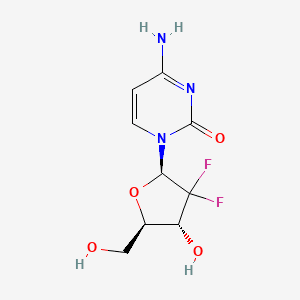
Pharmacotherapeutic group: pyrimidine analogues ATC code: L01BC05
Cytotoxic activity in cell cultures
Gemcitabine shows significant cytotoxic effects against a variety of cultured murine and human tumour cells. Its action is phase-specific such that gemcitabine primarily kills cells that are undergoing DNA synthesis (S-phase) and, under certain circumstances, blocks the progression of cells at the junction of the G1/S phase boundary. In vitro, the cytotoxic effect of gemcitabine is dependent on both concentration and time.
Antitumoral activity in preclinical models
In animal tumour models, antitumoural activity of gemcitabine is schedule-dependent. When gemcitabine is administered daily, high mortality among the animals but minimal antitumoural activity is observed. If, however, gemcitabine is given every third or fourth day, it can be administered in non-lethal doses with substantial antitumoural activity against a broad spectrum of mouse tumours.
Mechanism of action
Cellular metabolism and mechanism of action: Gemcitabine (dFdC), which is a pyrimidine antimetabolite, is metabolised intracellularly by nucleoside kinase to the active diphosphate (dFdCDP) and triphosphate (dFdCTP) nucleosides. The cytotoxic effect of gemcitabine is due to inhibition of DNA synthesis by two mechanisms of action by dFdCDP and dFdCTP. First, dFdCDP inhibits ribonucleotide reductase, which is uniquely responsible for catalysing the reactions that produce deoxynucleoside triphosphates (dCTP) for DNA synthesis. Inhibition of this enzyme by dFdCDP reduces the concentration of deoxynucleosides in general and, in particular, dCTP. Second, dFdCTP competes with dCTP for incorporation into DNA (self-potentiation).
Likewise, a small amount of gemcitabine may also be incorporated into RNA. Thus, the reduced intracellular concentration of dCTP potentiates the incorporation of dFdCTP into DNA. DNA polymerase epsilon lacks the ability to eliminate gemcitabine and to repair the growing DNA strands. After gemcitabine is incorporated into DNA, one additional nucleotide is added to the growing DNA strands. After this addition there is essentially a complete inhibition in further DNA synthesis (masked chain termination). After incorporation into DNA, gemcitabine appears to induce the programmed cell death process known as apoptosis.
Clinical data
Bladder cancer
A randomised phase III study of 405 patients with advanced or metastatic urothelial transitional cell carcinoma showed no difference between the two treatment arms, gemcitabine/cisplatin versus methotrexate/vinblastine/adriamycin/cisplatin (MVAC), in terms of median survival (12.8 and 14.8 months respectively, p=0.547), time to disease progression (7.4 and 7.6 months respectively, p=0.842) and response rate (49.4% and 45.7% respectively, p=0.512). However, the combination of gemcitabine and cisplatin had a better toxicity profile than MVAC.
Pancreatic cancer
In a randomised phase III study of 126 patients with advanced or metastatic pancreatic cancer, gemcitabine showed a statistically significant higher clinical benefit response rate than 5-fluorouracil (23.8% and 4.8% respectively, p=0.0022). Also, a statistically significant prolongation of the time to progression from 0.9 to 2.3 months (log-rank p<0.0002) and a statistically significant prolongation of median survival from 4.4 to 5.7 months (log-rank p<0.0024) was observed in patients treated with gemcitabine compared to patients treated with 5-fluorouracil.
Non small cell lung cancer
In a randomised phase III study of 522 patients with inoperable, locally advanced or metastatic NSCLC, gemcitabine in combination with cisplatin showed a statistically significant higher response rate than cisplatin alone (31.0% and 12.0%, respectively, p<0.0001). A statistically significant prolongation of the time to progression, from 3.7 to 5.6 months (log-rank p<0.0012) and a statistically significant prolongation of median survival from 7.6 months to 9.1 months (log-rank p<0.004) was observed in patients treated with gemcitabine/cisplatin compared to patients treated with cisplatin.
In another randomised phase III study of 135 patients with stage IIIB or IV NSCLC, a combination of gemcitabine and cisplatin showed a statistically significant higher response rate than a combination of cisplatin and etoposide (40.6% and 21.2%, respectively, p=0.025). A statistically significant prolongation of the time to progression, from 4.3 to 6.9 months (p=0.014) was observed in patients treated with gemcitabine/cisplatin compared to patients treated with etoposide/cisplatin.
In both studies it was found that tolerability was similar in the two treatment arms.
Ovarian carcinoma
In a randomised phase III study, 356 patients with advanced epithelial ovarian carcinoma who had relapsed at least 6 months after completing platinum based therapy were randomised to therapy with gemcitabine and carboplatin (GCb), or carboplatin (Cb). A statistically significant prolongation of the time to progression of disease, from 5.8 to 8.6 months (log-rank p= 0.0038) was observed in the patients treated with GCb compared to patients treated with Cb. Differences in response rate of 47.2% in the GCb arm versus 30.9% in the Cb arm (p=0.0016) and median survival 18 months (GCb) versus 17.3 (Cb) (p=0.73) favoured the GCb arm.
Breast cancer
In a randomised phase III study of 529 patients with inoperable, locally recurrent or metastatic breast cancer with relapse after adjuvant/neoadjuvant chemotherapy, gemcitabine in combination with paclitaxel showed a statistically significant prolongation of time to documented disease progression from 3.98 to 6.14 months (log-rank p=0.0002) in patients treated with gemcitabine/paclitaxel compared to patients treated with paclitaxel. After 377 deaths, the overall survival was 18.6 months versus 15.8 months (log rank p=0.0489, HR 0.82) in patients treated with gemcitabine/paclitaxel compared to patients treated with paclitaxel and the overall response rate was 41.4% and 26.2% respectively (p= 0.0002).
⚠️ Warnings
Handling
- Calculate the dose, and decide which size of the Gemcitabine infusion bags is needed.
- Inspect the product pack for any damage. Do not use if there are signs of tampering.
- Apply patient-specific label on the overwrap.
Removal of infusion bag from overwrap and infusion bag inspection
- Tear overwrap at notch. Do not use if overwrap has been previously opened or damaged.
- Remove infusion bag from overwrap.
- Use only if infusion bag and seal are intact. Prior to administration check for minute leaks by squeezing bag firmly. If leaks are found, discard the bag and solution as sterility may be impaired.
- Parenteral medicinal products should be inspected visually for particulate matter and discolouration prior to administration. If particulate matter is observed, do not administer.
Administration
- Break the Minitulipe stopper seal by applying pressure on one side with hand.
- Using aseptic technique, attach sterile administration set.
- Refer to directions for use accompanying the administration set.
Precautions
- Do not use in series connection.
- Do not introduce additives into the infusion bag.
- The solution for infusion is ready to use and must not be mixed with other medicinal products.
-
After opening the infusion bag
:
From a microbiological point of view, the solution should be used immediately. If not used immediately, in-use storage times and conditions prior to use are the responsibility of the user.
- Gemcitabine solution for infusion is for single use only.
Personnel must be provided with appropriate handling materials, notably long sleeved gowns, protection masks, caps, protective goggles, sterile single-use gloves, protective covers for the work area and collection bags for waste.
Cytotoxic preparations should not be handled by pregnant staff.
If the product comes into contact with the eyes, severe irritation may result. In such an event, the eyes should be washed thoroughly and immediately. Consult a doctor if irritation persists. If the solution should come into contact with skin, rinse the affected area thoroughly with water. Excreta and vomit must be handled with care.
Disposal
Any unused medicinal product or waste material should be disposed of in accordance with local requirements for cytotoxic agents.