This information is for educational purposes only. It is not intended as medical advice. Always consult a qualified healthcare professional.
Rx
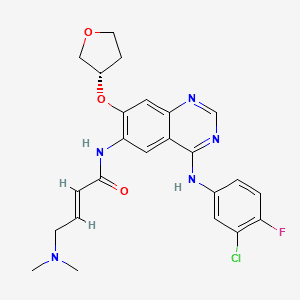
Giotrif
20 mg, Tabletki powlekane
INN: Afatinibum
Data updated: 2026-04-13
Available in:
🇨🇿🇩🇪🇬🇧🇫🇷🇵🇱🇵🇹🇸🇰🇺🇦
Form
Tabletki powlekane
Dosage
20 mg
Route
doustna
Storage
—
About This Product
User Reviews
Reviews reflect personal experiences and are not medical advice. Always consult your doctor.
Manufacturer
Boehringer Ingelheim International GmbH (Francja)
ATC Code
L01EB03
Source
URPL
Pharmacotherapeutic group: antineoplastic agents, protein kinase inhibitors, ATC code: L01EB03
Mechanism of action
Afatinib is a potent and selective, irreversible ErbB Family Blocker. Afatinib covalently binds to and irreversibly blocks signalling from all homo- and heterodimers formed by the ErbB family members EGFR (ErbB1), HER2 (ErbB2), ErbB3 and ErbB4.
Pharmacodynamic effects
Aberrant ErbB signalling triggered by receptor mutations, and/or amplification, and/or receptor ligand overexpression contributes to the malignant phenotype. Mutation in EGFR defines a distinct molecular subtype of lung cancer.
In non-clinical disease models with ErbB pathway deregulation, afatinib as a single agent effectively blocks ErbB receptor signalling resulting in tumour growth inhibition or tumour regression. NSCLC tumours with common activating EGFR mutations (Del 19, L858R) and several less common EGFR mutations in exon 18 (G719X) and exon 21 (L861Q) are particularly sensitive to afatinib treatment in non-clinical and clinical settings. Limited non-clinical and/or clinical activity was observed in NSCLC tumours with insertion mutations in exon 20.
The acquisition of a secondary T790M mutation is a major mechanism of acquired resistance to afatinib and gene dosage of the T790M-containing allele correlates with the degree of resistance in vitro. The T790M mutation is found in approximately 50% of patients' tumours upon disease progression on afatinib, for which T790M targeted EGFR TKIs may be considered as a next line treatment option. Other potential mechanisms of resistance to afatinib have been suggested preclinically and MET gene amplification has been observed clinically.
Clinical efficacy and safety
GIOTRIF in patients with Non-Small Cell Lung Cancer (NSCLC) with EGFR mutations
LUX-Lung 3
In the first-line setting, the efficacy and safety of GIOTRIF in patients with EGFR mutation-positive locally advanced or metastatic NSCLC (stage IIIB or IV) were assessed in a global, randomised, multicentre, open-label trial. Patients were screened for the presence of 29 different EGFR mutations using a polymerase chain reaction (PCR)-based method (TheraScreen
®
: EGFR29 Mutation Kit, Qiagen Manchester Ltd). Patients were randomised (2:1) to receive GIOTRIF 40 mg once daily or up to 6 cycles of pemetrexed/cisplatin. Among the patients randomised, 65% were female, the median age was 61 years, the baseline ECOG performance status was 0 (39%) or 1 (61%), 26% were Caucasian and 72% were Asian. 89% of patients had common EGFR mutations (Del 19 or L858R).
The primary endpoint was progression free survival (PFS) by independent review; the secondary endpoints included overall survival and objective response rate. At the time of the analysis, 14 Nov 2013, 176 patients (76.5%) in the afatinib arm and 70 patients (60.9%) in the chemotherapy arm experienced an event contributing to the PFS analysis, i.e. disease progression as determined by central independent review or death. The efficacy results are provided in Figure 1, Tables 6 and 7.
LUX-Lung 6
The efficacy and safety of GIOTRIF in Asian patients with Stage IIIB/IV EGFR mutation-positive locally advanced or metastatic adenocarcinoma of the lung was evaluated in a randomised, multicentre, open-label trial. Similar to LUX-Lung 3, patients with previously untreated NSCLC were screened for EGFR mutations using TheraScreen
®
: EGFR29 Mutation Kit (Qiagen Manchester Ltd). Among randomized patients, 65% were female, the median age was 58 years and all patients were of Asian ethnicity. Patients with common EGFR mutations accounted for 89% of the study population.
The primary endpoint was PFS as assessed by central independent review; secondary endpoints included OS and ORR.
Both trials demonstrated significant improvement in PFS of EGFR mutation positive patients treated with GIOTRIF compared to chemotherapy. The efficacy results are summarized in Figure 1 (LUX-Lung 3) and Tables 6 and 7 (LUX-Lung 3 and 6). Table 7 shows outcomes in the subgroups of patients with two common EGFR mutations – Del 19 and L858R.
Figure 1: Kaplan-Meier curve for PFS by independent review by treatment group in trial LUX-Lung 3 (Overall Population)
Table 6: Efficacy results of GIOTRIF vs. pemetrexed/cisplatin (LUX-Lung 3) gemcitabine/cisplatin (LUX-Lung 6) (Independent review)
LUX-Lung 3
LUX-Lung 6
GIOTRIF
(N = 230)
Pemetrexed/ Cisplatin
(N = 115)
GIOTRIF
(N = 242)
Gemcitabine/ Cisplatin
(N = 122)
Progression-free survival
Months (median)
11.2
6.9
11.0
5.6
Hazard Ratio (HR)
(95%CI)
0.58
(0.43-0.78)
0.28
(0.20-0.39)
p-value
1
0.0002
< 0.0001
1-year PFS Rate
48.1%
22.0%
46.7%
2.1%
Objective Response Rate (CR+PR)
2
56.5%
22.6%
67.8%
23.0%
Odds Ratio (OR)
(95%CI)
4.80
(2.89-8.08)
7.57
(4.52-12.68)
p-value
1
< 0.0001
< 0.0001
Overall Survival (OS)
Months (median)
28.2
28.2
23.1
23.5
Hazard Ratio (HR)
(95%CI)
0.88
(0.66-1.17)
0.93
(0.72-1.22)
p-value
1
0.3850
0.6137
1
p-value for PFS/OS based on stratified log-rank test; p-value for Objective Response Rate based on logistic regression
2
CR = complete response; PR = partial response
Table 7: PFS and OS efficacy results of GIOTRIF vs pemetrexed/cisplatin (LUX-Lung 3) gemcitabine/cisplatin (LUX-Lung 6) in the pre-defined EGFR mutation subgroups Del 19 and L858R (Independent review)
LUX-Lung 3
LUX-Lung 6
Del19
GIOTRIF
(N = 112)
Pemetrexed/ Cisplatin
(N = 57)
GIOTRIF
(N = 124)
Gemcitabine/ Cisplatin
(N = 62)
Progression-free survival
Months (median)
13.8
5.6
13.1
5.6
Hazard Ratio (HR)
(95%CI)
0.26
(0.17-0.42)
0.20
(0.13-0.33)
p-value
1
< 0.0001
< 0.0001
Overall Survival (OS)
Months (median)
33.3
21.1
31.4
18.4
Hazard Ratio (HR)
(95%CI)
0.54
(0.36-0.79)
0.64
(0.44-0.94)
p-value
1
0.0015
0.0229
L858R
GIOTRIF
(N = 91)
Pemetrexed/ Cisplatin
(N = 47)
GIOTRIF
(N = 92)
Gemcitabine/ Cisplatin
(N = 46)
Progression-free survival
Months (median)
10.8
8.1
9.6
5.6
Hazard Ratio (HR)
(95%CI)
0.75
(0.48-1.19)
0.31
(0.19-0.52)
p-value
1
0.2191
< 0.0001
Overall Survival (OS)
Months (median)
27.6
40.3
19.6
24.3
Hazard Ratio (HR)
(95%CI)
1.30
(0.80-2.11)
1.22
(0.81-1.83)
p-value
1
0.2919
0.3432
1
p-value for PFS/OS based on stratified log-rank test
In the pre-defined subgroup of common mutations (combined Del 19 and L858R) for GIOTRIF and chemotherapy, the median PFS was 13.6 months vs. 6.9 months (HR 0.48; 95% CI 0.35-0.66; p < 0.0001; N = 307) in LUX-Lung 3, and 11.0 months vs. 5.6 months (HR 0.24; 95% CI 0.17-0.35; p < 0.0001; N = 324) in LUX-Lung 6, respectively.
PFS benefit was accompanied by improvement in disease-related symptoms and delayed time to deterioration (see Table 8). Mean scores over time for overall quality of life, global health status and physical, role, cognitive, social and emotional functioning were significantly better for GIOTRIF.
Table 8: Symptom outcomes for GIOTRIF vs. chemotherapy in trials LUX-Lung 3 and LUX-Lung 6 (EORTC QLQ-C30 & QLQ-LC13)
LUX-Lung 3
Cough
Dyspnoea
Pain
% of patients improved
a
67% vs. 60%;
p = 0.2133
65% vs. 50%;
p = 0.0078
60% vs. 48%;
p = 0.0427
Delay of median time to deterioration (months)
a,b
27.0 vs. 8.0
HR 0.60; p = 0.0062
10.4 vs. 2.9
HR 0.68; p = 0.0129
4.2 vs. 3.1
HR 0.83; p = 0.1882
LUX-Lung 6
Cough
Dyspnoea
Pain
% of patients improved
a
76% vs. 55%;
p = 0.0003
71% vs. 48%;
p < 0.0001
65% vs. 47%;
p = 0.0017
Delay of median time to deterioration (months)
a,b
31.1 vs. 10.3
HR 0.46; p = 0.0001
7.7 vs. 1.7
HR 0.53; p < 0.0001
6.9 vs. 3.4
HR 0.70; p = 0.0220
a
values presented for GIOTRIF vs. chemotherapy, p-value based on logistic regression
b
p-value for time to deterioration based on stratified log-rank test
LUX-Lung 2
LUX-Lung 2 was a single arm Phase II trial in 129 EGFR TKI-naïve patients with stage IIIB or IV lung adenocarcinoma with EGFR mutations. Patients were enrolled in the first-line (N = 61) or second-line setting (N = 68) (i.e. after failure of 1 prior chemotherapy regimen). In 61 patients treated in the first-line setting, confirmed ORR was 65.6% and DCR was 86.9% according to independent review. The median PFS was 12.0 months by independent review. Efficacy was similarly high in the group of patients who had received prior chemotherapy (N = 68; ORR 57.4%; median PFS by independent review 8 months). The updated median OS for first- and second-line was 31.7 months and 23.6 months, respectively.
LUX-Lung 7
LUX-Lung 7 is a randomised, global, open label Phase IIb trial investigating the efficacy and safety of GIOTRIF in patients with locally advanced or metastatic lung adenocarcinoma (stage IIIB or IV) with EGFR mutations in the first-line setting. Patients were screened for the presence of activating EGFR mutations (Del 19 and/or L858R) using the TheraScreen
®
EGFR RGQ PCR Kit, Qiagen Manchester Ltd. Patients (N = 319) were randomised (1:1) to receive GIOTRIF
®
40 mg orally once daily (N = 160) or gefitinib 250 mg orally once daily (N = 159). Randomisation was stratified according to EGFR mutation status (Del 19; L858R) and presence of brain metastases (yes; no).
Among the patients randomised, 62% were female, the median age was 63 years, 16% of patients had brain metastases, the baseline ECOG performance status was 0 (31%) or 1 (69%), 57% were Asian and 43% were non-Asian. Patients had a tumour sample with an EGFR mutation categorised as either exon 19 deletion (58%) or exon 21 L858R substitutions (42%).
The co-primary endpoints include PFS by independent review and OS. Secondary endpoints include ORR and DCR. GIOTRIF significantly improved PFS and ORR in EGFR mutation positive patients compared to gefitinib. The efficacy results are summarized in Table 9.
Table 9: Efficacy results of GIOTRIF vs. gefitinib (LUX-Lung 7) based on primary analysis as of August 2015.
GIOTRIF
(N = 160)
Gefitinib
(N = 159)
Hazard Ratio/ Odds Ratio
(95%CI)
p-value
2
Median PFS (months), Overall Trial Population
18-months PFS rate
24-months PFS rate
11.0
27%
18%
10.9
15%
8%
HR 0.73
(0.57-0.95)
0.0165
Median OS (months)
1
, Overall Trial Population
Alive at 18-months
Alive at 24-months
27.9
71%
61%
24.5
67%
51%
HR 0.86
(0.66, 1.12)
0.2580
Objective Response Rate (CR+PR)
3
70%
56%
OR 1.87
(1.12, 2.99)
0.0083
1
OS results based on primary OS analysis as of April 2016 at event rates of 109 (68.1%) and 117 (73.6%) in the GIOTRIF and gefitinib arms, respectively
2
p-value for PFS/OS based on stratified log-rank test; p-value for Objective Response Rate based on stratified logistic regression
3
CR = complete response; PR = partial response
The PFS hazard ratio for patients with DEL 19 mutations and L858R mutations was 0.76 (95% CI [0.55, 1.06]; p = 0.1071), and 0.71 (95% CI [0.47, 1.06]; p = 0.0856) respectively for afatinib vs gefitinib.
Analysis of GIOTRIF's efficacy in EGFR TKI naïve patients with tumours harbouring uncommon EGFR Mutations (LUX-Lung 2, -3, and -6)
In three clinical trials of GIOTRIF with prospective tumour genotyping (Phase 3 trials LUX-Lung 3 and -6, and single arm Phase 2 trial LUX-Lung 2), an analysis was conducted of data from a total of 75 TKI-naïve patients with advanced (stage IIIb–IV) lung adenocarcinomas harbouring uncommon EGFR mutations, which were defined as all mutations other than Del 19 and L858R mutations. Patients were treated with GIOTRIF 40 mg (all three trials) or 50 mg (LUX-Lung 2) orally once daily.
In patients with tumours harbouring either G719X (N = 18), L861Q (N = 16), or S768I substitution mutation (N = 8), the confirmed ORR was 72.2%, 56.3%, 75.0%, respectively, and the median duration of response was 13.2 months, 12.9 months and 26.3 months, respectively.
In patients with tumours harbouring exon 20 insertions (N = 23) the confirmed ORR was 8.7% and the median duration of response was 7.1 months. In patients with tumours harbouring de-novo T790M mutations (N = 14) the confirmed ORR was 14.3% and the median duration of response was 8.3 months.
GIOTRIF in patients with NSCLC of squamous histology
The efficacy and safety of GIOTRIF as second-line treatment for patients with advanced NSCLC of squamous histology was investigated in a randomized open-label global Phase III trial LUX-Lung 8. Patients who received at least 4 cycles of platinum-based therapy in the first line setting were subsequently randomized 1:1 to daily GIOTRIF 40 mg or erlotinib 150 mg until progression. Randomization was stratified by race (Eastern Asian vs non Eastern Asian). The primary endpoint was PFS; OS was the key secondary endpoint. Other secondary endpoints included ORR, DCR, change in tumour size and HRQOL.
Among 795 patients randomized, the majority were males (84%), white (73%), current or former smokers (95%) with baseline performance status ECOG 1 (67%) and ECOG 0 (33%).
Second-line GIOTRIF significantly improved PFS and OS of patients with squamous NSCLC compared to erlotinib. The efficacy results at the time of the primary analysis of OS including all randomized patients are summarized in Figure 2 and Table 10.
Table 10: Efficacy results for GIOTRIF vs erlotinib in LUX-Lung 8, based on primary analysis of OS, including all randomized patients
GIOTRIF
(N = 398)
Erlotinib
(n = 397)
Hazard Ratio/Odds Ratio
(95%CI)
p-value
2
PFS
Months (median)
2.63
1.94
HR 0.81
(0.69, 0.96)
0.0103
OS
Months (median)
Alive at 12 months
Alive at 18 months
7.92
36.4%
22.0%
6.77
28.2%
14.4%
HR 0.81
(0.69, 0.95)
0.0077
Objective Response Rate (CR+PR)
1
5.5%
2.8%
OR 2.06
(0.98, 4.32)
0.0551
Duration of response Months (median)
7.29
3.71
1
CR=complete response; PR=partial response
2
p-value for PFS/OS based on stratified log-rank test; p-value for Objective Response Rate based on logistic regression
The overall survival hazard ratio in patients < 65 years of age was 0.68 (95% CI 0.55, 0.85) and in patients 65 years of age and older it was 0.95 (95% CI 0.76, 1.19).
Figure 2: Kaplan-Meier Curve for OS by treatment group in LUX-Lung 8
PFS benefit was accompanied by improvement in disease-related symptoms and delayed time to deterioration (see Table 11).
Table 11: Symptom outcomes for GIOTRIF vs. erlotinib in trial LUX-Lung 8 (EORTC QLQ-C30 & QLQ-LC13)
Cough
Dyspnoea
Pain
% of patients improved
a, c
43% vs. 35%;
p = 0.0294
51% vs. 44%;
p = 0.0605
40% vs. 39%;
p = 0.7752
Delay of time to deterioration (months)
b, c
4.5 vs. 3.7
HR 0.89; p = 0.2562
2.6 vs. 1.9
HR 0.79; p = 0.0078
2.5 vs. 2.4
HR 0.99; p = 0.8690
a
values presented for GIOTRIF vs. erlotinib, p-value based on logistic regression
b
p-value for time to deterioration based on stratified log-rank test
c
p-values were not adjusted for multiplicity
Efficacy in EGFR-negative tumours has not been established.
Paediatric population
The European Medicines Agency has waived the obligation to submit the results of trials with this medicinal product in all subsets of the paediatric population in NSCLC indications (see section 4.2 for information on paediatric use). However, paediatric development was conducted in paediatric patients with other conditions.
A Phase I/II open-label, dose escalation, multicentre trial evaluated the safety and efficacy of GIOTRIF in paediatric patients aged 2 to less than 18 years with recurrent/refractory neuroectodermal tumours, rhabdomyosarcoma and/or other solid tumours with known ErbB pathway deregulation regardless of tumour histology. A total of 17 patients were treated in the dose finding part of the trial. In the maximum tolerated dose (MTD) expansion part of the trial, 39 patients selected by biomarkers for ErbB pathway deregulation received GIOTRIF at a dose of 18 mg/m
2
/day. In this expansion part, no objective responses were observed in 38 patients, including 6 patients with refractory high grade glioma (HGG), 4 patients with diffuse intrinsic pontine glioma (DIPG), 8 patients with ependymoma and 20 patients with other histologies. One patient with a neural-glial tumour of the brain with a CLIP2-EGFR gene fusion had a confirmed partial response (see section 4.2 for information on paediatric use). The adverse reaction profile of GIOTRIF in paediatric patients was consistent with the safety profile seen in adults.
⚠️ Warnings
Any unused medicinal product or waste material should be disposed of in accordance with local requirements.