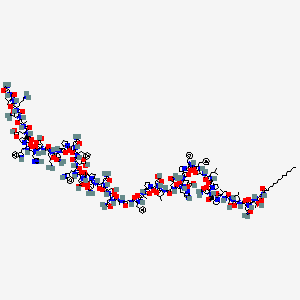
This information is for educational purposes only. It is not intended as medical advice. Always consult a qualified healthcare professional.
OTC
Hepcludex
2 mg, Proszek do sporządzania roztworu do wstrzykiwań
INN: Bulevirtidum
Data updated: 2026-04-13
Available in:
🇨🇿🇩🇪🇬🇧🇫🇷🇵🇱🇸🇰🇺🇦
Form
Proszek do sporządzania roztworu do wstrzykiwań
Dosage
2 mg
Route
podskórna
Storage
—
User Reviews
Reviews reflect personal experiences and are not medical advice. Always consult your doctor.
About This Product
Manufacturer
Gilead Sciences Ireland UC (Irlandia)
Composition
Bulevirtidum 2 mg
ATC Code
J05AX28
Source
URPL
Pharmacotherapeutic group: Antivirals for systemic use, other antivirals. ATC code: J05AX28
Mechanism of action
Bulevirtide blocks the entry of HBV and HDV into hepatocytes by binding to and inactivating NTCP, a bile salt liver transporter serving as essential HBV/HDV entry receptor.
Clinical efficacy and safety
The clinical efficacy and safety of bulevirtide was investigated in one Phase 3 study and two Phase 2 studies. Patients with chronic HDV infection and active hepatitis were included. The population of these three studies was mainly Caucasian, HDV genotype 1 was predominant.
MYR301 study
In Study 301, 100 of 150 patients with chronic HDV infection were randomised to receive immediate treatment with once daily bulevirtide 2 mg (N=49) or to have treatment delayed for 48 weeks (N=51). Randomisation was stratified by the presence or absence of compensated cirrhosis.
Of the 49 patients in the immediate treatment group, mean age was 44 years; 61% were male, 84% were White, and 16% were Asian. Of the 51 patients in the delayed treatment group, mean age was 41 years; 51% were male, 78% were White and 22% were Asian. All 100 patients had infection with HDV genotype 1.
Baseline characteristics were balanced among the immediate and delayed treatment groups. Of the patients who received 2 mg bulevirtide at baseline, mean plasma HDV RNA was 5.1 log
10
IU/mL, mean ALT was 108 U/L, 47% of patients had a history of cirrhosis, and 53% were interferon experienced. During the study (through Week 48), 63% of these patients, received concomitant therapy according to the standard care for their underlying HBV infection: the most common concomitant medications were tenofovir disoproxil fumarate-containing or tenofovir alafenamide-containing products (49%) and entecavir (14%).
The table below presents the virologic and biochemical outcomes for immediate treatment with bulevirtide 2 mg once daily and delayed treatment at Week 48.
Week 48
a
Bulevirtide 2 mg
(Immediate Treatment)
(N=49)
Delayed Treatment
(N=51)
Undetectable
b
HDV RNA or decrease in HDV RNA by ≥ 2 log
10
IU/mL and ALT normalisation
c
45%
d
2%
Undetectable
b
HDV RNA or decrease in HDV RNA by ≥ 2 log
10
IU/mL
71%
e
4%
ALT normalisation
c
51%
e
12%
a. For the first endpoint, for missing values, the last observation carrying forward (LOCF) was used if COVID-19 related; otherwise, missing = failure; for the second and third endpoints, missing = failure.
b. < lower limit of quantification LLOQ (target not detected)
c. Defined as an ALT value within the normal range: Russian sites, ≤ 31 U/L for females and ≤ 41 U/L for males; all other sites, ≤ 34 U/L for females and ≤ 49 U/L for males.
d. p-value < 0.0001.
e. Not multiplicity controlled.
MYR202 study
In Study MYR202, 56 of 118 patients with chronic HDV infection and ongoing viral replication who were interferon experienced, had a contraindication to interferon, or were cirrhotic, were randomised to receive bulevirtide 2 mg + TDF (N=28) or TDF alone (N=28) for 24 weeks. At Week 24, 21% of patients in the bulevirtide 2 mg + TDF group achieved a combined response, 54% achieved undetectable HDV RNA (defined as < limit of detection [LOD], where LOD was 14 IU/mL) or decrease by ≥ 2 log
10
IU/mL, and 43% achieved ALT normalisation. At Week 24, no patients in the TDF group achieved a combined response, 4% achieved undetectable HDV RNA or decrease in HDV RNA by ≥ 2 log
10
IU/mL, and 7% achieved ALT normalisation (normal ALT was defined as ≤ 31 U/L for females and ≤ 41 U/L for males).
MYR203 study
In Study MYR203, a total of 15 patients were treated with bulevirtide 2 mg daily for 48 weeks. In this limited dataset, the efficacy and safety profiles were not substantially different than for patients treated for 24 weeks. Two patients developed virological breakthrough, possibly related to medication non-adherence.
Immunogenicity
Bulevirtide has the potential to induce antidrug antibodies (ADA), as detected in clinical studies using an enzyme-linked immunosorbent assay (ELISA). In Studies MYR203 and MYR301, a total of 64 patients who were treated with bulevirtide 2 mg monotherapy for 48 weeks were eligible for assessment of ADA prevalence; 18 of these patients (28.1%) were positive for ADA prevalence, of which 3 patients (4.7%) were positive for ADA at baseline.
There is no evidence that the pharmacokinetics, safety, or effectiveness of bulevirtide were altered in these patients.
Paediatric population
See section 4.2 and 5.2 for information on paediatric use.
⚠️ Warnings
Each vial is intended for single use only and the excess of unused product must be properly disposed of. Sterile water for injections, syringes (with necessary graduations according to the dose to be administered), needle tips and alcohol wipes should be provided to the patient.
Instructions for use
The bulevirtide vial should be taken from the refrigerator shortly before the injection and the blue flip-off cap has to be removed. A single-use syringe should be taken and a needle tip attached to the syringe head in order to extract 1 ml of sterile water for injection into the syringe. The syringe needle with the syringe containing the sterile water for injection should then be inserted into the bulevirtide vial through the rubber stopper. The sterile water for injection inside the syringe will then be injected into the bulevirtide vial and the bulevirtide vial has to be carefully swayed until a clear solution is obtained. The required content for the dose to be administered from the bulevirtide vial has to be extracted back into the same syringe with the same needle tip (See Table below).
Required dose volumes to be extracted for administration of bulevirtide
Bulevirtide Dose
Required volume of reconstituted bulevirtide to be extracted
1 mg
0.5 ml
1.5 mg
0.75 ml
2 mg
1 ml
The needle tip has then to be detached from the syringe. To this syringe, a needle tip for subcutaneous injection has to be attached and any remaining air bubbles have to be removed from the syringe prior to injection. The content of the bulevirtide vial will then be administered subcutaneously.
Disposal of medicinal product and auxiliary components
All used components/ waste should be handled according to the current regulation.
Any unused medicinal product or waste material should be disposed of in accordance with local requirements.