This information is for educational purposes only. It is not intended as medical advice. Always consult a qualified healthcare professional.
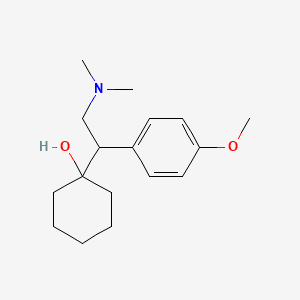
Venlafaxine is an antidepressant from the SNRI (serotonin-norepinephrine reuptake inhibitor) class, used for the treatment of depression, anxiety disorders, and panic disorders. Its effects are based on the selective inhibition of the reuptake of norepinephrine and serotonin into the presynaptic neuron. Extended-release formulations are generally taken once daily at the same time of day with a meal. The most common possible adverse effects include nausea, dry mouth, headache, drowsiness, insomnia, and sweating. Venlafaxine is metabolized by CYP2D6 and has a high potential for drug interactions.
Venlafaxine (ATC N06AX16) has antidepressant properties. The effects are delayed, appearing after one to four weeks, and are based on the selective inhibition of the reuptake of serotonin and norepinephrine into the presynaptic neuron. Dopamine reuptake is only slightly inhibited.
Unlike other antidepressants, venlafaxine does not bind to alpha-adrenoceptors, muscarinic, or histamine receptors, is not anticholinergic, and is not a MAO inhibitor. The half-life is 5 hours for venlafaxine and 11 hours for the metabolite desvenlafaxine.
Mechanism of action of reuptake inhibitors, click to enlarge. Illustration © PharmaWiki