This information is for educational purposes only. It is not intended as medical advice. Always consult a qualified healthcare professional.
Rx
Iclusig
15 mg, Tabletki powlekane
INN: Ponatinibum
Data updated: 2026-04-13
Available in:
🇨🇿🇩🇪🇬🇧🇵🇱🇵🇹🇸🇰
Form
Tabletki powlekane
Dosage
15 mg
Route
doustna
Storage
—
About This Product
User Reviews
Reviews reflect personal experiences and are not medical advice. Always consult your doctor.
Manufacturer
Incyte Biosciences Distribution B.V. (Holandia)
Composition
Ponatinibum 15 mg
ATC Code
L01EA05
Source
URPL
Pharmacotherapeutic group: antineoplastic agents, protein kinase inhibitors, ATC code: L01EA05
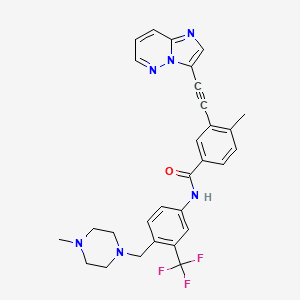
Ponatinib is a potent pan BCR-ABL inhibitor with structural elements, including a carbon-carbon triple-bond, that enable high affinity binding to native BCR-ABL and mutant forms of the ABL kinase. Ponatinib inhibits the tyrosine kinase activity of ABL and T315I mutant ABL with IC
50
values of 0.4 and 2.0 nM, respectively. In cellular assays, ponatinib was able to overcome imatinib, dasatinib, and nilotinib resistance mediated by BCR-ABL kinase domain mutations. In preclinical mutagenesis studies, 40 nM was determined as the concentration of ponatinib sufficient to inhibit viability of cells expressing all tested BCR-ABL mutants by > 50% (including T315I) and suppress the emergence of mutant clones. In a cell-based accelerated mutagenesis assay, no mutation in BCR-ABL was detected that could confer resistance to 40 nM ponatinib.
Ponatinib elicited tumour shrinkage and prolonged survival in mice bearing tumours expressing native or T315I mutant BCR-ABL.
At doses of 30 mg or greater plasma steady state trough concentrations of ponatinib typically exceed 21 ng/mL (40 nM). At doses of 15 mg or greater, 32 of 34 patients (94%) demonstrated a ≥ 50% reduction of CRK‑like (CRKL) phosphorylation, a biomarker of BCR-ABL inhibition, in peripheral blood mononuclear cells.
Ponatinib inhibits the activity of other clinically relevant kinases with IC
50
values below 20 nM and has demonstrated cellular activity against RET, FLT3, and KIT and members of the FGFR, PDGFR, and VEGFR families of kinases.
Clinical efficacy and safety
PACE Trial
The safety and efficacy of Ponatinib in CML and Ph+ ALL patients who were resistant or intolerant to prior tyrosine kinase inhibitor (TKI) therapy were evaluated in a single-arm, open-label, international, multicenter trial. All patients were administered 45 mg of Ponatinib once-daily with the possibility of dose de-escalations and dose interruptions followed by dose resumption and re-escalation. Patients were assigned to one of six cohorts based on disease phase (CP‑CML; AP‑CML; or BP‑CML/Ph+ ALL), resistance or intolerance (R/I) to dasatinib or nilotinib, and the presence of the T315I mutation.
Resistance in CP-CML was defined as failure to achieve either a complete haematological response (by 3 months), a minor cytogenetic response (by 6 months), or a major cytogenetic response (by 12 months) while on dasatinib or nilotinib. CP-CML patients who experienced a loss of response or development of a kinase domain mutation in the absence of a complete cytogenetic response or progression to AP-CML or BP‑CML at any time on dasatinib or nilotinib were also considered resistant. Resistance in AP-CML and BP‑CML/Ph+ ALL was defined as failure to achieve either a major haematological response (AP-CML by 3 months, BP-CML/Ph+ ALL by 1 month), loss of major haematological response (at any time), or development of kinase domain mutation in the absence of a major haematological response while on dasatinib or nilotinib.
Intolerance was defined as the discontinuation of dasatinib or nilotinib due to toxicities despite optimal management in the absence of a complete cytogenetic response for CP CML patients or major haematological response for AP CML, BP CML, or Ph+ ALL patients.
The primary efficacy endpoint in CP-CML was major cytogenetic response (MCyR), which included complete and partial cytogenetic responses (CCyR and PCyR) by 12 months. The secondary efficacy endpoints in CP-CML were complete haematological response (CHR) and major molecular response (MMR).
The primary efficacy endpoint in AP-CML and BP-CML/Ph+ ALL was major haematological response (MaHR), defined as either a complete haematological response (CHR) or no evidence of leukaemia (NEL). The secondary efficacy endpoints in AP-CML and BP-CML/Ph+ ALL were MCyR and MMR.
For all patients, additional secondary efficacy endpoints included: confirmed MCyR, time to response, duration of response, progression free survival, and overall survival. Also, post-hoc analyses to assess the relationship of shorter-term cytogenetic (MCyR) and molecular (MMR) response outcomes with longer-term outcomes of PFS and OS, maintenance of response (MCyR and MMR) after dose reductions, and PFS and OS by Arterial Occlusive Event status were conducted.
The trial enrolled 449 patients of which 444 were eligible for analysis: 267 CP-CML patients (R/I Cohort: n=203, T315I Cohort: n=64), 83 AP-CML patients (R/I Cohort: n=65, T315I Cohort: n=18), 62 BP-CML (R/I Cohort: n=38, T315I Cohort: n=24), and 32 Ph+ ALL patients (R/I Cohort: n=10, T315I Cohort: n=22). A prior MCyR or better (MCyR, MMR, or CMR) to dasatinib or nilotinib was only achieved in 26% patients with CP-CML and a prior MaHR or better (MaHR, MCyR, MMR, or CMR) was only achieved in 21%, and 24% of AP-CML, and BP-CML/Ph+ALL patients, respectively. Baseline demographic characteristics are described in Table 6 below.
Table 6 Demographics and disease characteristics for the PACE trial
Patient characteristics at entry
Total safety population
N=449
Age
Median, years (range)
59 (18 - 94)
Gender, n (%)
Male
238 (53%)
Race, n (%)
Asian
59 (13%)
Black/African American
25 (6%)
White
352 (78%)
Other
13 (3%)
ECOG Performance Status, n (%)
ECOG=0 or 1
414 (92%)
Disease history
Median time from diagnosis to first dose, years (range)
6.09 (0.33 - 28.47)
Resistant to Prior TKI Therapy
a
*, n (%)
374 (88%)
Prior TKI therapy– number of regimens, n (%)
1
32 (7%)
2
155 (35%)
≥ 3
262 (58%)
BCR-ABL mutation detected at entry, n (%)
b
None
198 (44%)
1
192 (43%)
≥ 2
54 (12%)
Comorbidities
Hypertension
159 (35%)
Diabetes
57 (13%)
Hypercholesterolemia
100 (22%)
History of ischemic heart disease
67 (15%)
a
* of 427 patients reporting prior TKI therapy with dasatinib or nilotinib
b
Of the patients with one or more BCR-ABL kinase domain mutations detected at entry, 37 unique mutations were detected.
Overall, 55% of patients had one or more BCR-ABL kinase domain mutation at entry with the most frequent being: T315I (29%), F317L (8%), E255K (4%) and F359V (4%). In 67% of CP-CML patients in the R/I cohort, no mutations were detected at study entry.
Efficacy results are summarized in Table 7, Table 8, and Table 9.
Table 7 Efficacy of Ponatinib in resistant or intolerant chronic phase CML patients
Overall
(N=267)
Resistant or Intolerant
R/I
Cohort
(N=203)
T315I
Cohort
(N=64)
Cytogenetic Response
Major (MCyR)
a
%
(95% CI)
55%
(49‑62)
51%
(44‑58)
70%
(58‑81)
Complete (CCyR)
%
(95% CI)
46%
(40‑52)
40%
(33-47)
66%
(53‑77)
Major Molecular Response
b
%
(95% CI)
40%
(35-47)
35%
(28-42)
58%
(45‑70)
a
Primary endpoint for CP-CML Cohorts was MCyR, which combines both complete (No detectable Ph+ cells) and partial (1% to 35% Ph+ cells) cytogenetic responses.
b
Measured in peripheral blood. Defined as a ≤ 0.1% ratio of BCR-ABL to ABL transcripts on the International Scale (IS) (ie, ≤ 0.1% BCR-ABL
IS
; patients must have the b2a2/b3a2 (p210) transcript), in peripheral blood measured by quantitative reverse transcriptase polymerase chain reaction (qRT PCR).
Database cutoff date 06 February 2017.
CP-CML patients who received fewer prior TKIs attained higher cytogenetic, haematological, and molecular responses. Of the CP-CML patients previously treated with one, two, three or four prior TKIs, 75% (12/16), 68% (66/97), 44% (63/142), and 58% (7/12)) achieved a MCyR while on Ponatinib, respectively. The median dose intensity was 28 mg/day or, 63% of the expected 45 mg dose.
Of the CP-CML patients with no mutation detected at entry, 49% (66/136) achieved a MCyR.
For every BCR-ABL mutation detected in more than one CP-CML patient at entry, a MCyR was achieved following treatment with Ponatinib.
In CP-CML patients who achieved MCyR, the median time to MCyR was 2.8 months (range: 1.6 to 11.3 months) and in patients who achieved MMR, the median time to MMR was 5.5 months (range: 1.8 to 55.5 months). At the time of updated reporting with minimum follow-up for all ongoing patients of 64 months, the median durations of MCyR and MMR had not yet been reached. Based on the Kaplan-Meier estimates, 82% (95% CI: [74%–88%]) of CP-CML (median duration of treatment: 32.2 months) patients who achieved a MCyR are projected to maintain that response at 48 months and 61% (95% CI: [51%- 70%]) of CP-CML patients who achieved a MMR are projected to maintain that response at 36 months. The probability of all patients with CP CML maintaining MCyR and MMR did not change further when the analysis was extended out to 5 years.
With a minimum follow-up of 64 months, 3.4% (9/267) of CP-CML patients experienced transformation of their disease to AP-CML or BP-CML.
For CP-CML patients overall (N=267), as well as for CP-CML R/I Cohort A patients (N=203) and T315I Cohort B patients (N=64), the median OS has not yet been reached. For the overall CP-CML disease group, the probability of survival at 2, 3, 4, and 5 years is estimated as 86.0%, 81.2%, 76.9%, and 73.3%, respectively, as shown in Figure 1.
Figure 1- Kaplan-Meier estimates for overall survival in the CP-CML population (Treated Population)
CP -CML patients who achieved MCyR or MMR response within the first year of treatment had statistically significantly improved progression-free (PFS) and overall survival (OS) compared to those patients who did not meet the treatment milestones. A MCyR at the 3-month landmark correlated strongly and statistically significantly with PFS and OS (p<0.0001 and p=0.0006, respectively). Statistical significance was achieved in the correlation of PFS and OS with a MCyR at the 12-month landmark (p=<0.0001 and p=0.0012, respectively).
Table 8 Efficacy of Ponatinib in resistant or intolerant advanced phase CML patients
Accelerated Phase CML
Blast Phase CML
Overall
(N=83)
Resistant or Intolerant
Overall
(N=62)
Resistant or Intolerant
R/I
Cohort
(N=65)
T315I
Cohort
(N=18)
R/I
Cohort
(N=38)
T315I
Cohort
(N=24)
Haematological Response Rate
Major
a
(MaHR)
%
(95% CI)
57%
(45‑68)
57%
(44‑69)
56%
(31‑79)
31%
(20–44)
32%
(18–49)
29%
(13–51)
Complete
b
(CHR)
%
(95% CI)
51%
(39-62)
49%
(37-62)
56%
(31‑79)
21%
(12‑33)
24%
(11‑40)
17%
(5‑37)
Major Cytogenetic Response
c
%
(95% CI)
39%
(28‑50)
34%
(23‑47)
56%
(31‑79)
23%
(13‑35)
18%
(8‑34)
29%
(13‑51)
a
Primary endpoint for AP-CML and BP-CML/Ph+ ALL Cohorts was MaHR, which combines complete haematological responses and no evidence of leukaemia.
b
CHR: WBC ≤ institutional ULN, ANC ≥ 1,000/mm
3
, platelets ≥ 100,000/mm
3
, no blasts or promyelocytes in peripheral blood, bone marrow blasts ≤ 5%, < 5% myelocytes plus metamyelocytes in peripheral blood, basophils < 5% in peripheral blood, No extramedullary involvement (including no hepatomegaly or splenomegaly).
c
MCyR combines both complete (No detectable Ph+ cells) and partial (1% to 35% Ph+ cells) cytogenetic responses.
Database cutoff date 06 February 2017
The median dose intensity was 32 mg/day in the AP‑CML patients.
Table 9 Efficacy of Ponatinib in resistant or intolerant Ph+ ALL patients
Overall
(N=32)
Resistant or Intolerant
R/I
Cohort
(N=10)
T315I
Cohort
(N=22)
Haematological Response Rate
Major
a
(MaHR)
%
(95% CI)
41%
(24‑59)
50%
(19‑81)
36%
(17‑59)
Complete
b
(CHR)
%
(95% CI)
34%
(19‑53)
40%
(12‑74)
32%
(14‑55)
Major Cytogenetic Response
c
%
(95% CI)
47%
(29‑65)
60%
(26‑88)
41%
(21‑64)
a
Primary endpoint for AP-CML and BP-CML/Ph+ ALL Cohorts was MaHR, which combines complete haematological responses and no evidence of leukaemia.
b
CHR: WBC ≤ institutional ULN, ANC ≥ 1,000/mm
3
, platelets ≥ 100,000/mm
3
, no blasts or promyelocytes in peripheral blood, bone marrow blasts ≤ 5%, < 5% myelocytes plus metamyelocytes in peripheral blood, basophils < 5% in peripheral blood, No extramedullary involvement (including no hepatomegaly or splenomegaly).
c
MCyR combines both complete (No detectable Ph+ cells) and partial (1% to 35% Ph+ cells) cytogenetic responses.
Database cutoff date 06 February 2017
The median dose intensity was 44 mg/day in the BP CML/Ph+ ALL patients.
The median time to MaHR in patients with AP-CML, BP-CML, and Ph+ ALL was 0.7 months (range: 0.4 to 5.8 months), 1.0 months (range: 0.4 to 3.7 months), and 0.7 months (range: 0.4 to 5.5 months), respectively. At the time of updated reporting with minimum follow-up for all ongoing patients of 64 months, the median duration of MaHR for AP-CML (median duration of treatment: 19.4 months) BP-CML (median duration of treatment: 2.9 months), and Ph+ ALL (median duration of treatment: 2.7 months) patients was estimated as 12.9 months (range: 1.2 to 68.4 months), 6.0 months (range: 1.8 to 59.6 months), and 3.2 months (range: 1.8 to 12.8 months), respectively.
For all patients in the PACE phase 2 trial, the dose intensity-safety relationship indicated that there are significant increases in grade ≥ 3 adverse events (cardiac failure, arterial thrombosis, hypertension, thrombocytopenia, pancreatitis, neutropenia, rash, ALT increase, AST increase, lipase increase, myelosuppression, arthralgia) over the dose range of 15 to 45 mg once-daily.
The analysis of the dose intensity-safety relationship in the PACE phase 2 trial concluded that after adjusting for covariates, the overall dose intensity is significantly associated with an increased risk of arterial occlusion, with an odds ratio of approximately 1.6 for each 15 mg increase. In addition, results from logistic regression analyses of data from patients in the phase 1 trial, suggest a relationship between systemic exposure (AUC) and occurrence of arterial thrombotic events. A reduction in dose is therefore expected to reduce the risk of vascular occlusive events, however, the analysis suggested that there may be a 'carry over' effect of higher doses such that it might take up to several months before a dose reduction manifests in risk reduction. Other covariates that show a statistically significant association with the occurrence of vascular occlusive events in this analysis are medical history of ischemia and age.
Dose reduction in CP-CML patients
In the PACE phase 2 trial, dose reductions were recommended following adverse events. Additional recommendations for prospective dose reduction in all CP-CML patients in the absence of adverse events were introduced in this trial with the aim of reducing the risk of vascular occlusive events.
With a minimum follow-up of 48 months, and approximately 2 years after the recommendation for prospective dose reduction, there were 110 CP-CML patients ongoing. A majority of these ongoing patients (82/110 patients; 75%) were reported to be receiving 15 mg at the last dose, while 24/110 patients (22%) were receiving 30 mg, and 4/110 (4%) were receiving 45 mg. At the time of study closure initiation (minimum follow-up of 64 months, and more than 3 years after the recommendation for prospective dose reduction), 99 CP-CML patients were ongoing and 77 (78%) of these patients received 15 mg as their last dose on study.
Safety
In the PACE phase 2 trial, 86 CP-CML patients achieved MCyR at a dose of 45 mg, 45 CP-CML patients achieved MCyR after a dose reduction to 30 mg, mostly for adverse events.
Vascular occlusive events occurred in 44 of these 131 patients. Most of these events occurred at the dose at which the patient achieved MCyR; fewer events occurred after dose reduction.
Table 10 Vascular occlusive first adverse events in CP-CML patients who achieved MCyR at 45 mg or 30 mg (data extraction 7 April 2014)
Most recent dose at onset of first vascular occlusive Event
45 mg
30 mg
15 mg
Achieved MCyR at 45 mg
(N=86)
19
6
0
Achieved MCyR at 30 mg
(N=45)
1
13
5
The median time to onset of the first cardiovascular, cerebrovascular, and peripheral vascular arterial occlusive events was 351, 611, and 605 days, respectively. When adjusted for exposure, the incidence of first arterial occlusive events was greatest in the first two years of follow-up and declined with decreasing daily dose intensity (following recommendation for prospective dose reduction). Factors other than dose may also contribute to this risk of arterial occlusion.
Efficacy
Data from the PACE phase 2 trial are available for the maintenance of response (MCyR and MMR) in all CP-CML patients who underwent dose reduction for any reason. Table 11 shows these data for patients who achieved MCyR and MMR at 45 mg; similar data are available for patients who achieved MCyR and MMR at 30 mg.
The majority of patients who underwent dose reduction maintained response (MCyR and MMR) for the duration of currently available follow-up. A proportion of patients did not undergo any dose reduction, based on an individual benefit-risk assessment.
Table 11 Maintenance of response in CP-CML patients who achieved MCyR or MMR at 45 mg dose (data extraction 6 February 2017)
Achieved MCyR at 45 mg (N=86)
Achieved MMR at 45 mg (N=63)
Number of patients
Maintained MCyR
Number of patients
Maintained MMR
No dose reduction
19
13 (68%)
18
11 (61%)
Dose reduction to 30 mg only
15
13 (87%)
5
3 (60%)
≥ 3 month reduction at 30 mg
12
10 (83%)
3
2 (67%)
≥ 6 month reduction at 30 mg
11
9 (82%)
3
2 (67%)
≥ 12 month reduction at 30 mg
8
7 (88%)
3
2 (67%)
≥ 18 month reduction at 30 mg
7
6 (86%)
2
2 (100%)
≥ 24 month reduction at 30 mg
6
6 (100%)
2
2 (100%)
≥ 36 month reduction at 30 mg
1
1 (100%)
--
--
Any dose reduction to 15 mg
52
51 (98%)
40
36 (90%)
≥3 month reduction at 15 mg
49
49 (100%)
39
36 (92%)
≥ 6 month reduction at 15 mg
47
47 (100%)
37
35 (95%)
≥ 12 month reduction at 15 mg
44
44 (100%)
34
33 (97%)
≥ 18 month day reduction at 15 mg
38
38 (100%)
29
29 (100%)
≥ 24 month reduction at 15 mg
32
32 (100%)
23
23 (100%)
≥ 36 month reduction at 15 mg
8
8 (100%)
4
4 (100%)
The anti-leukaemic activity of Ponatinib was also evaluated in a phase 1 dose escalation study that included 65 CML and Ph+ ALL patients; the study is completed. Of 43 CP-CML patients, 31 CP‑CML patients achieved a MCyR with a median duration of follow-up of 55.5 months (range: 1.7 to 91.4 months). At the time of reporting, 25 CP-CML patients were in MCyR (median duration of MCyR had not been reached).
OPTIC Open‑label randomized Phase 2 Trial
The safety and efficacy of Ponatinib was evaluated in the OPTIC phase 2 trial, a dose‑optimization trial. Eligible patients had CP‑CML whose disease was considered to be resistant to at least 2 prior kinase inhibitors or who have the T315I mutation. Resistance in CP‑CML while on a prior kinase inhibitor was defined as failure to achieve either a complete hematologic response (by 3 months), a minor cytogenetic response (by 6 months), or a major cytogenetic response (by 12 months), or development of a new BCR‑ABL1 kinase domain mutation or new clonal evolution. Patients were required to have > 1% BCR‑ABL1
IS
(by real‑time polymerase chain reaction) at trial entry. Patients received one of three starting dosages: 45 mg orally once daily, 30 mg orally once daily, or 15 mg orally once daily. Patients who received a starting dose of 45 mg or 30 mg had a mandatory dose reduction to 15 mg once daily upon achieving ≤ 1% BCR‑ABL1
IS
. The primary efficacy endpoint was a molecular response based on the achievement of ≤ 1% BCR‑ABL1
IS
at 12 months. All patients reached the 12‑month time point (primary endpoint) by the primary analysis data cut‑off. The median duration of follow‑up for the 45 mg cohort (N = 94) was 77.9 months (95% CI: 72.4, 84.0). Only the efficacy results for the recommended starting dose of 45 mg are described below. A total of 282 patients received Ponatinib: 94 received a starting dose of 45 mg, 94 received a starting dose of 30 mg, and 94 received a starting dose of 15 mg. Baseline demographic characteristics are described in Table 12 for patients who received a starting dose of 45 mg.
Table 12 Demographic and Disease Characteristics for the OPTIC trial
Patient Characteristics at Entry
Ponatinib
45 mg
→
15 mg
(N = 94)
Age
Median years (range)
46 (19 to 81)
Sex, n (%)
Male
50 (53 %)
Race, n (%)
White
73 (78%)
Asian
16 (17%)
Other/Unknown
4 (4%)
Black or African American
1 (1%)
ECOG Performance Status, n (%)
ECOG 0 or 1
93 (99%)
Disease History
Median time from diagnosis to first dose, years (range)
5.5 (1 to 21)
Resistant to Prior Kinase Inhibitor, n (%)
92 (98%)
Presence of one or more BCR‑ABL kinase domain mutations, n (%)
41 (44%)
Number of Prior Kinase Inhibitors, n (%)
1
1 (1%)
2
43 (46%)
≥ 3
50 (53%)
T315I mutation at baseline
25 (27%)
Comorbidities
Hypertension
29 (31%)
Diabetes
5 (5%)
Hypercholesterolemia
3 (3%)
History of ischemic heart disease
3 (3%)
Efficacy results are summarised in Table 13.
The primary endpoint was met in patients who received a starting dose of 45 mg.
Overall, 44% of patients had one or more BCR‑ABL kinase domain mutations at study entry with the most frequent being T315I (27%). The subgroup analysis based on baseline T315I mutation status showed similar ≤ 1% BCR‑ABL1
IS
rates at 2 months in patients with and without T315I (see Table 13 below). No mutations were detected at study entry for 54% of the patients who received the starting dose of 45 mg.
With a median follow up of 6.5 years among patients with CP‑CML, the proportion of patients experiencing transformation of their disease to either AP‑CML or BP‑CML was 11.7% and 3.2% respectively.
Table 13 Efficacy Results in Patients with CP‑CML Who Received Ponatinib at Starting Dose of 45 mg in the OPTIC Phase 2 Trial
Ponatinib
45 mg
→
15 mg
(N = 93)
(a)
Molecular Response at 12 months
(b)
Overall ≤ 1% BCR-ABL1IS Rate
% (n/N)
(98.3% CI)
(c)
44% (41/93)
(32%, 57%)
Patients with T315I mutation
% (n/N)
(95% CI)
44% (11/25)
(24%, 65%)
Patients without T315I mutation
% (n/N)
(95% CI)
44% (29/66)
(d)
(32%, 57%)
Cytogenetic Response at 12 months
Major (MCyR)
(e)
% (n/N)
(95% CI)
48% (44/91)
(f)
(38%, 59%)
Patients with T315I mutation
% (n/N)
(95% CI)
52% (13/25)
(31%, 72%)
Patients without T315I mutation
% (n/N)
(95% CI)
46% (30/65)
(g)
(34%, 59%)
(a)
ITT population (N = 93) defined as patients who had b2a2/b3a2 BCR ABL1 transcripts.
(b)
Primary endpoint was ≤ 1% BCR‑ABL1
IS
rate at 12 months. Defined as a ≤ 1% ratio of BCR ABL to ABL transcripts on the International Scale (IS) (i.e., ≤ 1% BCR‑ABL
IS
; patients must have the b2a2/b3a2 (p210) transcript), in peripheral blood measured by quantitative reverse transcriptase polymerase chain reaction (qRT PCR).
(c)
98.3% CI is calculated using the binomial exact (Clopper‑Pearson) method.
(d)
Of the 93 patients, two patients did not have a baseline mutation assessment and were excluded from the response by mutation analysis.
(e)
Secondary endpoint was MCyR by 12 months which combines both complete (no detectable Ph+ cells) and partial (1% to 35% Ph+ cells in at least 20 metaphases) cytogenetic responses.
(f)
Analysis is based on ITT cytogenetic population (N = 91) defined as patients who had a cytogenetic assessment at baseline with at least 20 metaphases examined. One patient who had a complete cytogenetic response at baseline was excluded from the analysis.
(g)
Of the 91 patients, one patient did not have a baseline mutation assessment and was excluded from the response by mutation analysis.
The secondary efficacy endpoints included complete cytogenetic response (CCyR) at 12 months, major molecular response (MMR) at 12 and 24 months, complete hematologic response at 3 months, time to response, duration of response, maintenance of response, progression free survival (PFS), and overall survival (OS). Additional assessment included the rates of molecular response at each patient visit at 3‑month intervals for 36 months based on the achievement of ≤ 1% BCR‑ABL1
IS
.
• At 12 months, 34% (31/91) and 17% (16/93) of patients achieved CCyR, and MMR, respectively. At 24 months, 34% (32/93) of patients achieved MMR. The median duration of MMR had not yet been reached.
• The median duration of ponatinib treatment was 31 months.
• Of the 45 patients who had a dose reduction from 45 mg to 15 mg after achieving ≤ 1% BCR‑ABL1
IS
, 25 patients (55.6%) maintained their response at the reduced dose for at least one year. Of these 25 patients, 16 patients (64%) maintained the response at 15 mg for greater than 60 months. Median duration of response (MR2) was not reached. The probabilities of maintaining MR2 at 60 months was 68.8% (95% CI, 53.9, 79.8).
• The molecular response rates (≤1% BCR-ABL
IS
) by 60 months was 64.0% (95% CI 42.5, 82.0) in patients with T315I mutation and 59.1% (95% CI, 46.3, 71.0) in patients without T315I mutation.
• The molecular response rates (≤ 1% BCR‑ABL1
IS
) at 12 months were lower among patients who had received treatment with ≤ 2 prior TKIs compared with patients who had received ≥ 3 prior TKIs (40% vs 48%), respectively).
Cardiac electrophysiology
The QT interval prolongation potential of Ponatinib was assessed in 39 leukaemia patients who received 30 mg, 45 mg, or 60 mg Ponatinib once daily. Serial ECGs in triplicate were collected at baseline and at steady state to evaluate the effect of ponatinib on QT intervals. No clinically significant changes in the mean QTc interval (i.e., > 20 ms) from baseline were detected in the study. In addition, the pharmacokinetic-pharmacodynamic models show no exposure-effect relationship, with an estimated QTcF mean change of –6.4 ms (upper confidence interval –0.9 ms) at C
max
for the 60 mg group.
Paediatric population
The Medicines and Healthcare products Regulatory Agency has waived the obligation to submit the results of studies with Ponatinib in children from birth to less than 1 year in CML and Ph+ ALL. The Medicines and Healthcare products Regulatory Agency has deferred the obligation to submit the results of studies with Ponatinib in paediatric patients from 1 year to less than 18 years in CML and Ph+ ALL (see section 4.2 for information on paediatric use).