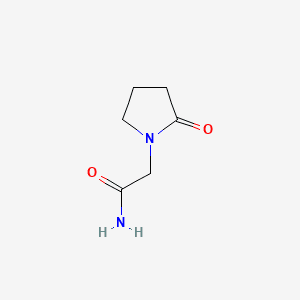
Pharmacotherapeutic group: Nootropics, ATC code: N06B X03
Mechanism of action
Piracetam's mode of action in cortical myoclonus is as yet unknown.
Pharmacodynamic effects
Piracetam exerts its haemorrheological effects on the platelets, red blood cells, and vessel walls by increasing erythrocyte deformability and by decreasing platelet aggregation, erythrocyte adhesion to vessel walls and capillary vasospasm.
- Effects on the red blood cells:
In patients with sickle cell anaemia, piracetam improves the deformability of the erythrocyte membrane, decreases blood viscosity, and prevents rouleaux formation.
- Effects on platelets:
In open studies in healthy volunteers and in patients with Raynaud's phenomenon, increasing doses of piracetam up to 12 g was associated with a dose-dependent reduction in platelet functions compared with pre-treatment values (tests of aggregation induced by ADP, collagen, epinephrine and ßTG release), without significant change in platelet count. In these studies, piracetam prolonged bleeding time.
- Effects on blood vessels:
In animal studies, piracetam inhibited vasospasm and counteracted the effects of various spasmogenic agents. It lacked any vasodilatory action and did not induce “steal” phenomenon, nor low or no reflow, nor hypotensive effects.
In healthy volunteers, piracetam reduced the adhesion of RBCs to vascular endothelium and possessed also a direct stimulant effect on prostacycline synthesis in healthy endothelium.
-Effects on coagulation factors:
In healthy volunteers, compared with pre-treatment values, piracetam up to 9.6 g reduced plasma levels of fibrinogen and von Willebrand's factors (VIII : C; VIII R : AG; VIII R : vW) by 30 to 40 %, and increased bleeding time.
In patients with both primary and secondary Raynaud phenomenon, compared with pre-treatment values, piracetam 8 g/d during 6 months reduced plasma levels of fibrinogen and von Willebrand's factors (VIII : C; VIII R : AG; VIII R : vW (RCF)) by 30 to 40 %, reduced plasma viscosity, and increased bleeding time.