This information is for educational purposes only. It is not intended as medical advice. Always consult a qualified healthcare professional.
Rx
Arixtra
1,5 mg/0,3 ml, Roztwór do wstrzykiwań
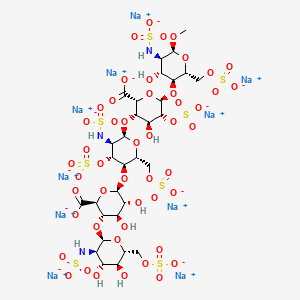
INN: Fondaparinuxum natricum
Data updated: 2026-04-13
Available in:
🇨🇿🇩🇪🇬🇧🇵🇱🇸🇰🇹🇷
Form
Roztwór do wstrzykiwań
Dosage
1,5 mg/0,3 ml
Route
podanie podskórne
Storage
—
About This Product
User Reviews
Reviews reflect personal experiences and are not medical advice. Always consult your doctor.
Manufacturer
Viatris Healthcare Limited (Francja)
Composition
Fondaparinuxum natricum 1,5 mg
ATC Code
B01AX05
Source
URPL
Pharmacotherapeutic group: antithrombotic agents.
ATC code: B01AX05
Pharmacodynamic effects
Fondaparinux is a synthetic and selective inhibitor of activated Factor X (Xa). The antithrombotic activity of fondaparinux is the result of antithrombin III (antithrombin) mediated selective inhibition of Factor Xa. By binding selectively to antithrombin, fondaparinux potentiates (about 300 times) the innate neutralization of Factor Xa by antithrombin. Neutralisation of Factor Xa interrupts the blood coagulation cascade and inhibits both thrombin formation and thrombus development. Fondaparinux does not inactivate thrombin (activated Factor II) and has no effects on platelets.
At the doses used for treatment, fondaparinux does not
,
to a clinically relevant extent, affect routine coagulation tests such as activated partial thromboplastin time (aPTT), activated clotting time (ACT) or prothrombin time (PT)/International Normalised Ratio (INR) tests in plasma nor bleeding time or fibrinolytic activity. However, rare spontaneous reports of aPTT prolongation have been received. At higher doses, moderate changes in aPTT can occur. At the 10 mg dose used in interaction studies, fondaparinux did not significantly influence the anticoagulation activity (INR) of warfarin.
Fondaparinux does not usually cross-react with sera from patients with heparin-induced thrombocytopaenia (HIT). However, rare spontaneous reports of HIT in patients treated with fondaparinux have been received.
Clinical studies
The fondaparinux clinical program in treatment of Venous Thromboembolism was designed to demonstrate the efficacy of fondaparinux for the treatment of deep vein thrombosis (DVT) and pulmonary embolism (PE). Over 4,874 patients were studied in controlled Phase II and III clinical studies.
Treatment of Deep Venous Thrombosis
In a randomised, double-blind, clinical trial in patients with a confirmed diagnosis of acute symptomatic DVT, fondaparinux 5 mg (body weight < 50 kg), 7.5 mg (body weight ≥ 50 kg, ≤ 100 kg) or 10 mg (body weight >100 kg) SC once daily was compared to enoxaparin sodium 1 mg/kg SC twice daily. A total of 2,192 patients were treated; for both groups, patients were treated for at least 5 days and up to 26 days (mean 7 days). Both treatment groups received Vitamin K antagonist therapy usually initiated within 72 hours after the first study drug administration and continued for 90 ± 7 days, with regular dose adjustments to achieve an INR of 2-3. The primary efficacy endpoint was the composite of confirmed symptomatic recurrent non-fatal VTE and fatal VTE reported up to Day 97. Treatment with fondaparinux was demonstrated to be non-inferior to enoxaparin (VTE rates 3.9% and 4.1%, respectively).
Major bleeding during the initial treatment period was observed in 1.1% of fondaparinux patients, compared to 1.2% with enoxaparin.
Treatment of Pulmonary Embolism
A randomised, open-label, clinical trial was conducted in patients with acute symptomatic PE. The diagnosis was confirmed by objective testing (lung scan, pulmonary angiography or spiral CT scan). Patients who required thrombolysis or embolectomy or vena cava filter were excluded. Randomised patients could have been pre-treated with UFH during the screening phase but patients treated for more than 24 hours with therapeutic dose of anticoagulant or with uncontrolled hypertension were excluded. Fondaparinux 5 mg (body weight < 50 kg), 7.5 mg (body weight ≥ 50kg, ≤ 100 kg) or 10 mg (body weight >100 kg) SC once daily was compared to unfractionated heparin IV bolus (5,000 IU) followed by a continuous IV infusion adjusted to maintain 1.5–2.5 times aPTT control value. A total of 2,184 patients were treated; for both groups, patients were treated for at least 5 days and up to 22 days (mean 7 days). Both treatment groups received Vitamin K antagonist therapy usually initiated within 72 hours after the first study drug administration and continued for 90 ± 7 days, with regular dose adjustments to achieve an INR of 2-3. The primary efficacy endpoint was the composite of confirmed symptomatic recurrent non-fatal VTE and fatal VTE reported up to Day 97. Treatment with fondaparinux was demonstrated to be non-inferior to unfractionated heparin (VTE rates 3.8% and 5.0%, respectively).
Major bleeding during the initial treatment period was observed in 1.3% of fondaparinux patients, compared to 1.1% with unfractionated heparin.
Treatment of Venous Thromboembolism (VTE) in Paediatric Patients
Safety and effectiveness of fondaparinux in paediatric patients have not been established in prospective randomized clinical studies (see section 4.2).
In an open-label, single-arm, retrospective, non-randomised, single center clinical study, 366 paediatric patients were consecutively treated with fondaparinux. Out of these 366 patients, 313 patients with diagnosis of VTE were included in efficacy analysis set of which 221 patients reported use of fondaparinux for > 14 days and other anticoagulants for < 33% of the overall fondaparinux treatment duration. The most common type of VTE was catheter-related thrombosis (N=179, 48.9%); 86 patients had lower extremity thromboses, 22 patients had cerebral sinus thromboses and 9 patients had pulmonary embolism. Patients were started on fondaparinux 0.1 mg/kg once daily with doses rounded to the nearest prefilled syringe (2.5 mg, 5 mg, or 7.5 mg) for patients weighing over 20 kg. For patients weighing 10-20 kg, dosing was based on body weight without rounding to the nearest prefilled syringe. Fondaparinux levels were monitored after the second or third dose until therapeutic levels were achieved. Fondaparinux levels were then monitored weekly initially and every 1-3 months while outpatient. Dosing adjustments were made to achieve peak fondaparinux blood concentration within the therapeutic target of 0.5-1.0 mg/L. The maximum dose was not to exceed 7.5 mg/day.
Patients received an initial median dose of approximately 0.1 mg/kg body weight, which translates into a median dose of 1.37 mg in the <20 kg weight group, 2.5 mg in the 20 to <40 kg weight group, 5 mg in the 40 to <60 kg, and 7.5 mg in the ≥60 kg weight group. Based on median values, it took approximately 3 days to achieve therapeutic levels across all age groups (see section 5.2). In the study, the median duration of fondaparinux treatment was 85.0 days (range 1 to 3,768 days).
The primary efficacy was based on measuring the proportion of paediatric patients with complete clot resolution up to 3 months (± 15 days). Summaries of complete clot resolution of patients' main VTEs at month 3 are provided by age group and weight group in table 1 and 2.
Table 1. Summary of complete clot resolution of main VTEs up to month 3 by age group
Parameter
<2 years
(N=30)
n (%)
≥2 to <6 years
(N=61)
n (%)
≥6 to <12 years
(N=72)
n (%)
≥12 to <18 years
(N=150)
n (%)
Complete Resolution of At Least One Clot, n (%)
14 (46.7)
26 (42.6)
38 (52.8)
65 (43.3)
Complete Resolution of All Clots, n (%)
14 (46.7)
25 (41.0)
37 (51.4)
64 (42.7)
Table 2. Summary of complete clot resolution of main VTEs up to month 3 by weight group
Parameter
<20 kg
(N=91)
n (%)
20 to <40 kg
(N=78)
n (%)
40 to <60 kg
(N=70)
n (%)
≥60 kg
(N=73)
n (%)
Complete Resolution of At Least One Clot, n (%)
42 (46.2)
42 (53.8)
30 (42.9)
28 (38.4)
Complete Resolution of All Clots, n (%)
41 (45.1)
42 (53.8)
29 (41.4)
27 (37.0)
⚠️ Warnings
The subcutaneous injection is administered in the same way as with a classical syringe.
Parenteral solutions should be inspected visually for particulate matter and discoloration prior to administration.
Instruction for self-administration is mentioned in the Package Leaflet.
The Arixtra pre-filled syringes have been designed with a needle protection system to prevent needle stick injuries following injection.
Any unused medicinal product or waste material should be disposed of in accordance with local requirements.
This medicinal product is for single use only.