Reviews reflect personal experiences and are not medical advice. Always consult your doctor.
Manufacturer
Merck Sharp & Dohme B.V. (Francja)
Composition
Ribavirinum 200 mg
ATC Code
J05AP01
Source
URPL
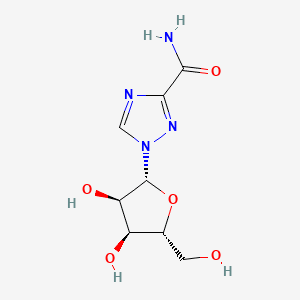
DESCRIPTION Ribavirin is a synthetic nucleoside with antiviral activity. Ribavirin for inhalation solution, USP is a sterile, lyophilized powder to be reconstituted for aerosol administration. Each 100 mL glass vial contains 6 grams of ribavirin, and when reconstituted to the recommended volume of 300 mL with sterile water for injection or sterile water for inhalation (no preservatives added), will contain 20 mg of ribavirin per mL, pH approximately 5.5. Aerosolization is to be carried out in a Small Particle Aerosol Generator (SPAG-2) nebulizer only. Ribavirin is 1-beta-D-ribofuranosyl-1H-1,2,4-triazole-3-carboxamide, with the following structural formula: Ribavirin is a stable, white crystalline compound with a maximum solubility in water of 142 mg/mL at 25°C and with only a slight solubility in ethanol. The empirical formula is C 8 H 12 N 4 O 5 and the molecular weight is 244.21. Image
⚠️ Warnings
WARNINGS SUDDEN DETERIORATION OF RESPIRATORY FUNCTION HAS BEEN ASSOCIATED WITH INITIATION OF AEROSOLIZED RIBAVIRIN FOR INHALATION SOLUTION, USP USE IN INFANTS. Respiratory function should be carefully monitored during treatment. If initiation of aerosolized ribavirin for inhalation solution, USP treatment appears to produce sudden deterioration of respiratory function, treatment should be stopped and reinstituted only with extreme caution, continuous monitoring, and consideration of concomitant administration of bronchodilators. Use with Mechanical Ventilators USE OF AEROSOLIZED RIBAVIRIN FOR INHALATION SOLUTION, USP IN PATIENTS REQUIRING MECHANICAL VENTILATOR ASSISTANCE SHOULD BE UNDERTAKEN ONLY BY PHYSICIANS AND SUPPORT STAFF FAMILIAR WITH THIS MODE OF ADMINISTRATION AND THE SPECIFIC VENTILATOR BEING USED. Strict attention must be paid to procedures that have been shown to minimize the accumulation of drug precipitate, which can result in mechanical ventilator dysfunction and associated increased pulmonary pressures. These procedures include the use of bacteria filters in series in the expiratory limb of the ventilator circuit with frequent changes (every 4 hours), water column pressure release valves to indicate elevated ventilator pressures, frequent monitoring of these devices and verification that ribavirin crystals have not accumulated within the ventilator circuitry, and frequent suctioning and monitoring of the patient (see Clinical Studies). Those administering aerosolized ribavirin for inhalation solution, USP in conjunction with mechanical ventilator use should be thoroughly familiar with detailed descriptions of these procedures as outlined in the SPAG-2 manual.