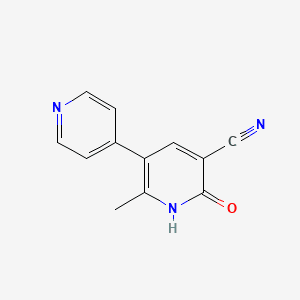
Pharmacotherapeutic group: phosphodiesterase inhibitors.
ATC code: C01CE02.
Milrinone is a positive inotropic and vasodilating substance with low chronotropic, bathmotropic and dromotropic effects.
It differs in structure and mode of action from both the digitalis glycosides and the catecholamines.
Milrinone is a selective inhibitor of the peak-III- cAMP -phosphodiesterase -isoenzyme in myocardium and the tunica media at inotropic and vasorelaxant concentrations. This inhibitory effect leads to a cAMP-mediated increase in intracellular Ca
2+
in the myocardial cell and the contraction force of the myocardium as well as cAMP dependent phosphorylation of the contractile proteins.
In the tunica media cells, there is a cAMP mediated decrease of the intracellular Ca
2+
and thus leads to a relaxation of the vascular musculature. Further experimental evidence suggests that milrinone is neither a beta-receptor agonist nor does it resemble the Na
+
/Ka
+
ATPase inhibitory effect of digitalis glycosides.
Clinical trials in cardiac failure patients have shown that milrinone increases the rate of maximum left ventricular pressure rise as a function of the dose and its plasma concentration. Studies in healthy volunteers have shown an increase in left ventricular pressure-volume relationship during milrinone therapy. This indicates a direct inotropic effect of the substance. Milrinone also resulted in a dose and plasma concentration dependent increase in forearm blood flow in patients with cardiac failure, indicating a direct vasodilatory effect on the arteries.
In addition to increasing myocardial contractility, milrinone improves diastolic function. This was demonstrated by improvements in left ventricular diastolic relaxation.
In patients with impaired myocardial function, milrinone injection in the usual dose range increased cardiac index and decreased pulmonary capillary pressure and vascular resistance. The heart rate increased by 3% to 10% depending on the dose. The mean arterial blood pressure fell dose dependently by 5% to 17%. The hemodynamic improvements correlated with dose and milrinone plasma concentration and were accompanied by improvement in clinical symptoms. The vast majority of patients showed improvements in hemodynamic parameters within five to fifteen minutes of treatment initiation.
Milrinone also has a positive inotropic effect in digitalized patients. There is no evidence that milrinone increases the toxicity of glycosides. Approximately maximum effects of milrinone on cardiac output and pulmonary capillary pressure are attained at milrinone plasma concentrations ranging from 150 ng/ml to 250 ng/ml.
Children and adolescents:
Upon reviewing the literature, there were clinical studies in patients treated for low-cardiac output syndrome status post cardiac surgery due to septic shock or pulmonary hypertension. The usual dosage consisted of an initial dose from 50 to 75 microgram/kg for 30 to 60 minutes followed by a continuous intravenous infusion of 0.25 to 0.75 microgram/kg / min for up to 35 hours. In these studies, milrinone showed an increase in cardiac output, a decrease in cardiac filling pressure, and a decrease in systemic and pulmonary vascular resistance, along with a minimal change in heart rate and myocardial oxygen consumption.
There are inadequate studies on prolonged use of milrinone to recommend a duration of more than 35 hours.
Some studies have investigated the use of milrinone in children with non-hyperdynamic septic shock, the effect of milrinone on postsurgical pulmonary hypertension after bypass to correct a Tetralogy of Fallot and the combined effect of nitric oxide and milrinone on pulmonary circulation after Fontan surgery. The study results were not conclusive. Therefore, milrinone cannot be recommended for these indications.
⚠️ Warnings
Instructions for dilution and administration:
Infusion solutions should be freshly prepared before use.
The following diluents may be used to prepare solutions for infusion:
• 0.9% Sodium Chloride Infusion
• 5% Glucose Infusion
Initial dose
The initial dose is 50 micrograms (0.05 mg) of milrinone/kg. It is administered slowly over a period of 10 minutes. This is usually followed by a continuous maintenance infusion.
Maintenance dose
The maintenance dose is generally 0.5 micrograms of milrinone /kg /minute. However, it may be between 0.375 micrograms of milrinone/kg/minute and 0.75 micrograms of milrinone/kg/minute.
To administer the maintenance dose, prepare an infusion solution containing 200 micrograms of milrinone/ml. It is prepared by adding 40 ml of a carrier solution to 10 ml undiluted milrinone solution for injection. The carrier solutions can be 0.9% Sodium Chloride Infusion or 5% Glucose Infusion.
Delivery rates:
Adults
The following provides a guide to maintenance infusion delivery rate based upon a solution containing milrinone 200microgram/ml
Maintenance Dose
(microgram/kg/minute)
Infusion rate*
(milliliter/kg/hour)
0.375
0.11
0.400
0.12
0.500
0.15
0.600
0.18
0.700
0.21
0.750
0.22
Patients with renal impairment:
The following maintenance infusion rates are recommended using the infusion solution described above.
Creatinine clearance
(ml/min/1.73 m
2
),
Maintenance dose
(microgram/kg /minute)
Infusion rate*
(milliliter/kg/hour).
5
0.20
0.06
10
0.23
0.07
20
0.28
0.08
30
0.33
0.10
40
0.38
0.11
50
0.43
0.13
The infusion rate should be adjusted according to hemodynamic response. See section 4.2.
The vials are for single use only and should be discarded immediately after initial use.