This information is for educational purposes only. It is not intended as medical advice. Always consult a qualified healthcare professional.
⚠️ Warnings
As with all other neuromuscular blocking agents, atracurium besilate paralyses the respiratory muscles along with other skeletal muscles, but has no effect on consciousness. The medicinal product should only be administered in facilities equipped for endotracheal intubation and controlled ventilation, under adequate general anaesthesia, and by or under the direct supervision of an experienced anaesthetist.
Histamine release may occur upon administration of atracurium besilate in susceptible patients. Caution is required when administering atracurium besilate to patients with a history suggesting increased sensitivity to the effects of histamine. Bronchospasm may occur particularly in patients with a history of allergy or asthma.
Caution is required when administering atracurium besilate to patients with hypersensitivity to other neuromuscular blocking agents, as a high rate of cross-sensitivity (greater than 50%) between neuromuscular blocking agents has been reported (see section 4.3).
Atracurium besilate at recommended doses does not have significant vagolytic or ganglionic blocking properties. Therefore, at recommended doses, the medicinal product has no clinically significant effect on heart rate and does not counteract bradycardia caused by other anaesthetic agents or vagal stimulation during surgery.
As with other non-depolarising neuromuscular blocking agents, increased sensitivity to atracurium besilate may be expected in patients with myasthenia gravis or other forms of neuromuscular disorders, and in severe electrolyte imbalances.
In patients who may be unusually sensitive to decreases in arterial blood pressure, e.g. patients with hypovolaemia, atracurium besilate should be administered over 60 seconds.
Atracurium besilate is inactivated at high pH and must therefore not be mixed in the same syringe with thiopental solutions or other alkaline solutions.
If a small vein is selected for administration of atracurium besilate, the vein should be flushed with normal saline after injection. When other medicinal products are administered through the same indwelling needle or cannula as atracurium besilate, it is important that each product is flushed through with an adequate volume of normal saline.
This medicinal product is a hypotonic solution and must not be administered through the same intravenous line as blood transfusions.
Studies of malignant hyperthermia in susceptible animals (pig) and clinical studies in patients susceptible to malignant hyperthermia have shown that atracurium besilate does not trigger this syndrome.
As with other non-depolarising neuromuscular blocking agents, resistance to the muscle relaxant effects of atracurium besilate may develop in patients with burns. These patients may require higher doses, depending on the time elapsed since the burn injury and the extent of the burn.
Intensive care unit patients
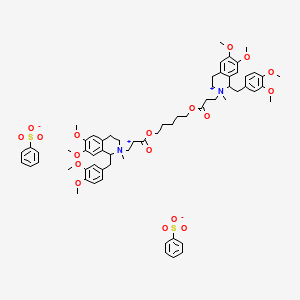
Administration of laudanosine, one of the metabolites of atracurium besilate, to experimental animals has been associated with transient hypotension and, in some species, with cerebral excitatory effects.
Although seizures have been observed in ICU patients receiving atracurium besilate, a causal relationship with laudanosine has not been established (see section 4.8).