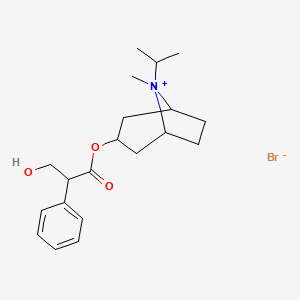
Pharmacotherapeutic group: Anticholinergics
ATC code: R03BB01
Ipratropium bromide is a quaternary ammonium compound with anticholinergic (parasympatholytic) properties. Based on non-clinical studies, it inhibits vagally mediated reflexes by antagonising the effect of acetylcholine — the transmitter released by the vagus nerve. Anticholinergic agents prevent the increase in intracellular Ca2+ concentration that occurs following the interaction of acetylcholine with muscarinic receptors on bronchial smooth muscle. The release of Ca2+ is mediated by a second messenger system consisting of IP3 (inositol triphosphate) and DAG (diacylglycerol).
Bronchodilation following inhalation of Atrovent is primarily a local (not systemic), site-specific effect on the lungs.
Non-clinical and clinical studies indicate no deleterious effect of Atrovent on airway mucous secretion, mucociliary clearance, or gas exchange.
Clinical studies
In controlled 85- to 90-day studies involving patients with bronchospasm associated with COPD (chronic bronchitis with emphysema), significant improvement in pulmonary function was demonstrated within 15 minutes of administration. Peak effect was achieved at 1–2 hours and persisted for up to 4–6 hours in the majority of patients.
The bronchodilatory effect of Atrovent in the treatment of acute bronchospasm associated with asthma was demonstrated in studies involving adult patients and children over 6 years of age. In the majority of these studies, Atrovent was administered together with inhaled beta-mimetics.
Although data are limited, Atrovent has been shown to have a therapeutic effect in the treatment of bronchospasm in viral bronchiolitis and bronchopulmonary dysplasia in infants and young children.
⚠️ Warnings
Hypersensitivity
In rare cases, immediate hypersensitivity reactions may occur following administration of Atrovent, such as urticaria, angioedema, skin rash, bronchospasm, oropharyngeal oedema, and anaphylactic reactions.
Paradoxical bronchospasm
As with other inhaled medicines, Atrovent may cause paradoxical bronchospasm, which may be life-threatening. If paradoxical bronchospasm occurs, treatment with Atrovent must be discontinued immediately and replaced with alternative therapy.
Ocular complications
Atrovent must be administered with caution in patients predisposed to narrow-angle glaucoma.
Ocular complications (mydriasis, increased intraocular pressure, narrow-angle glaucoma, eye pain) have been reported in isolated cases when the aerosolised form of ipratropium bromide, either alone or in combination with beta2-agonists, came into contact with the eyes.
Eye pain, ocular discomfort, blurred vision, visual haloes, or rainbow vision associated with red eyes caused by conjunctival hyperaemia and corneal oedema may be signs of acute narrow-angle glaucoma. If any combination of these symptoms occurs, treatment with miotic eye drops should be initiated and specialist ophthalmological advice should be sought.
Patients must be instructed on the correct technique for administering Atrovent. Care should be taken to prevent the solution or its aerosol from entering the eyes.
It is recommended that the nebulised solution be administered via a mouthpiece. If a mouthpiece is unavailable and a nebuliser mask is used, it must fit properly. Patients predisposed to glaucoma must be specifically warned of the need to protect their eyes.
Effects on the kidneys and urinary tract
Atrovent should be administered with caution in patients with pre-existing urinary outflow obstruction (e.g., prostatic hyperplasia or bladder neck obstruction).
Gastrointestinal motility disorders
Patients with cystic fibrosis may be more susceptible to gastrointestinal motility disorders.
Excipients
This medicinal product contains 0.1 mg benzalkonium chloride per 1 ml of solution.
Benzalkonium chloride may cause wheezing or breathing difficulties. There is an increased risk of these adverse effects in patients with asthma.