This information is for educational purposes only. It is not intended as medical advice. Always consult a qualified healthcare professional.
Azopt — Description, Dosage, Side Effects | PillsCard
Rx
Azopt
10 mg/ml, Krople do oczu, zawiesina
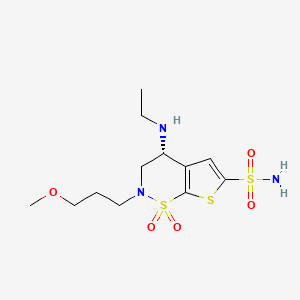
INN: Brinzolamidum
Data updated: 2026-04-13
Available in:
🇨🇿🇩🇪🇬🇧🇫🇷🇵🇱🇸🇰🇹🇷🇺🇦
Form
Krople do oczu, zawiesina
Dosage
10 mg/ml
Route
do oka
Storage
—
About This Product
User Reviews
Reviews reflect personal experiences and are not medical advice. Always consult your doctor.
Manufacturer
Novartis Europharm Limited (Hiszpania)
Composition
Brinzolamidum 10 mg
ATC Code
S01EC04
Source
URPL
Pharmacotherapeutic group: Ophthalmologicals, Antiglaucoma preparation and miotics
ATC code: S01ED51
Mechanism of action
AZARGA contains two active substances: brinzolamide and timolol maleate. These two components decrease elevated IOP primarily by reducing aqueous humour secretion, but do so by different mechanisms of action. The combined effect of these two active substances results in additional IOP reduction compared to either compound alone.
Brinzolamide is a potent inhibitor of human carbonic anhydrase II (CA-II), the predominant iso-enzyme in the eye. Inhibition of carbonic anhydrase in the ciliary processes of the eye decreases aqueous humour secretion, presumably by slowing the formation of bicarbonate ions with subsequent reduction in sodium and fluid transport.
Timolol is a non-selective adrenergic-blocking agent that has no intrinsic sympathomimetic, direct myocardial depressant or membrane-stabilising activity. Tonography and fluorophotometry studies in man suggest that its predominant action is related to reduced aqueous humour formation and a slight increase in outflow facility.
Pharmacodynamic effects
Clinical effects:
In a twelve-month, controlled clinical trial in patients with open-angle glaucoma or ocular hypertension who, in the investigator's opinion could benefit from a combination therapy, and who had baseline mean IOP of 25 to 27 mmHg, the mean IOP-lowering effect of AZARGA dosed twice daily was 7 to 9 mmHg. The non-inferiority of AZARGA as compared to dorzolamide 20 mg/ml + timolol 5 mg/ml in the mean IOP reduction was demonstrated across all time-points at all visits.
In a six-month, controlled clinical study in patients with open-angle glaucoma or ocular hypertension and baseline mean IOP of 25 to 27 mmHg, the mean IOP-lowering effect of AZARGA dosed twice daily was 8 to 9 mmHg, and was up to 3 mmHg greater than that of brinzolamide 10 mg/ml dosed twice daily and up to 2 mmHg greater than that of timolol 5 mg/ml dosed twice daily. A statistically superior reduction in mean IOP was observed compared to both brinzolamide and timolol at all time-points and visits throughout the study.
In three controlled clinical trials, the ocular discomfort upon instillation of AZARGA was significantly lower than that of dorzolamide 20 mg/ml + timolol 5 mg/ml.