This information is for educational purposes only. It is not intended as medical advice. Always consult a qualified healthcare professional.
Dupixent — Description, Dosage, Side Effects | PillsCard
OTC
Dupixent
300 mg (150 mg/ml), Roztwór do wstrzykiwań w ampułko-strzykawce
INN: Dupilumabum
Data updated: 2026-04-08
Available in:
🇨🇿🇩🇪🇬🇧🇫🇷🇵🇱🇵🇹🇸🇰🇺🇦
Form
Roztwór do wstrzykiwań w ampułko-strzykawce
Dosage
300 mg (150 mg/ml)
Route
—
Storage
—
User Reviews
Reviews reflect personal experiences and are not medical advice. Always consult your doctor.
About This Product
Manufacturer
Sanofi Winthrop Industrie
ATC Code
D11AH05
Source
URPL
Pharmacotherapeutic group: Other dermatological preparations, agents for dermatitis, excluding corticosteroids, ATC code: D11AH05
Mechanism of action
Dupilumab is a recombinant human IgG4 monoclonal antibody that inhibits interleukin-4 and interleukin‑13 signaling. Dupilumab inhibits IL‑4 signaling via the Type I receptor (IL‑4Rα/γc), and both IL-4 and IL‑13 signalling through the Type II receptor (IL-4Rα/IL-13Rα). IL-4 and IL-13 are major drivers of human type 2 inflammatory disease, such as atopic dermatitis, asthma, and EoE, and CSU. Blocking the IL-4/IL-13 pathway with dupilumab in patients decreases many of the mediators of type 2 inflammation.
Pharmacodynamic effects
In atopic dermatitis clinical trials, treatment with dupilumab was associated with decreases from baseline in concentrations of type 2 immunity biomarkers, such as thymus and activation‑regulated chemokine (TARC/CCL17), total serum IgE and allergen-specific IgE in serum. A reduction of lactate dehydrogenase (LDH), a biomarker associated with AD disease activity and severity, was observed with dupilumab treatment in adults and adolescents with atopic dermatitis.
In adult and adolescent patients with asthma, dupilumab treatment relative to placebo markedly decreased FeNO and circulating concentrations of eotaxin-3, total IgE, allergen specific IgE, TARC, and periostin, the type 2 biomarkers evaluated in clinical trials. These reductions in type 2 inflammatory biomarkers were comparable for the 200 mg Q2W and 300 mg Q2W regimens. In paediatric (6 to 11 years of age) patients with asthma, dupilumab treatment relative to placebo markedly decreased FeNO and circulating concentrations of total IgE, allergen specific IgE, and TARC, the type 2 biomarkers evaluated in clinical trials. These markers were near maximal suppression after 2 weeks of treatment, except for IgE which declined more slowly. These effects were sustained throughout treatment.
Clinical efficacy and safety in atopic dermatitis
Adolescents with atopic dermatitis (12 to 17 years of age)
The efficacy and safety of dupilumab monotherapy in adolescent patients was evaluated in a multicentre, randomised, double-blind, placebo-controlled study (AD-1526) in 251 adolescent patients 12 to 17 years of age with moderate-to-severe atopic dermatitis (AD) defined by Investigator's Global Assessment (IGA) score ≥3 in the overall assessment of AD lesions on a severity scale of 0 to 4, an Eczema Area and Severity Index (EASI) score ≥ 16 on a scale of 0 to 72, and a minimum body surface area (BSA) involvement of ≥10 %. Eligible patients enrolled into this study had previous inadequate response to topical medication.
Patients received dupilumab was administered by subcutaneous (SC) injections either as: 1) an initial dose of 400 mg dupilumab (two 200 mg injections) on day 1, followed by 200 mg once every other week (Q2W) for patients with baseline weight of < 60 kg or an initial dose of 600 mg dupilumab (two 300 mg injections) on day 1, followed by 300 mg Q2W for patients with baseline weight of ≥ 60 kg; or 2) an initial dose of 600 mg dupilumab (two 300 mg injections) on day 1, followed by 300 mg every 4 weeks (Q4W) regardless of baseline body weight; or 3) matching placebo. If needed to control intolerable symptoms, patients were permitted to receive rescue treatment at the discretion of the investigator. Patients who received rescue treatment were considered non-responders.
In this study, the mean age was 14.5 years, the median weight was 59.4 kg, 41.0 % were female, 62.5 % were White, 15.1 % were Asian, and 12.0 % were Black. At baseline 46.2 % of patients had a baseline IGA score of 3 (moderate AD), 53.8 % of patients had a baseline IGA of 4 (severe AD), the mean BSA involvement was 56.5 %, and 42.4 % of patients had received prior systemic immunosuppressants. Also at baseline the mean Eczema Area and Severity Index (EASI) score was 35.5, the baseline weekly averaged pruritus Numerical Rating Scale (NRS) was 7.6, the baseline mean Patient Oriented Eczema Measure (POEM) score was 21.0, and the baseline mean Children Dermatology Life Quality Index (CDLQI) was 13.6. Overall, 92.0 % of patients had at least one co-morbid allergic condition; 65.6 % had allergic rhinitis, 53.6 % had asthma, and 60.8 % had food allergies.
The co-primary endpoint was the proportion of patients with IGA 0 or 1 (“clear” or “almost clear”) least a 2-point improvement and the proportion of patients with EASI-75 (improvement of at least 75 % in EASI), from baseline to week 16.
Clinical Response
The efficacy results at week 16 for adolescent atopic dermatitis study are presented in Table 8.
Table 8: Efficacy results of dupilumab in the adolescent atopic dermatitis study at week 16 (FAS
)
AD-1526(FAS)
a
Placebo
Dupilumab
200 mg (< 60 kg) and
300 mg (≥ 60 kg)
Q2W
Patients randomised
85
a
82
a
IGA 0 or 1
b
, % responders
c
2.4 %
24.4 %
d
EASI-50, % responders
c
12.9 %
61.0 %
d
EASI-75, % responders
c
8.2 %
41.5 %
d
EASI-90, % responders
c
2.4 %
23.2 %
d
EASI, LS mean % change from baseline (+/-SE)
-23.6 %
(5.49)
-65.9 %
d
(3.99)
Pruritus NRS, LS mean % change from baseline (+/- SE)
-19.0 %
(4.09)
-47.9 %
d
(3.43)
Pruritus NRS (≥ 4-point improvement), % responders
c
4.8 %
36.6 %
d
CDLQI, LS mean change from baseline (+/-SE)
-5.1
(0.62)
-8.5
d
(0.50)
CDLQI, (≥ 6-point improvement), % responders
19.7 %
60.6 %
e
POEM, LS mean change from baseline (+/- SE)
-3.8
(0.96)
-10.1
d
(0.76)
POEM, (
≥
6-point improvement), % responders
9.5 %
63.4 %
e
a
full Analysis Set (FAS) includes all patients randomised.
b
responder was defined as a subject with IGA 0 or 1 (“clear” or “almost clear”) with a reduction of ≥ 2 points on a 0-4 IGA scale.
c
patients who received rescue treatment or with missing data were considered as non-responders (58.8 % and 20.7 % in the placebo and dupilumab arms, respectively).
d
p –value < 0.0001 (statistically significant vs placebo with adjustment for multiplicity)
e
nominal p-value < 0.0001
A larger percentage of patients randomised to placebo needed rescue treatment (topical corticosteroids, systemic corticosteroids, or systemic non-steroidal immunosuppressants) as compared to the dupilumab group (58.8 % and 20.7 %, respectively).
A significantly greater proportion of patients randomised to dupilumab achieved a rapid improvement in the pruritus NRS compared to placebo (defined as ≥ 4-point improvement as early as week 4; nominal p< 0.001) and the proportion of patients responding on the pruritus NRS continued to increase through the treatment period.
The dupilumab group significantly improved patient-reported symptoms, the impact of AD on sleep and health-related quality of life as measured by POEM and CDLQI scores at 16 weeks compared to placebo.
The long-term efficacy of dupilumab in adolescent patients with moderate-to-severe AD who had participated in previous clinical trials of dupilumab was assessed in open-label extension study (AD-1434). Efficacy data from this study suggests that clinical benefit provided at week 16 was sustained through week 52.
Paediatrics (6 to 11 years of age)
The efficacy and safety of dupilumab in paediatric patients concomitantly with TCS was evaluated in a multicentre, randomised, double-blind, placebo-controlled study (AD-1652) in 367 subjects 6 to 11 years of age, with severe AD defined by an IGA score of 4 (scale of 0 to 4), an EASI score ≥ 21 (scale of 0 to 72), and a minimum BSA involvement of ≥ 15 %. Eligible patients enrolled into this trial had previous inadequate response to topical medication. Enrolment was stratified by baseline weight (< 30 kg; ≥ 30 kg).
Patients in the dupilumab Q2W + TCS group with baseline weight of < 30 kg received an initial dose of 200 mg on Day 1, followed by 100 mg Q2W from week 2 to week 14, and patients with baseline weight of ≥ 30 kg received an initial dose of 400 mg on Day 1, followed by 200 mg Q2W from week 2 to week 14. Patients in the dupilumab Q4W + TCS group received an initial dose of 600 mg on Day 1, followed by 300 mg Q4W from week 4 to week 12, regardless of weight.
In this study, the mean age was 8.5 years, the median weight was 29.8 kg, 50.1 % of patients were female, 69.2 % were White, 16.9 % were Black, and 7.6 % were Asian. At baseline, the mean BSA involvement was 57.6 %, and 16.9 % had received prior systemic non-steroidal immunosuppressants. Also, at baseline the mean EASI score was 37.9, and the weekly average of daily worst itch score was 7.8 on a scale of 0-10, the baseline mean SCORAD score was 73.6, the baseline POEM score was 20.9, and the baseline mean CDLQI was 15.1. Overall, 91.7 % of subjects had at least one co-morbid allergic condition; 64.4 % had food allergies, 62.7 % had other allergies, 60.2 % had allergic rhinitis, and 46.7 % had asthma.
The co-primary endpoint was the proportion of patients with IGA 0 or 1 (“clear” or “almost clear”) at least a 2-point improvement and the proportion of patients with EASI-75 (improvement of at least 75 % in EASI), from baseline to week 16.
Clinical Response
Table 9 presents the results by baseline weight strata for the approved dose regimens.
Table 9: Efficacy results of dupilumab with concomitant TCS in AD-1652 at week 16 (FAS)
a
Dupilumab
300 mg Q4W
d
+ TCS
Placebo +TCS
Dupilumab
200 mg Q2W
e
+ TCS
Placebo
+ TCS
(N=122)
(N=123)
(N=59)
(N=62)
≥ 15 kg
≥ 15 kg
≥ 30 kg
≥ 30 kg
IGA 0 or 1
b
, % responders
c
32.8 %
f
11.4 %
39.0 %
h
9.7 %
EASI-50, % responders
c
91.0 %
f
43.1 %
86.4 %
g
43.5 %
EASI-75, % responders
c
69.7 %
f
26.8 %
74.6 %
g
25.8 %
EASI-90, % responders
c
41.8 %
f
7.3 %
35.6 %
h
8.1 %
EASI, LS mean % change from baseline (+/-SE)
-82.1 %
f
(2.37)
-48.6 %
(2.46)
-80.4 %
g
(3.61)
-48.3 %
(3.63)
Pruritus NRS, LS mean % change from baseline (+/- SE)
-54.6 %
f
(2.89)
-25.9 %
(2.90)
-58.2 %
g
(4.01)
-25.0 %
(3.95)
Pruritus NRS (≥ 4-point improvement), % responders
c
50.8 %
f
12.3 %
61.4 %
g
12.9 %
CDLQI, LS mean change from baseline (+/-SE)
-10.6
f
(0.47)
-6.4
(0.51)
-9.8
g
(0.63)
-5.6
(0.66)
CDLQI, (≥ 6-point improvement), % responders
77.3 %
g
38.8 %
80.8 %
g
35.8 %
POEM, LS mean change from baseline (+/- SE)
-13.6
f
(0.65)
-5.3
(0.69)
-13.6
g
(0.90)
-4.7
(0.91)
POEM, (≥ 6-point improvement), % responders
81.7 %
g
32.0 %
79.3 %
g
31.1 %
a
full Analysis Set (FAS) includes all patients randomised.
b
responder was defined as a patient with an IGA 0 or 1 (“clear” or “almost clear”).
c
patients who received rescue treatment or with missing data were considered as non-responders.
d
at Day 1, patients received 600 mg of dupilumab (see section 5.2).
e
at Day 1, patients received 400 mg (baseline weight ≥ 30 kg) of dupilumab.
f
p-value < 0.0001 (statistically significant vs placebo with adjustment for multiplicity)
g
nominal p-values < 0.0001
h
nominal p-value = 0.0002
A greater proportion of patients randomised to dupilumab + TCS achieved an improvement in the peak pruritus NRS compared to placebo + TCS (defined as ≥4-point improvement at week 4).
The dupilumab groups significantly improved patient-reported symptoms, the impact of AD on sleep and health-related quality of life as measured by POEM, and CDLQI scores at 16 weeks compared to placebo.
The long-term efficacy and safety of dupilumab + TCS in paediatric patients with moderate to severe atopic dermatitis who had participated in the previous clinical trials of dupilumab + TCS was assessed in an open-label extension study (AD-1434). Efficacy data from this trial suggests that clinical benefit provided at week 16 was sustained through week 52. Some patients receiving dupilumab 300 mg Q4W + TCS showed further clinical benefit when escalated to dupilumab 200 mg Q2W + TCS. The safety profile of dupilumab in patients followed through week 52 was similar to the safety profile observed at week 16 in the AD-1526 and AD-1652 studies.
Paediatrics (6 Months to 5 years of age)
The efficacy and safety of dupilumab + TCS in paediatric patients was evaluated in a multicentre, randomised, double-blind, placebo-controlled study (AD-1539) in 162 patients 6 months to 5 years of age, with moderate-to-severe AD (ITT population) defined by an IGA score ≥ 3 (scale of 0 to 4), an EASI score ≥ 16 (scale of 0 to 72), and a minimum BSA involvement of ≥ 10. Of the 162 patients, 125 patients had severe AD defined by an IGA score of 4. Eligible patients enrolled into this study had previous inadequate response to topical medication. Enrolment was stratified by baseline weight (≥ 5 to < 15 kg and ≥ 15 to < 30 kg).
Patients in the dupilumab Q4W + TCS group with baseline weight of ≥ 5 to < 15 kg received an initial dose of 200 mg on Day 1, followed by 200 mg Q4W from week 4 to week 12, and patients with baseline weight of ≥ 15 to < 30 kg received an initial dose of 300 mg on Day 1, followed by 300 mg Q4W from week 4 to week 12. Patients were permitted to receive rescue treatment at the discretion of the investigator. Patients who received rescue treatment were considered non-responders.
In AD-1539, the mean age was 3.8 years, the median weight was 16.5 kg, 38.9% of patients were female, 68.5% were White, 18.5% were Black, and 6.2% were Asian. At baseline, the mean BSA involvement was 58.4%, and 15.5% had received prior systemic non-steroidal immunosuppressants. Also, at baseline the mean EASI score was 34.1, and the weekly average of daily worst itch score was 7.6 on a scale of 0-10. Overall, 81.4% of patients had at least one co-morbid allergic condition; 68.3% had food allergies, 52.8% had other allergies, 44.1% had allergic rhinitis, and 25.5% had asthma.
These baseline disease characteristics were comparable between moderate-to-severe and severe AD populations.
The co-primary endpoint was the proportion of patients with IGA 0 or 1 (“clear” or “almost clear”) at least a 2-point improvement and the proportion of patients with EASI-75 (improvement of at least 75 % in EASI), from baseline to week 16. The primary endpoint was the proportion of patients with an IGA 0 (clear) or 1 (almost clear) at week 16.
Clinical Response
The efficacy results at week 16 for AD-1539 are presented in Table 10.
Table 10: Efficacy results of dupilumab with concomitant TCS in AD-1539 at Week 16 (FAS)
a
Dupilumab
200 mg (5 to < 15kg) or 300 mg (15 to < 30 kg) Q4W
d
+ TCS
(ITT population)(N=83)
a
Placebo
+ TCS
(ITT population)
(N=79)
Dupilumab
200 mg (5 to < 15kg) or 300 mg (15 to < 30 kg) Q4W
d
+ TCS
(severe AD population)
(N=63)
Placebo + TCS
(severe AD population)
(N=62)
IGA 0 or 1
b,c
27.7%
e
3.9%
14.3%
f
1.7%
EASI-50, % responders
c
68.7%
e
20.2%
60.3%
g
19.2%
EASI-75
c
53.0%
e
10.7%
46.0%
g
7.2%
EASI-90
c
25.3%
e
2.8%
15.9%
h
0%
EASI, LS mean % change from baseline (+/-SE)
-70.0%
e
(4.85)
-19.6%
(5.13)
-55.4%
g
(5.01)
-10.3%
(5.16)
Worst scratch/itch NRS, LS mean % change from baseline (+/-SE) *
-49.4%
e
(5.03)
-2.2%
(5.22)
-41.8
g
(5.35)
0.5
(5.40)
Worst Scratch/Itch NRS (≥4-point improvement)
c
*
48.1%
e
8.9%
42.3%
i
8.8%
Patient's sleep quality NRS, LS mean change from baseline (+/-SE)*
2.0
e
(0.25)
0.3
(0.26)
1.7
g
(0.25)
0.2
(0.25)
Patient's skin pain NRS, LS mean change from baseline (+/-SE)*
-3.9
e
(0.30)
-0.6
(0.30)
-3.4
g
(0.29)
-0.3
(0.29)
POEM, LS mean change from baseline (+/- SE)*
-12.9
e
(0.89)
-3.8
(0.92)
-10.6
g
(0.93)
-2.5
(0.95)
a
Full Analysis Set (FAS) includes all patients randomised.
b
Responder was defined as a patient with an IGA 0 or 1 (“clear” or “almost clear”).
c
Patients who received rescue treatment (62% and 19% in the placebo and dupilumab arms, respectively) or with missing data were considered as non-responders.
d
At Day 1, patients received 200 mg (5 to <15kg) or 300 mg (15 to <30 kg) of dupilumab.
e
p–values < 0.0001,
f
nominal p-value < 0.05,
g
nominal p-value < 0.0001,
h
nominal p-value < 0.005,
i
nominal p-value < 0.001
*Caregiver reported outcome
A significantly greater proportion of patients randomised to dupilumab + TCS achieved a rapid improvement in the Worst Scratch/Itch NRS compared to placebo + TCS (defined as ≥ 4-point improvement as early as week 3, nominal p< 0.005) and the proportion of patients responding on the Worst Scratch/Itch NRS continued to increase through the treatment period.
In this study, dupilumab significantly improved health-related quality of life as measured by the CDLQI (in 85 patients 4 to 5 years old) and IDQOL (in 77 patients 6 months to 3 years old). In the ITT population, greater LS mean changes in CDLQI and IDQOL scores from baseline to week 16 were observed in the dupilumab + TCS (-10.0 and -10.9) group compared to the placebo + TCS group (-2.5 and -2.0), respectively (p< 0.0001). Similar improvements in both CDLQI and IDQOL were observed in the severe AD population.
The long-term efficacy and safety of dupilumab + TCS in paediatric patients with moderate to severe atopic dermatitis who had participated in the previous clinical trials of dupilumab + TCS were assessed in an open-label extension study (AD-1434). Efficacy data from this trial suggest that clinical benefit provided at week 16 was sustained through week 52. The safety profile of dupilumab in patients followed through week 52 was similar to the safety profile observed at week 16 in the AD- 1539 study.
Atopic Hand and Foot Dermatitis (adults and adolescents)
The efficacy and safety of dupilumab was evaluated in a 16-week multicenter, randomized, double-blind, parallel-group, placebo-controlled trial (AD-1924) in 133 adult and paediatric patients 12 to 17 years of age with moderate-to-severe atopic hand and foot dermatitis, defined by an IGA (hand and foot) score ≥3 (scale of 0 to 4) and a hand and foot Peak Pruritus Numeric Rating Scale (NRS) score for maximum itch intensity ≥4 (scale of 0 to 10). Eligible patients had previous inadequate response or intolerance to treatment of hand and foot dermatitis with topical AD medications.
In AD-1924, 38% of patients were male, 80% were White, 72% of subjects had a baseline IGA (hand and foot) score of 3 (moderate atopic hand and foot dermatitis), and 28% of patients had a baseline IGA (hand and foot) score of 4 (severe atopic hand and foot dermatitis). The baseline weekly averaged hand and foot Peak Pruritus NRS score was 7.1.
The primary endpoint was the proportion of patients with an IGA hand and foot score of 0 (clear) or 1 (almost clear) at Week 16. The key secondary endpoint was reduction of itch as measured by the hand and foot Peak Pruritus NRS (≥4-point improvement). Other patient reported outcomes included assessment of hand and foot skin pain NRS (0-10), quality of sleep NRS (0-10), quality of life in Hand Eczema Questionnaire (0-117) (QoLHEQ) and work productivity and impairment (WPAI) (0-100%).
The proportion of patients with an IGA (hand and foot) 0 to 1 at Week 16 was 40.3% for dupilumab and 16.7% for placebo (treatment difference 23.6, 95% CI: 8.84, 38.42). The proportion of patients with improvement (reduction) of weekly averaged hand and foot Peak Pruritus NRS ≥4 at Week 16 was 52.2% for dupilumab and 13.6% for placebo (treatment difference 38.6, 95% CI: 24.06, 53.15).
Greater improvements for hand and foot skin pain NRS, quality of sleep NRS, QoLHEQ score and WPAI overall work impairment and routine activity impairment from baseline to week 16 were seen in the dupilumab group as compared to the placebo group (LS mean change of dupilumab vs placebo: -4.66 vs -1.93 [p < 0.0001], 0.88 vs -0.00 [p < 0.05], -40.28 vs -16.18 [p < 0.0001], -38.57% vs -22.83% [nominal p<0.001] and -36.39% vs -21.26% [nominal p < 0.001] respectively).
Adults with atopic dermatitis
For clinical data in adults with atopic dermatitis please refer to the dupilumab 300 mg Summary of Product Characteristics.
Clinical efficacy and safety in asthma
The asthma development program included three randomised, double-blind, placebo-controlled, parallel-group, multi-centre studies (DRI12544, QUEST, and VENTURE) of 24 to 52 weeks in treatment duration which enrolled a total of 2,888 patients (12 years of age and older). Patients were enrolled without requiring a minimum baseline blood eosinophil or other type 2 inflammatory biomarkers (e.g. FeNO or IgE) level. Asthma treatment guidelines define type 2 inflammation as eosinophilia ≥ 150 cells/mcL and/or FeNO ≥ 20 ppb. In DRI12544 and QUEST, the pre-specified subgroup analyses included blood eosinophils ≥ 150 and ≥ 300 cells/mcL, FeNO ≥ 25 and ≥ 50 ppb.
DRI12544 was a 24-week dose-ranging study which included 776 patients (18 years of age and older). Dupilumab compared with placebo was evaluated in adult patients with moderate to severe asthma on a medium-to-high dose inhaled corticosteroid and a long acting beta agonist. The primary endpoint was change from baseline to week 12 in FEV
1
(L). Annualised rate of severe asthma exacerbation events during the 24-week placebo controlled treatment period was also determined. Results were evaluated in the overall population (unrestricted by minimum baseline eosinophils or other type 2 inflammatory biomarkers) and subgroups based on baseline blood eosinophil count.
QUEST was a 52-week confirmatory study which included 1,902 patients (12 years of age and older). Dupilumab compared with placebo was evaluated in 107 adolescent and 1,795 adult patients with persistent asthma on a medium-to-high dose inhaled corticosteroid (ICS) and a second controller medication. Patients requiring a third controller were allowed to participate in this trial. The primary endpoints were the annualised rate of severe exacerbation events during the 52-week placebo controlled period and change from baseline in pre-bronchodilator FEV
1
at week 12 in the overall population (unrestricted by minimum baseline eosinophils or other type 2 inflammatory biomarkers) and subgroups based on baseline blood eosinophil count and FeNO.
VENTURE was a 24-week oral corticosteroid-reduction study in 210 patients with asthma unrestricted by baseline type 2 biomarker levels who required daily oral corticosteroids in addition to regular use of high dose inhaled corticosteroids plus an additional controller. The OCS dose was optimized during the screening period. Patients continued to receive their existing asthma medicine during the study; however their OCS dose was reduced every 4 weeks during the OCS reduction phase (week 4-20), as long as asthma control was maintained. The primary endpoint was the percent reduction in oral corticosteroid dose assessed in the overall population, based on a comparison of the oral corticosteroid dose at weeks 20 to 24 that maintained asthma control with the previously optimized (at baseline) oral corticosteroid dose.
The demographics and baseline characteristics of these 3 studies are provided in Table 11 below.
Table 11: Demographics and baseline characteristics of asthma trials
Parameter
DRI12544
(n = 776)
QUEST
(n = 1902)
VENTURE
(n=210)
Mean age (years) (SD)
48.6 (13.0)
47.9 (15.3)
51.3 (12.6)
% Female
63.1
62.9
60.5
% White
78.2
82.9
93.8
Duration of Asthma (years), mean ± SD
22.03 (15.42)
20.94 (15.36)
19.95 (13.90)
Never smoked, (%)
77.4
80.7
80.5
Mean exacerbations in previous year
±
SD
2.17 (2.14)
2.09 (2.15)
2.09 (2.16)
High dose ICS use (%)
a
49.5
51.5
88.6
Pre-dose FEV
1
(L) at baseline
±
SD
1.84 (0.54)
1.78 (0.60)
1.58 (0.57)
Mean percent predicted FEV
1
at baseline (%)(
±
SD)
60.77 (10.72)
58.43 (13.52)
52.18 (15.18)
% Reversibility (± SD)
26.85 (15.43)
26.29 (21.73)
19.47 (23.25)
Mean ACQ-5 score (± SD)
2.74 (0.81)
2.76 (0.77)
2.50 (1.16)
Mean AQLQ score (± SD)
4.02 (1.09)
4.29 (1.05)
4.35 (1.17)
Atopic Medical History % Overall (AD %, NP %, AR %)
72.9
(8.0, 10.6, 61.7)
77.7
(10.3, 12.7, 68.6)
72.4
(7.6, 21.0, 55.7)
Mean FeNO ppb (± SD)
39.10 (35.09)
34.97 (32.85)
37.61 (31.38)
% patients with FeNO ppb
≥ 25
≥ 50
49.9
21.6
49.6
20.5
54.3
25.2
Mean total IgE IU/mL
(±
SD)
435.05 (753.88)
432.40 (746.66)
430.58 (775.96)
Mean baseline Eosinophil count (± SD) cells/mcL
350 (430)
360 (370)
350 (310)
% patients with EOS
≥ 150 cells/mcL
≥ 300 cells/mcL
77.8
41.9
71.4
43.7
71.4
42.4
ICS = inhaled corticosteroid; FEV
1
= Forced expiratory volume in 1 second; ACQ-5 = Asthma Control Questionnaire-5; AQLQ = Asthma Quality of Life Questionnaire; AD = atopic dermatitis; NP = nasal polyposis; AR = allergic rhinitis; FeNO = fraction of exhaled nitric oxide; EOS = blood eosinophil
a
the population in dupilumab asthma trials included patients on medium and high dose ICS. The medium ICS dose was defined as equal to 500 mcg fluticasone or equivalent per day.
Exacerbations
In the overall population in DRI12544 and QUEST subjects receiving either dupilumab 200 mg or 300 mg every other week had significant reductions in the rate of severe asthma exacerbations compared to placebo. There were greater reductions in exacerbations in subjects with higher baseline levels of type 2 inflammatory biomarkers such as blood eosinophils or FeNO (Table 12 and Table 13).
Table 12: Rate of severe exacerbations in DRI12544 and QUEST (baseline blood eosinophil levels ≥ 150 and ≥ 300 cells/mcL)
Treatment
Baseline blood EOS
≥150 cells/mcL
≥300 cells/mcL
Exacerbations per Year
% reduction
Exacerbations per Year
%
reduction
N
Rate
(95% CI)
Rate
ratio (95%CI)
N
Rate
(95% CI)
Rate
ratio (95%CI)
All Severe Exacerbations
DRI12544 study
Dupilumab
200 mg Q2W
120
0.29
(0.16, 0.53)
0.28
a
(0.14, 0.55)
72 %
65
0.30
(0.13, 0.68)
0.29
c
(0.11, 0.76)
71 %
Dupilumab
300 mg Q2W
129
0.28
(0.16, 0.50)
0.27
b
(0.14, 0.52)
73 %
64
0.20
(0.08, 0.52)
0.19
d
(0.07, 0.56)
81 %
Placebo
127
1.05
(0.69, 1.60)
68
1.04
(0.57, 1.90)
QUEST study
Dupilumab
200 mg Q2W
437
0.45
(0.37, 0.54)
0.44
f
(0.34,0.58)
56 %
264
0.37
(0.29, 0.48)
0.34
f
(0.24,0.48)
66 %
Placebo
232
1.01
(0.81, 1.25)
148
1.08
(0.85, 1.38)
Dupilumab
300 mg Q2W
452
0.43
(0.36, 0.53)
0.40
e
(0.31,0.53)
60 %
277
0.40
(0.32, 0.51)
0.33
e
(0.23,0.45)
67 %
Placebo
237
1.08
(0.88, 1.33)
142
1.24
(0.97, 1.57)
a
p-value = 0.0003,
b
p-value = 0.0001,
c
p-value = 0.0116,
d
p-value = 0.0024,
e
p-value < 0.0001 (all statistically significant vs placebo with adjustment for multiplicity);
f
nominal p-value < 0.0001
Table 13
:
Rate of severe exacerbations in QUEST defined by baseline FeNO subgroups
Treatment
Exacerbations per Year
% reduction
N
Rate (95% CI)
Rate ratio (95%CI)
FeNO ≥ 25 ppb
Dupilumab 200 mg Q2W
299
0.35 (0.27, 0.45)
0.35 (0.25, 0.50)
a
65 %
Placebo
162
1.00 (0.78, 1.30)
Dupilumab 300 mg Q2W
310
0.43 (0.35, 0.54)
0.39 (0.28, 0.54)
a
61 %
Placebo
172
1.12 (0.88, 1.43)
FeNO ≥ 50 ppb
Dupilumab 200 mg Q2W
119
0.33 (0.22, 0.48)
0.31 (0.18, 0.52)
a
69 %
Placebo
71
1.057 (0.72, 1.55)
Dupilumab 300 mg Q2W
124
0.39 (0.27, 0.558)
0.31 (0.19, 0.49)
a
69 %
Placebo
75
1.27 (0.90, 1.80)
a
nominal p-value < 0.0001
In the pooled analysis of DRI12544 and QUEST, hospitalisations and/or emergency room visits due to severe exacerbations were reduced by 25.5 % and 46.9 % with dupilumab 200 mg or 300 mg every other week, respectively.
Lung function
Clinically significant increases in pre-bronchodilator FEV
1
were observed at week 12 for DRI12544 and QUEST. There were greater improvements in FEV
1
in the subjects with higher baseline levels of type 2 inflammatory biomarkers such as blood eosinophils or FeNO (Table 14 and Table 15).
Significant improvements in FEV
1
were observed as early as week 2 following the first dose of dupilumab for both the 200 mg and 300 mg dose strengths and were maintained through week 24 (DRI12544) and week 52 in QUEST (see Figure 1).
Figure 1: Mean change from baseline in pre-bronchodilator FEV
1
(L) over time (baseline eosinophils ≥ 150 and ≥ 300 cells/mcL and FeNO ≥25 ppb) in QUEST
Table 14: Mean change from baseline in pre-bronchodilator FEV
1
at week 12 in DRI12544 and QUEST (baseline blood eosinophil levels ≥ 150 and ≥ 300 cells/mcL)
Treatment
Baseline blood EOS
≥ 150 cells/mcL
≥ 300 cells/mcL
N
LS mean Δ from baseline L (%)
LS mean difference vs. placebo (95% CI)
N
LS mean Δ from baseline L (%)
LS mean difference vs. placebo (95% CI)
DRI12544 study
Dupilumab 200 mg Q2W
120
0.32 (18.25)
0.23
a
(0.13, 0.33)
65
0.43 (25.9)
0.26
c
(0.11, 0.40)
Dupilumab 300 mg Q2W
129
0.26 (17.1)
0.18
b
(0.08, 0.27)
64
0.39 (25.8)
0.21
d
(0.06, 0.36)
Placebo
127
0.09 (4.36)
68
0.18 (10.2)
QUEST study
Dupilumab 200 mg Q2W
437
0.36 (23.6)
0.17
f
(0.11, 0.23)
264
0.43 (29.0)
0.21
f
(0.13, 0.29)
Placebo
232
0.18 (12.4)
148
0.21 (15.6)
Dupilumab 300 mg Q2W
452
0.37 (25.3)
0.15
e
(0.09, 0.21)
277
0.47 (32.5)
0.24
e
(0.16, 0.32)
Placebo
237
0.22 (14.2)
142
0.22 (14.4)
a
p-value < 0.0001,
b
p-value = 0.0004,
c
p-value = 0.0008,
d
p-value = 0.0063,
e
p-value < 0.0001 (all statistically significant vs placebo with adjustment for multiplicity);
f
nominal p-value < 0.0001
Table 15: Mean change from baseline in pre-bronchodilator FEV
1
at week 12 and week 52 in QUEST by baseline FeNO subgroups
Treatment
At week 12
At week 52
N
LS mean Δ from baseline L (%)
LS mean difference vs. placebo (95% CI)
LS mean Δ from baseline L (%)
LS mean difference vs. placebo (95% CI)
FeNO ≥ 25 ppb
Dupilumab 200 mg Q2W
288
0.44 (29.0 %)
0.23 (0.15, 0.31)
a
0.49 (31.6 %)
0.30 (0.22, 0.39)
a
Placebo
157
0.21 (14.1 %)
0.18 (13.2 %)
Dupilumab 300 mg Q2W
295
0.45 (29.8 %)
0.24 (0.16, 0.31)
a
0.45 (30.5 %)
0.23 (0.15, 0.31)
a
Placebo
167
0.21 (13.7 %)
0.22 (13.6 %)
FeNO ≥ 50 ppb
Dupilumab 200 mg Q2W
114
0.53 (33.5 %)
0.30 (0.17, 0.44)
a
0.59 (36.4 %)
0.38 (0.24, 0.53)
a
Placebo
69
0.23 (14.9 %)
0.21 (14.6 %)
Dupilumab 300 mg Q2W
113
0.59 (37.6 %)
0.39 (0.26, 0.52)
a
0.55 (35.8 %)
0.30 (0.16, 0.44)
a
Placebo
73
0.19 (13.0 %)
0.25 (13.6 %)
a
nominal p-value < 0.0001
Quality of life/patient-reported outcomes in asthma
Pre-specified secondary endpoint of ACQ-5 and AQLQ(S) responder rates were analysed at 24 weeks (DRI12544 and VENTURE) and at 52 weeks (QUEST, Table 16). The responder rate was defined as an improvement in score of 0.5 or more (scale range 0-6 for ACQ-5 and 1-7 for AQLQ(S)). Improvements in ACQ-5 and AQLQ(S) were observed as early as week 2 and maintained for 24 weeks in DRI12544 study and 52 weeks in QUEST study. Similar results were observed in VENTURE.
Table 16: ACQ-5 and AQLQ(S) responder rates at week 52 in QUEST
PRO
Treatment
EOS
≥ 150 cells/mcL
EOS
≥
300 cells/mcL
FeNO
≥ 25 ppb
N
Responder rate %
N
Responder rate (%)
N
Responder rate (%)
ACQ-5
Dupilumab
200 mg Q2W
395
72.9
239
74.5
262
74.4
Placebo
201
64.2
124
66.9
141
65.2
Dupilumab
300 mg Q2W
408
70.1
248
71.0
277
75.8
Placebo
217
64.5
129
64.3
159
64.2
AQLQ(S)
Dupilumab
200 mg Q2W
395
66.6
239
71.1
262
67.6
Placebo
201
53.2
124
54.8
141
54.6
Dupilumab
300 mg Q2W
408
62.0
248
64.5
277
65.3
Placebo
217
53.9
129
55.0
159
58.5
Oral corticosteroid reduction study (VENTURE)
VENTURE evaluated the effect of dupilumab on reducing the use of maintenance oral corticosteroids. Baseline characteristics are presented in Table 11. All patients were on oral corticosteroids for at least 6 months prior to the study initiation. The baseline mean oral corticosteroid use was 11.75 mg in the placebo group and 10.75 mg in the group receiving dupilumab.
In this 24-week trial, asthma exacerbations (defined as a temporary increase in oral corticosteroid dose for at least 3 days) were reduced by 59 % in subjects receiving dupilumab compared with those receiving placebo (annualised rate 0.65 and 1.60 for the dupilumab and placebo group, respectively; rate ratio 0.41 [95% CI 0.26, 0.63]) and improvement in pre-bronchodilator FEV
1
from baseline to week 24 was greater in subjects receiving dupilumab compared with those receiving placebo (LS mean difference for dupilumab versus placebo of 0.22 L [95% CI: 0.09 to 0.34 L]). Effects on lung function, on oral steroid and exacerbation reduction were similar irrespective of baseline levels of type 2 inflammatory biomarkers (e.g. blood eosinophils, FeNO). The ACQ-5 and AQLQ(S) were also assessed in VENTURE and showed improvements similar to those in QUEST.
The results for VENTURE by baseline biomarkers are presented in the Table 17.
Table 17:
Effect of dupilumab on OCS dose reduction, VENTURE (baseline blood eosinophil levels ≥ 150 and ≥ 300 cells/mcL and FeNO ≥ 25 ppb)
Baseline blood EOS
≥ 150 cells/mcL
Baseline blood EOS
≥ 300 cells/mcL
FeNO ≥ 25 ppb
Dupilumab
300 mg Q2W
N=81
Placebo
N=69
Dupilumab
300 mg Q2W
N=48
Placebo
N=41
Dupilumab
300 mg Q2W
N=57
Placebo
N=57
Primary endpoint (week 24)
Percent reduction in OCS from baseline
Mean overall percent reduction from baseline (%)
Difference (% [95% CI])
(Dupilumab vs. placebo)
75.91
29.39
b
(15.67, 43.12)
46.51
79.54
36.83
b
(18.94, 54.71)
42.71
77.46
34.53
b
(19.08, 49.97)
42.93
Median % reduction in daily OCS dose from baseline
100
50
100
50
100
50
Percent reduction from baseline
100 %
≥ 90 %
≥ 75 %
≥ 50 %
> 0 %
No reduction or any increase in OCS dose, or dropped out of study
54.3
58.0
72.8
82.7
87.7
12.3
33.3
34.8
44.9
55.1
66.7
33.3
60.4
66.7
77.1
85.4
85.4
14.6
31.7
34.1
41.5
53.7
63.4
36.6
52.6
54.4
73.7
86.0
89.5
10.5
28.1
29.8
36.8
50.9
66.7
33.3
Secondary endpoint (week 24)
a
Proportion of patients achieving a reduction of OCS dose to < 5 mg/day
77
44
84
40
79
34
Odds ratio (95% CI)
4.29
c
(2.04, 9.04)
8.04
d
(2.71, 23.82)
7.21
b
(2.69, 19.28)
a
model estimates by logistic regression,
b
nominal p-value < 0.0001,
c
nominal p-value = 0.0001,
d
nominal p-value = 0.0002
Long-term extension study (TRAVERSE)
The long-term safety of dupilumab in 2,193 adults and 89 adolescents with moderate-to-severe asthma, including 185 adults with oral corticosteroid-dependent asthma, who had participated in previous clinical trials of dupilumab (DRI12544, QUEST, and VENTURE), was assessed in the open-label extension study (TRAVERSE) (see section 4.8). Efficacy was measured as a secondary endpoint, was similar to results observed in the pivotal studies and was sustained up to 96 weeks. In the adults with oral-corticosteroid-dependent asthma, there was sustained reduction in exacerbations and improvement in lung function up to 96 weeks, despite decrease or discontinuation of oral corticosteroid dose.
Paediatric study (6 to 11 years of age; VOYAGE)
The efficacy and safety of dupilumab in paediatric patients was evaluated in a 52-week multicentre, randomised, double-blind, placebo-controlled study (VOYAGE) in 408 patients 6 to 11 years of age, with moderate-to-severe asthma on a medium- or high- dose ICS and one controller medication or high dose ICS alone. Patients were randomised to dupilumab (N=273) or matching placebo (N=135) every other week based on body weight ≤ 30 kg or > 30 kg, respectively. The efficacy was evaluated in populations with type 2 inflammation defined as blood eosinophil levels of ≥ 150 cells/mcL or FeNO ≥ 20 ppb.
The primary endpoint was the annualised rate of severe exacerbation events during the 52-week placebo-controlled period and the key secondary endpoint was the change from baseline in pre-bronchodilator FEV
1
percent predicted at week 12. Additional secondary endpoints included mean change from baseline and responder rates in the ACQ-7-IA and PAQLQ(S)-IA scores.
The demographics and baseline characteristics for VOYAGE are provided in Table 18 below.
Table 18: Demographics and baseline characteristics for VOYAGE
Parameter
EOS ≥ 150 cells/mcL or FeNO ≥ 20 ppb
(N = 350)
EOS
≥ 300 cells/mcL
(N = 259)
Mean age (years) (SD)
8.9 (1.6)
9.0 (1.6)
% Female
34.3
32.8
% White
88.6
87.3
Mean body weight (kg)
36.09
35.94
Mean exacerbations in previous year (± SD)
2.47 (2.30)
2.64 (2.58)
ICS dose (%)
Medium
High
55.7
43.4
54.4
44.4
Pre-dose FEV
1
(L) at baseline (± SD)
1.49 (0.41)
1.47 (0.42)
Mean percent predicted FEV
1
(%) (±SD)
77.89 (14.40)
76.85 (14.78)
Mean % Reversibility
(
± SD)
27.79 (19.34)
22.59 (20.78)
Mean ACQ-7-IA score (± SD)
2.14 (0.72)
2.16 (0.75)
Mean PAQLQ(S)-IA score (± SD)
4.94 (1.10)
4.93 (1.12)
Atopic Medical History % Overall
(AD %, AR %)
94
(38.9, 82.6)
96.5
(44.4, 85.7)
Median total IgE IU/mL (± SD)
905.52 (1140.41)
1077.00 (1230.83)
Mean FeNO ppb (± SD)
30.71 (24.42)
33.50 (25.11)
% patients with FeNO ≥ 20 ppb
58
64.1
Mean baseline Eosinophil count (± SD) cells/mcL
570 (380)
710 (360)
% patients with EOS
≥ 150 cells/mcL
≥ 300 cells/mcL
94.6
74
0
100
ICS = inhaled corticosteroid; FEV
1
= Forced expiratory volume in 1 second; ACQ-7-IA = Asthma Control Questionnaire-7 Interviewer Administered; PAQLQ(S)-IA = Paediatric Asthma Quality of Life Questionnaire with Standardised Activities–Interviewer Administered; AD = atopic dermatitis; AR = allergic rhinitis; EOS = blood eosinophil; FeNO = fraction of exhaled nitric oxide
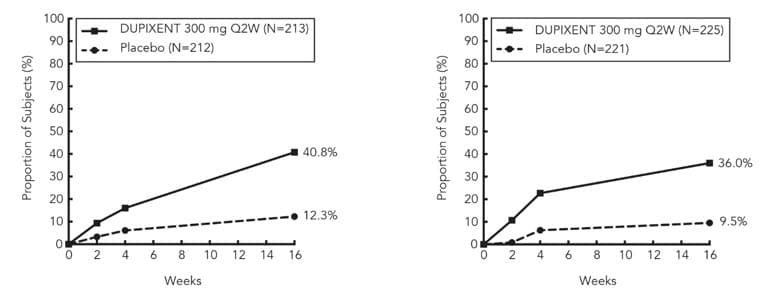
Dupilumab significantly reduced the annualised rate of severe asthma exacerbation events during the 52-week treatment period compared to placebo in the population with the type 2 inflammation and in population defined by baseline blood eosinophils ≥ 300 cells/mcL or by baseline FeNO ≥ 20 ppb. Clinically significant improvements in percent predicted pre-bronchodilator FEV
1
were observed at week 12. Improvements were also observed for ACQ-7-IA and PAQLQ(S)-IA at week 24 and were sustained at week 52. Greater responder rates were observed for ACQ-7-IA and PAQLQ(S)-IA compared to placebo at week 24. The efficacy results for VOYAGE are presented in Table 19.
In the population with the type 2 inflammation, the LS mean change from baseline in pre-bronchodilator FEV
1
at week 12 was 0.22 L in the dupilumab group and 0.12 L in the placebo group, with an LS mean difference versus placebo of 0.10 L (95% CI: 0.04, 0.16). The treatment effect was sustained over the 52-week treatment period, with an LS mean difference versus placebo at week 52 of 0.17 L (95% CI: 0.09, 0.24).
In the population defined by baseline blood eosinophils ≥ 300 cells/mcL, the LS mean change from baseline in pre-bronchodilator FEV
1
at week 12 was 0.22 L in the dupilumab group and 0.12 L in the placebo group, with an LS mean difference versus placebo of 0.10 L (95% CI: 0.03, 0.17). The treatment effect was sustained over the 52-week treatment period, with an LS mean difference versus placebo at week 52 of 0.17 L (95% CI: 0.09, 0.26).
In both primary efficacy populations, there was a rapid improvement in FEF25-75% and FEV
1
/FVC (onset of a difference was observed as early as week 2) and sustained over the 52-week treatment period, see Table 19.
Table 19: Rate of severe exacerbations, mean change from baseline in FEV
1
, ACQ-7-IA and PAQLQ(S)-IA responder rates in VOYAGE
Treatment
EOS ≥ 150 cells/mcL or FeNO ≥ 20 ppb
EOS
≥ 300 cells/mcL
FeNO
≥20 ppb
Annualised severe exacerbations rate over 52 weeks
N
Rate
(95% CI)
Rate ratio
(95% CI)
N
Rate
(95% CI)
Rate ratio
(95% CI)
N
Rate
(95% CI)
Rate ratio (95% CI)
Dupilumab 100 mg Q2W (<30 kg)/ 200 mg Q2W
(≥30 kg)
236
0.305
(0.223, 0.416)
0.407
b
(0.274, 0.605)
175
0.235
(0.160, 0.345)
0.353
b
(0.222, 0.562)
141
0.271
(0.170, 0.432)
0.384
c
(0.227, 0.649)
Placebo
114
0.748
(0.542, 1.034)
84
0.665
(0.467, 0.949)
62
0.705
(0.421, 1.180)
Mean change from baseline in percent predicted FEV
1
at week 12
N
LS mean Δ from baseline
LS mean difference vs. placebo
(95% CI)
N
LS mean Δ from baseline
LS mean difference vs. placebo
(95% CI)
N
LS mean Δ from baseline
LS mean difference vs. placebo
(95% CI)
Dupilumab 100 mg Q2W (<30 kg)/
200 mg Q2W
(≥30 kg)
229
10.53
5.21
c
(2.14, 8.27)
168
10.15
5.32
d
(1.76, 8.88)
141
11.36
6.74
d
(2.54, 10.93)
Placebo
110
5.32
80
4.83
62
4.62
Mean change from baseline in percent predicted FEF 25-75% at week 12
N
LS mean Δ from baseline
LS mean difference vs. placebo
(95% CI)
N
LS mean Δ from baseline
LS mean difference vs. placebo
(95% CI)
N
LS mean Δ from baseline
LS mean difference vs. placebo
(95% CI)
Dupilumab 100 mg Q2W (<30 kg)/ 200 mg Q2W
(≥30 kg)
229
16.70
11.93
e
(7.44, 16.43)
168
16.91
13.92
e
(8.89, 18.95)
141
17.96
13.97
e
(8.30, 19.65)
Placebo
110
4.76
80
2.99
62
3.98
Mean change from baseline in FEV
1
/FVC % at week 12
N
LS mean Δ from baseline
LS mean difference vs. placebo
(95% CI)
N
LS mean Δ from baseline
LS mean difference vs. placebo
(95% CI)
N
LS mean Δ from baseline
LS mean difference vs. placebo
(95% CI)
Dupilumab 100 mg Q2W (<30 kg)/ 200 mg Q2W
(≥30 kg)
229
5.67
3.73
e
(2.25, 5.21)
168
6.10
4.63
e
(2.97, 6.29)
141
6.84
4.95
e
(3.08, 6.81)
Placebo
110
1.94
80
1.47
62
1.89
ACQ-7-IA at week 24
a
N
Responder rate %
OR vs. placebo
(95% CI)
N
Responder rate %
OR vs. placebo
(95% CI)
N
Responder rate %
OR vs. placebo
(95% CI)
Dupilumab 100 mg Q2W (<30 kg)/ 200 mg Q2W
(≥30 kg)
236
79.2
1.82
g
(1.02, 3.24)
175
80.6
2.79
f
(1.43, 5.44)
141
80.9
2.60
g
(1.21, 5.59)
Placebo
114
69.3
84
64.3
62
66.1
PAQLQ(S)-IA at week 24
a
N
Responder rate %
OR vs. placebo (95% CI)
N
Responder rate %
OR vs. placebo
(95% CI)
N
Responder rate %
OR vs. placebo
(95% CI)
Dupilumab 100 mg Q2W (<30 kg)/ 200 mg Q2W
(≥30 kg)
211
73.0
1.57
(0.87, 2.84)
158
72.8
1.84
(0.92, 3.65)
131
75.6
2.09
(0.95, 4.61)
Placebo
107
65.4
81
63.0
61
67.2
a
the responder rate was defined as an improvement in score of 0.5 or more (scale range 0-6 for ACQ-7-IA and 1-7 for PAQLQ(S))
b
p-value < 0.0001;
c
p-value < 0.001,
d
p-value < 0.01 (all statistically significant vs placebo with adjustment for multiplicity);
e
nominal p-value < 0.0001,
f
nominal p-value < 0.01,
g
nominal p-value < 0.05
Significant improvements in percent predicted FEV1 were observed as early as week 2 and were maintained through week 52 in VOYAGE study.
Improvements in percent predicted FEV
1
over time in VOYAGE are shown in Figure 2.
Figure 2: Mean change from baseline in percent predicted pre-bronchodilator FEV
1
(L) over time in VOYAGE (baseline blood eosinophils ≥ 150 cells/mcL or FeNO ≥ 20 ppb, baseline eosinophils ≥ 300 cells/mcL, and baseline FeNO ≥ 20 ppb)
In VOYAGE, in the population with the type 2 inflammation, the mean annualised total number of systemic corticosteroid courses due to asthma was reduced by 59.3% versus placebo (0.350 [95% CI: 0.256, 0.477] versus 0.860 [95% CI: 0.616, 1.200]). In the population defined by baseline blood eosinophils ≥ 300 cells/mcL, the mean annualised total number of systemic corticosteroid courses due to asthma was reduced by 66.0% versus placebo (0.274 [95% CI: 0.188, 0.399] versus 0.806 [95% CI: 0.563, 1.154]).
Dupilumab improved the overall health status as measured by the European Quality of Life 5-Dimension Youth Visual Analog Scale (EQ-VAS) in both the type 2 inflammation and the baseline blood eosinophil count of ≥ 300 cells/mcL populations at week 52; the LS mean difference versus placebo was 4.73 (95% CI: 1.18, 8.28), and 3.38 (95% CI: -0.66, 7.43), respectively.
Dupilumab reduced the impact of paediatric patient's asthma on the caregiver quality of life as measured by the Paediatric Asthma Quality of Life Questionnaire (PACQLQ) in both the type 2 inflammation and the baseline blood eosinophil count of ≥ 300 cells/mcL population at week 52; the LS mean difference versus placebo was 0.47 (95% CI: 0.22, 0.72), and 0.50 (95% CI: 0.21, 0.79), respectively.
Long-term extension study (EXCURSION)
The efficacy of dupilumab, measured as a secondary endpoint, was assessed in 365 paediatric asthma patients (6 to 11 years of age) in the long-term extension study (EXCURSION). There were sustained reductions in exacerbations requiring hospitalization and/or emergency room visits and a reduction in exposure to systemic oral corticosteroids. Sustained improvements in lung function were observed across multiple parameters including percent predicted FEV
1
, percent predicted FVC, FEV
1
/FVC ratio and percent predicted FEF 25-75%. Furthermore, 75% of patients achieved and/or maintained normal lung function with pre-bronchodilator percent predicted FEV
1
> 80% by the end of EXCURSION. Efficacy was sustained for a cumulative treatment duration of up to 104 weeks (VOYAGE and EXCURSION).
Clinical efficacy and safety in eosinophilic esophagitis
Paediatric Patients 1 to 11 Years of Age with EoE
The efficacy and safety of dupilumab was evaluated in paediatric patients 1 to 11 years of age with EoE in a two-part study up to 52-weeks (EoE KIDS Part A & Part B). All enrolled patients had to have failed conventional medicinal therapy (proton pump inhibitors), 77.5% were treated with another conventional medicinal therapy (swallowed topical corticosteroids) prior to inclusion, and 53.5% of patients were inadequately controlled, intolerant or contraindicated to swallowed topical corticosteroid treatment. Eligible patients had ≥15 intraepithelial eosinophils per high-power field (eos/hpf) despite a treatment course of a proton pump inhibitor (PPI) either prior to or during the screening period and a history of EoE signs and symptoms. Part A was a 16-week randomized, double-blind, parallel-group, multicenter, placebo-controlled trial. Part B was an active treatment extension period evaluating the dupilumab regimens for an additional 36 weeks.
Part A evaluated dupilumab versus matching placebo at dosing regimens based on body weight (≥5 to <15 kg (100 mg Q2W), ≥15 to <30 kg (200 mg Q2W), and ≥30 to <60 kg (300 mg Q2W). The recommended dosing regimen of dupilumab was selected for paediatric patients 1 to 11 years of age weighing ≥40 kg (300 mg QW) based upon simulations with a population pharmacokinetic model to match exposures of adult and paediatric patients 12 to 17 years of age with EoE receiving 300mg QW for whom histologic and symptomatic efficacy were observed [see section 5.1 and section 5.2].
A total of 71 patients were enrolled in Part A. The mean age was 7 years (range 1 to 11 years), the median weight was 24.8 kg, 74.6% of patients were male, 87.3% were White, 9.9% were Black, and 1.4% were Asian. A total of 55 patients from Part A continued in Part B.
The primary efficacy endpoint in Part A was the proportion of patients achieving histological remission defined as peak esophageal intraepithelial eosinophil count of ≤6 eos/hpf at Week 16. Secondary endpoints included the proportion of patients achieving peak esophageal intraepithelial eosinophil count of <15 eos/hpf and the change from baseline in the following: peak esophageal intraepithelial eosinophil count (eos/hpf), absolute change in Mean Grade Score from the Histology Scoring System (EoEHSS), absolute change in Mean Stage Score from the EoEHSS, and absolute change in EoE-Endoscopic Reference Score (EoE-EREFS). The impact on signs of EoE was measured using observer reported outcomes; Paediatric EoE Sign/Symptom Questionnaire-Caregiver (PESQ-C) assessed the proportion of days with one or more EoE signs and Paediatric Eosinophilic Esophagitis Symptom Score (PEESS) assessed the frequency and severity of EoE signs.
Efficacy results for Part A are presented in Table 20 and below.
Table 20: Efficacy Results of dupilumab at Week 16 in Subjects 1 to 11 Years of Age with EoE (EoE KIDS Part A)
Dupilumab
a
N=37
Placebo
N=34
Difference vs Placebo
(95% CI)
Primary Endpoint
Proportion of subjects achieving histological remission (peak esophageal intraepithelial eosinophil count ≤6 eos/hpf), n (%)
b
25
(67.6)
1
(2.9)
64.5
(48.19, 80.85)
Secondary Endpoints
Proportion of subjects achieving peak esophageal intraepithelial eosinophil count of <15 eos/hpf, n (%)
b
31
(83.8)
1
(2.9)
81
(68.07, 94.10)
Percent change from baseline in peak esophageal intraepithelial eosinophil count (eos/hpf), LS mean (SE)
c
-86.09
(11.84)
20.98
(12.23)
-107.07
(-139.25, -74.90)
Absolute change in Mean Grade Score (0-3
d
) from the Histology Scoring System (EoEHSS) from baseline, LS mean (SE)
-0.879
(0.05)
0.023
(0.05)
-0.902
(-1.03, -0.77)
Absolute change in Mean Stage Score (0-3
d
) from the EoEHSS from baseline, LS mean (SE)
-0.835
(0.05)
0.048
(0.05)
-0.883
(-1.01, -0.76)
Absolute change in EoE-Endoscopic Reference Score(EoE-EREFS) (0-18
e
) from baseline, LS mean (SE)
-3.5
(0.42)
0.3
(0.45)
-3.8
(-4.94, -2.63)
a
DUPIXENT was evaluated at tiered dosing regimens based on body weight: ≥5 to <15 kg (100 mg Q2W), ≥15 to <30 kg (200 mg Q2W), and ≥30 to <60 kg (300 mg Q2W).
b
For histological remission, the difference in percentages is estimated using the Mantel-Haenszel method, adjusting for baseline weight group (≥5 to <15 kg, ≥15 to <30 kg, and ≥30 to <60 kg).
c
The difference in absolute change or percent change is estimated using ANCOVA model with baseline measurement as covariate and the treatment, baseline weight group (≥5 to <15 kg, ≥15 to <30 kg, and ≥30 to <60 kg) strata as fixed factors.
d
EoEHSS scores range from 0 to 3; higher scores indicate greater severity and extent of histological abnormalities.
e
EoE-EREFS overall scores range from 0 to 18; higher scores indicate worse endoscopic inflammatory and remodeling findings.
In Part A, a greater proportion of patients randomized to dupilumab achieved histological remission (peak esophageal intraepithelial eosinophil count ≤6 eos/hpf) compared to placebo. The proportion of subjects with histological remission observed after 16 weeks of treatment in Part A was maintained for 52 weeks in Part B.
Numerical improvement in the proportion of days with 1 or more EoE signs (PESQ-C) was observed after 16 weeks of treatment in Part A and was maintained for 52 weeks in Part B.
Nominally significant improvement in the frequency and severity of EoE signs (PEESS-Caregiver) was observed after 16 weeks of treatment in Part A. PEESS-Caregiver was not measured in Part B.
Adults and Adolescents with eosinophilic esophagitis
For clinical data in adults and adolescents with eosinophilic esophagitis please refer to the dupilumab 300 mg Summary of Product Characteristics.
Clinical Efficacy in Chronic Spontaneous Urticaria (CSU)
The chronic spontaneous urticaria (CSU) development program was conducted under a master protocol (CUPID). CUPID Study A, Study B, and Study C were three randomized, double-blind, parallel-group, multicentre, placebo-controlled, 24-week treatment studies in adult and paediatric patients (Study A: 6 to 17 years of age, Study B: 12 to 17 years of age, and Study C: 6 to 17 years of age). Study A and Study C enrolled patients with CSU who were symptomatic despite the use of H1 antihistamines. Study B enrolled patients with CSU who were symptomatic despite the use of H1 antihistamines and were inadequate responders or intolerant to anti-IgE therapy. In all three studies, dupilumab 300 mg every two weeks, dupilumab 200 mg every two weeks, or placebo were evaluated in adults and adolescent patients (12 to 17 years of age).
CUPID Study A and Study C
CUPID Study A and CUPID Study C enrolled 289 patients of which 274 were adults, 10 were adolescent patients 12 to 17 years of age, and 5 were paediatric patients 6 to 11 years of age, randomized to receive either dupilumab 300 mg every two weeks (N=139), dupilumab 200 mg every two weeks (N=5), or placebo (N=145).
In CUPID Study A and Study C, the mean age was 43.1 years, the median weight was 73 kg, 68.2% of patients were female, 57.1% were White, 1.7% were Black, 16.6% were Hispanic or Latino and 33.6% were Asian. In CUPID Study A and Study C, the mean weekly itch and urticaria activity severity scores (ISS7, UAS7) at baseline were 15.5 and 29.8, respectively, despite use of an H1 antihistamine. Majority of patients (64.7%) had severe CSU disease activity at baseline with a UAS7 score of ≥28 The mean baseline UCT was 4.5, corresponding to uncontrolled urticaria (UCT <12). The reported mean duration of CSU at enrollment across treatment groups was 6.1 years (with an overall subject-level range of 1 to 60 years). The primary efficacy endpoint was change from baseline in itch severity score over 7 days (ISS7) at Week 24. The ISS7 score was defined as the sum of the daily itch severity scores (ISS) recorded at the same time of the day for a 7-day period, ranging from 0 to 21.
The key secondary endpoint was change from baseline in urticaria activity score over 7 days (UAS7) at Week 24. Disease severity was measured by a weekly urticaria activity score (UAS7, range 0–42), which is a composite of the weekly itch severity score (ISS7, range 0–21) and the weekly hive count score (HSS7 range 0–21). Additional secondary endpoints included the change from baseline in hives severity score over 7 days (HSS7) and the urticaria control test (UCT) at Week 12 and Week 24. The UCT is a measure for assessing urticaria control based on 4 assessment elements (severity of urticaria symptom, frequency of treatment being not sufficient, quality-of-life impairment, and overall urticarial control), with a score ranging from 0 to 16. The demographics and baseline characteristics of CUPID Study A are provided in Table 21 below.
Table 21: Demographics and Baseline Characteristics of CUPID Study A and Study C
Parameter
CUPID Study A
(N=138)
CUPID Study C
(N=151)
Pooled
(N=289)
Age (years), mean (SD)
41.3 (15.5)
44.7 (16.9)
43.1 (16.3)
% Male
34.1
29.8
31.8
BMI (kg/m
2
), mean (SD)
27.67 (6.47)
26.81 (6.16)
27.22 (6.31)
Disease Duration, mean (SD)
5.7 (8.5)
6.5 (9.8)
6.1 (9.2)
Baseline ISS7 score, mean (SD)
15.9 (4.0)
15.1 (3.8)
15.5 (3.9)
Baseline UAS7 score, mean (SD)
31.3 (7.7)
28.3 (7.5)
29.8 (7.7)
Severe CSU disease activity (UAS7 ≥28)
70.3
59.6
64.7
Baseline HSS7 score, mean (SD)
15.4 (4.3)
13.2 (4.7)
14.2 (4.7)
Baseline UCT score, mean (SD)
3.7 (2.3)
5.2 (3.2)
4.5 (2.9)
Baseline Total IgE (IU/mL,) median
101.0
107.3
103.0
The results for primary and secondary endpoints in CUPID Study A and Study C are presented in the Table 22.
Table 22: Results of the Primary and Secondary Endpoints in CUPID Study A and Study C
CUPID STUDY A
CUPID Study C
DUPIXENT
(N=70)
Placebo
(N=68)
Difference (95% CI) for DUPIXENT vs. Placebo
b
DUPIXENT
(N=74)
Placebo
(N=77)
Difference (95% CI) for DUPIXENT vs. Placebo
b
Primary Endpoint
Change from baseline in ISS7 at Week 24
a
-10.24 (0.91)
-6.01 (0.94)
-4.23 (-6.63, -1.84)
-8.64 (1.41)
-6.10 (1.40)
-2.54 (-4.65, -0.43)
Secondary Endpoints
Change from baseline in UAS7 at Week 24
a
-20.53 (1.76)
-12.00 (1.81)
-8.53 (-13.16, -3.90)
-15.86 (2.66)
-11.21 (2.65)
-4.65 (-8.65, -0.65)
Change from baseline in HSS7 at Week 24
a
-10.28 (0.91)
-5.90 (0.93)
-4.38 (-6.78, -1.98)
-7.27 (1.32)
-5.11 (1.31)
-2.17 (-4.15, -0.19)
Proportion of patients with UAS7 ≤6 at Week 24
a
32 (45.7)
16 (23.5)
2.848 (1.301, 6.234)
30 (40.5)
18 (23.4)
3.137 (1.371, 7.176)
Proportion of patients with UAS7 = 0 at Week 24
a
22 (31.4)
9 (13.2)
2.908 (1.173, 7.209)
22 (29.7)
14 (18.2)
2.677 (1.127, 6.359)
Proportion of participants with MID (ISS7 ≥ 5) response at Week 24
51 (72.9)
29 (42.6)
3.41 (1.60, 7.30)
52 (70.3)
40 (51.9)
2.51 (1.23, 5.11)
a
Values presented are LS mean change from baseline (SE) for continuous variables and number and percent of responders for binary variables.
b
Difference is LS mean difference for continuous variables and odds ratio for binary variables.
Dupilumab treatment led to an improvement over time in ISS7 and UAS7 through the 24-week treatment period (Figures 3 and 4).
Figure 3: LS mean change from baseline in ISS7 up to Week 24 in CUPID Study A and Study C ITT population
Figure 4: LS mean change from baseline in UAS7 up to Week 24 in CUPID Study A and Study C ITT population
Similar improvement in HSS7 was observed over 24 weeks.
Improvements in ISS7 and UAS7 at Week 24 were consistent regardless of the patients' baseline IgE.
Dupilumab improved overall disease control compared to placebo as measured by UCT (higher score reflects greater disease control) at Week 24 (LS mean difference versus placebo of 2.84 [95% CI: 1.27: 4.40] in Study A and 0.93 [95% CI: -0.48, 2.34] in Study C) and at Week 12 (LS mean difference versus placebo of 1.86 [95% CI: 0.35: 3.36]).
Study A showed statistically significant improvement in ISS7 and UAS7 from baseline at Week 12 (LS mean difference versus placebo of -2.37 [95% CI: (-4.60, -0.13) for ISS7 and -5.02 [95% CI: (-9.32, -0.72)] for UAS7 respectively. Study C showed numerical differences in ISS7 and UAS7 from baseline at Week 12 (LS mean difference versus placebo of -1.84 [95% CI: (-3.78, 0.10)] for ISS7 and -3.36 [95% CI: (-7.07, 0.36)] for UAS7.The proportion of patients with UAS7 ≤6 at Week 12 was 34.3% and 31.1%for dupilumab and 17.6% and 16.9% for placebo [Odds Ratio: Study A: 2.645 [95% CI: (1.154, 6.061); Study C: 2.676 [95% CI:(1.169, 6.125)] for Study A and C respectively.
CUPID Study B
CUPID Study B evaluated the efficacy of dupilumab in patients with CSU who are inadequate responders (N=104) or intolerant (N=4) to anti-IgE therapy. This study enrolled 108 patients 12 years of age and older, and had same efficacy endpoints as Study A and Study C. Dupilumab did not meet statistical significance for reduction in the primary endpoint ISS7 at Week 24 (dupilumab -7.68, placebo -4.81, treatment difference, -2.87), but demonstrated nominally significant improvements for secondary endpoints UAS7 and HSS7 at Week 24 (UAS7: 'TM' -14.37, placebo -8.54, treatment difference -5.83; HSS7: 'TM' -6.64, placebo -3.63, treatment difference -3.01).
Paediatric population
Atopic dermatitis
The safety and efficacy of dupilumab have been established in paediatric patients 6 months of age and older with atopic dermatitis. Use of dupilumab in this age group is supported by study AD-1526 which included 251 adolescents aged 12 to 17 years old with moderate-to-severe atopic dermatitis, in study AD-1652 which included 367 paediatric patients aged 6 to 11 years old with severe atopic dermatitis, and study AD-1539 which included 162 children ages 6 months to 5 years old with moderate-to-severe atopic dermatitis (125 of whom had severe atopic dermatitis). Long term use is supported by study AD-1434 which enrolled 823 paediatric patients aged 6 months to 17 years of age; this included 275 adolescents, 368 children 6 to 11 years of age, and 180 children 6 months to 5 years of age. The safety and efficacy were generally consistent between children 6 months to 5 years old, 6 to 11 years old, adolescent (12 to 17 years old), and adult patients with atopic dermatitis (see section 4.8)
.
Safety and efficacy in paediatric patients < 6 months of age with atopic dermatitis have not been established.
Asthma
A total of 107 adolescents aged 12 to 17 years with moderate to severe asthma were enrolled in QUEST study and received either 200 mg (N=21) or 300 mg (N=18) dupilumab (or matching placebo either 200 mg [N=34] or 300 mg [N=34]) every other week. Efficacy with respect to severe asthma exacerbations and lung function was observed in both adolescents and adults. For both the 200 mg and 300 mg every other week doses, significant improvements in FEV
1
(LS mean change from baseline at week 12) were observed (0.36 L and 0.27 L, respectively). For the 200 mg every other week dose, patients had a reduction in the rate of severe exacerbations that was consistent with adults. The safety profile in adolescents was generally similar to the adults.
A total of 89 adolescents aged 12 to 17 years with moderate-to-severe asthma were enrolled in the open label long-term study (TRAVERSE). In this study, efficacy was measured as a secondary endpoint, was similar to results observed in the pivotal studies and was sustained up to 96 weeks. A total of 408 children aged 6 to 11 years with moderate-to-severe asthma was enrolled in the VOYAGE study, which evaluated doses of 100 mg Q2W and 200 mg Q2W. The efficacy of dupilumab 300 mg Q4W in children aged 6 to 11 years is extrapolated from the efficacy of 100 mg and 200 mg Q2W in VOYAGE and 200 mg and 300 mg Q2W in adults and adolescents (QUEST). Patients who completed the treatment period of the VOYAGE study could participate in the open label extension study (EXCURSION). Eighteen patients (≥ 15 kg to < 30 kg) out of 365 patients were exposed to 300 mg Q4W in this study, and the safety profile was similar to that seen in VOYAGE. Safety and efficacy in paediatric patients < 6 years of age with asthma have not been established.
Eosinophilic Esophagitis
The safety and efficacy of dupilumab for the treatment of EoE have been established in paediatric patients 1 to 17 years of age. Use of dupilumab in this population is supported by adequate and well-controlled studies and additional pharmacokinetic data. A total of 72 paediatric patients 12 to 17 years of age received dupilumab 300 mg QW or placebo for 24 weeks (TREET Parts A and B). Of these, there were 37 dupilumab treated patients in Parts A and B; 34 continued treatment with 300 mg QW for an additional 28 weeks (TREET Part C). A total of 71 paediatric patients 1 to 11 years of age received dupilumab 100 mg Q2W, 200 mg Q2W, 300 mg Q2W, or placebo for 16 weeks (EoE KIDS Part A). Of these, there were 37 dupilumab treated patients in Part A all of whom continued treatment with these dupilumab regimens for an additional 36 weeks (EoE KIDS Part B). The use of dupilumab 300 mg QW in patients 1 to 11 years of age with EoE with a body weight 40 ≥ kg is also supported by a population pharmacokinetic analysis [see section 5.1]. The safety and efficacy of dupilumab in adults and paediatric patients were similar [see section 4.8 and section 5.1].
Chronic Spontaneous Urticaria
The safety and effectiveness of dupilumab for the treatment of CSU have been established in adolescent subjects 12 year of age and older. A total of 12 adolescents aged 12 to 17 years and 5 children aged 6 to 11 years with CSU were enrolled in CUPID Study A, B, and C who received doses of dupilumab 200 mg Q2W (30 kg to <60 kg), 300 mg Q2W (≥60 kg) or placebo. Two children 6 to 11 years of age (both in the dupilumab group), discontinued study treatment early (Week 4 and Week 10) and two adolescents aged 12 to 17 years of age (one in each treatment group) discontinued study treatment early (Week 12 and Week 22). An adverse event was reported in one adolescent treated with dupilumab. No adverse events were reported in children aged 6 to 11 years treated with dupilumab. The effectiveness of dupilumab for the treatment of CSU in adolescent patients 12 to 17 years of age is based on safety and efficacy in adults with this condition due to the similarity of pathophysiology, disease course, response to available therapies, and consistent dupilumab exposure established through PK modelling safety for dupilumab in adolescent patients 12 to 17 years of age with CSU is supported by available safety information from the paediatric AD indication. The recommended dosage in paediatric patients 12 years of age or older is based on body weight. Safety and effectiveness in adolescent patients younger than 12 years of age with CSU have not been established.
The European Medicines Agency has deferred the obligation to submit the results of studies with dupilumab in one or more subset of the paediatric population in asthma (see section 4.2 for information on paediatric use). Obligations related to the paediatric investigation plans for atopic dermatitis and EoE have been fulfilled.
⚠️ Warnings
Comprehensive instructions for the administration of Dupixent in a pre-filled pen are given at the end of the package leaflet.
The solution should be clear to slightly opalescent, colourless to pale yellow. If the solution is cloudy, discoloured or contains visible particulate matter, the solution should not be used.
After removing the 200 mg pre-filled pen from the refrigerator, it should be allowed to reach room temperature up to 25 °C by waiting for 30 min before injecting Dupixent.
The pre-filled pen should not be exposed to heat or direct sunlight and should not be shaken.
Any unused medicinal product or waste material should be disposed of in accordance with local requirements. After use, place the pre-filled pen into a puncture-resistant container and discard as required by local regulations. Do not recycle the container.