This information is for educational purposes only. It is not intended as medical advice. Always consult a qualified healthcare professional.
Amaryl 2 — Description, Dosage, Side Effects | PillsCard
OTC
Amaryl 2
2 mg, Tabletki
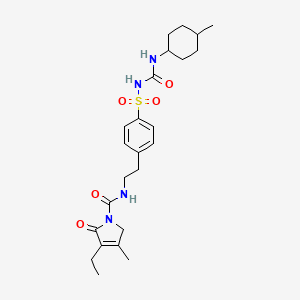
INN: Glimepiridum
Available in:
🇨🇿🇩🇪🇬🇧🇫🇷🇵🇱🇵🇹🇸🇰🇹🇷🇺🇦
Form
Tabletki
Dosage
2 mg
Route
—
Storage
—
About This Product
User Reviews
Reviews reflect personal experiences and are not medical advice. Always consult your doctor.
Manufacturer
Sanofi-Aventis Deutschland GmbH
ATC Code
A10BB12
Source
URPL
Pharmacotherapeutic group: Oral blood glucose lowering drugs: Sulfonamides, urea derivatives. ATC Code: A10B B12.
Glimepiride is an orally active hypoglycaemic substance belonging to the sulphonylurea group. It may be used in non-insulin dependent diabetes mellitus.
Mechanism of action
Glimepiride acts mainly by stimulating insulin release from pancreatic beta cells.
As with other sulphonylureas this effect is based on an increase of responsiveness of the pancreatic beta cells to the physiological glucose stimulus. In addition, glimepiride seems to have pronounced extrapancreatic effects also postulated for other sulphonylureas.
Insulin release
Sulphonylureas regulate insulin secretion by closing the ATP-sensitive potassium channel in the beta cell membrane. Closing the potassium channel induces depolarisation of the beta cell and results -by opening of calcium channels - in an increased influx of calcium into the cell.
This leads to insulin release through exocytosis.
Glimepiride binds with a high exchange rate to a beta cell membrane protein which is associated with the ATP-sensitive potassium channel but which is different from the usual sulphonylurea binding site.
Extrapancreatic activity
The extrapancreatic effects are for example an improvement of the sensitivity of the peripheral tissue for insulin and a decrease of the insulin uptake by the liver.
The uptake of glucose from blood into peripheral muscle and fat tissues occurs via special transport proteins, located in the cells membrane. The transport of glucose in these tissues is the rate limiting step in the use of glucose. Glimepiride increases very rapidly the number of active glucose transport molecules in the plasma membranes of muscle and fat cells, resulting in stimulated glucose uptake.
Glimepiride increases the activity of the glycosyl-phosphatidylinositol-specific phospholipase C which may be correlated with the drug-induced lipogenesis and glycogenesis in isolated fat and muscle cells.
Glimepiride inhibits the glucose production in the liver by increasing the intracellular concentration of fructose-2,6-bisphosphate, which in its turn inhibits the gluconeogenesis.
General
In healthy persons, the minimum effective oral dose is approximately 0.6 mg. The effect of glimepiride is dose-dependent and reproducible. The physiological response to acute physical exercise, reduction of insulin secretion, is still present under glimepiride.
There was no significant difference in effect regardless of whether the drug was given 30 minutes or immediately before a meal. In diabetic patients, good metabolic control over 24 hours can be achieved with a single daily dose.
Although the hydroxy metabolite of glimepiride caused a small but significant decrease in serum glucose in healthy persons, it accounts for only a minor part of the total drug effect.
Combination therapy with metformin
Improved metabolic control for concomitant glimepiride therapy compared to metformin alone in patients not adequately controlled with the maximum dosage of metformin has been shown in one study.
Combination therapy with insulin
Data for combination therapy with insulin are limited. In patients not adequately controlled with the maximum dosage of glimepiride, concomitant insulin therapy can be initiated. In two studies, the combination achieved the same improvement in metabolic control as insulin alone; however, a lower average dose of insulin was required in combination therapy.
Special populations
Paediatric population:
An active controlled clinical trial (glimepiride up to 8 mg daily or metformin up to 2,000 mg daily) of 24 weeks duration was performed in 285 children (8-17 years of age) with type 2 diabetes.
Both glimepiride and metformin exhibited a significant decrease from baseline in HbA1c (glimepiride-0.95 (se 0.41); metformin -1.39 (se 0.40)). However, glimepiride did not achieve the criteria of non-inferiority to metformin in mean change from baseline of HbA1c. The difference between treatments was 0.44% in favour of metformin. The upper limit (1.05) of the 95% confidence interval for the difference was not below the 0.3% non-inferiority margin.
Following glimepiride treatment, there were no new safety concerns noted in children compared to adult patients with type 2 diabetes mellitus. No long-term efficacy and safety data are available in paediatric patients.