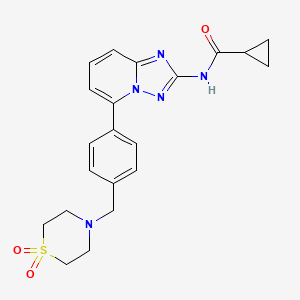
This information is for educational purposes only. It is not intended as medical advice. Always consult a qualified healthcare professional.
Jyseleca — Description, Dosage, Side Effects | PillsCard
Rx
Jyseleca
100 mg, Tabletki powlekane
INN: Filgotinibum
Data updated: 2026-04-13
Available in:
🇨🇿🇬🇧🇫🇷🇵🇱🇵🇹🇸🇰🇺🇦
Form
Tabletki powlekane
Dosage
100 mg
Route
doustna
Storage
—
About This Product
User Reviews
Reviews reflect personal experiences and are not medical advice. Always consult your doctor.
Manufacturer
Alfasigma S.p.A. (Włochy)
Composition
Filgotinibum 100 mg
ATC Code
L04AF04
Source
URPL
Pharmacotherapeutic group: Immunosuppressants, Janus-associated kinase (JAK) inhibitors, ATC code: L04AF04
Mechanism of action
Filgotinib is an adenosine triphosphate (ATP)-competitive and reversible inhibitor of the JAK family. JAKs are intracellular enzymes which transmit signals arising from cytokine or growth factor-receptor interactions on the cellular membrane. JAK1 is important in mediating inflammatory cytokine signals, JAK2 in mediating myelopoiesis and erythropoiesis and JAK3 plays critical roles in immune homeostasis and lymphopoiesis. Within the signalling pathway, JAKs phosphorylate and activate signal transducers and activators of transcription (STATs) which modulate intracellular activity including gene expression. Filgotinib modulates these signalling pathways by preventing the phosphorylation and activation of STATs. In biochemical assays, filgotinib preferentially inhibited the activity of JAK1 and showed > 5-fold higher potency of filgotinib for JAK1 over JAK2, JAK3 and TYK2. In human cellular assays, filgotinib preferentially inhibited JAK1/JAK3-mediated signalling downstream of the heterodimeric cytokine receptors for interleukin (IL)-2, IL-4 and IL-15, JAK1/2-mediated IL-6, and JAK1/TYK2-mediated type I interferons, with functional selectivity over cytokine receptors that signal via pairs of JAK2 or JAK2/TYK2. GS-829845, the primary metabolite of filgotinib, was approximately 10-fold less active than filgotinib in
in vitro
assays, while exhibiting a similar JAK1 preferential inhibitory activity. In an
in vivo
rat model, the overall pharmacodynamic effect was predominantly driven by the metabolite.
Pharmacodynamic effects
Inhibition of IL-6 induced STAT1 phosphorylation
Filgotinib administration resulted in a dose-dependent inhibition of IL-6 induced STAT1 phosphorylation in whole blood from healthy subjects. Filgotinib administration did not affect JAK2-associated GM-CSF induced STAT5 phosphorylation.
Immunoglobulins
In FINCH 1, 2, and 3, the median and interquartile ranges for serum IgG, IgM, and IgA values remained largely within the normal reference ranges through 24 weeks of treatment with filgotinib in patients with rheumatoid arthritis and through 58 weeks of treatment in patients with ulcerative colitis.
Haematologic effects
In FINCH 1, 2, and 3 in patients with rheumatoid arthritis, treatment with filgotinib was associated with a small, transient increase in mean ALC that remained within normal reference ranges and gradually returned to at or near baseline levels with continued treatment by week 12. In FINCH 1, 2, and 3, median haemoglobin values remained stable within the normal range through 24 weeks of filgotinib treatment. A slight decrease in median platelet counts occurred within the first 4 weeks of filgotinib treatment and remained stable thereafter through 24 weeks. Median platelet counts remained within the normal range.
In SELECTION, in patients with ulcerative colitis, median haemoglobin values remained stable through 58 weeks of filgotinib treatment.
C-reactive protein
Decreases in serum C-reactive protein (CRP) were observed as early as 2 weeks after starting treatment with filgotinib and were maintained through 24 weeks of treatment in patients with rheumatoid arthritis and through 58 weeks of treatment in patients with ulcerative colitis.
Clinical efficacy and safety
Rheumatoid arthritis
The efficacy and safety of filgotinib once daily were assessed in three Phase 3 studies (FINCH 1, 2, and 3). These were randomised, double-blind, multicentre studies in patients with moderate to severe active rheumatoid arthritis diagnosed according to American College of Rheumatology (ACR)/European League Against Rheumatism (EULAR) 2010 criteria.
FINCH 1 was a 52-week study in 1 755 patients with rheumatoid arthritis who had an inadequate response to MTX. Patients received filgotinib 200 mg once daily, filgotinib 100 mg once daily, adalimumab every 2 weeks, or placebo, all added to stable background MTX. At week 24, patients receiving placebo were re-randomised to filgotinib 100 mg or 200 mg once daily through week 52. The primary endpoint was the proportion of patients who achieved an ACR20 response at week 12.
FINCH 2 was a 24-week study in 448 patients with rheumatoid arthritis who had an inadequate response to bDMARDs. Patients received filgotinib 200 mg once daily, filgotinib 100 mg once daily, or placebo, all with a continued stable background dose of conventional synthetic DMARD(s) (csDMARD[s]: MTX, hydroxychloroquine, sulfasalazine, or leflunomide). The primary endpoint was the proportion of patients who achieved an ACR20 response at week 12.
FINCH 3 was a 52-week study in 1 249 patients with rheumatoid arthritis who were naïve to MTX therapy. Patients received filgotinib 200 mg once daily plus MTX once weekly, filgotinib 100 mg once daily plus MTX once weekly, filgotinib 200 mg (monotherapy) once daily, or MTX (monotherapy) once weekly. The primary endpoint was the proportion of patients who achieved an ACR20 response at week 24.
Clinical response
Higher response rates
versus
placebo or MTX were seen at week 2 for ACR20, and responses were maintained through week 52.
Treatment with filgotinib 200 mg resulted in improvements in all individual ACR components, including tender and swollen joint counts, patient and physician global assessments, Health Assessment Questionnaire Disability Index (HAQ-DI), pain assessment and high sensitivity CRP, compared to placebo or MTX. In two of the Phase 3 studies (FINCH 1 and FINCH 2), the comparison (
versus
placebo) was carried out on top of MTX or csDMARD(s) (see above).
Low disease activity and remission
Across the Phase 3 studies, a significantly higher proportion of patients treated with filgotinib 200 mg plus MTX or other csDMARD achieved low disease activity and/or remission (DAS28-CRP ≤ 3.2 and DAS28-CRP < 2.6) at weeks 12 and 24 as compared to placebo or MTX. Filgotinib 200 mg was non-inferior to adalimumab at week 12 for DAS28-CRP ≤ 3.2 in FINCH 1 (Table 3).
Table 3: Clinical response at weeks 12, 24 and 52 in FINCH 1, 2, and 3
FINCH 1
MTX-IR
FINCH 2
bDMARD-IR
FINCH 3
MTX-naïve
Treatment
FIL 200 mg
FIL 100 mg
ADA
PBO
FIL 200 mg
FIL 100 mg
PBO
FIL 200 mg + MTX
FIL 100 mg + MTX
FIL 200 mg mono
MTX
+ MTX
+ csDMARD
N
475
480
325
475
147
153
148
416
207
210
416
Week
ACR20 (percent of patients)
12
77
***¶
70
***
71
50
66
***
58***
31
77†††
72††
71††
59
24
78
†††
78
†††
74
59
69
†††
55
†††
34
81
***
80
*
78
71
52
78
76
74
-
-
-
-
75
†††
73
††
75
†††
62
ACR50 (percent of patients)
12
47
†††¶¶¶
36
†††
35
20
43
†††
32
†††
15
53
†††
44
†††
46
†††
28
24
58
†††
53
†††
52
33
46
†††
35
††
19
62
†††
57
††
58
††
46
52
62
59
59
-
-
-
-
62
†††
59
††
61
†††
48
ACR70 (percent of patients)
12
26
†††¶¶¶
19
†††
14
7
22
†††
14
†
7
33
†††
27
†††
29
†††
13
24
36
†††¶
30
†††
30
15
32
†††
20
††
8
44
†††
40
†††
40
†††
26
52
44
38
39
-
-
-
-
48
†††
40
††
45
†††
30
DAS28-CRP ≤ 3.2 (percent of patients)
12
50
***###
39
***
43
23
41
***
37
***
16
56
†††
50
†††
48
†††
29
24
61
†††§§§¶¶
53
†††§§§
50
34
48
†††
38
†††
21
69
†††
63
†††
60
†††
46
52
66
¶
59
59
-
-
-
-
69
†††
60
††
66
†††
48
DAS28-CRP < 2.6 (percent of patients)
12
34
†††§§§¶¶¶
24
†††§§
24
9
22
†††
25
†††
8
40
†††
32
†††
30
†††
17
24
48
***§§§¶¶¶
35
***§§§
36
16
31
†††
26
††
12
54
***
43
***
42
†††
29
52
54¶
43
46
-
-
-
-
53
†††
43
††
46
†††
31
CDAI, change from baseline (mean)
12
-26.0
†††
-23.3
†††
-23.5
-20.3
-26.2
†††
-23.8
†††
-17.3
-27.8
†††
-26.1
†††
-27.5
†††
-22.7
24
-30.6
†††
-28.6
†††
-28.4
-26.3
-30.9
†††
-27.8
††
-25.4
-31.3
†††
-30.0
†††
-31.3
†††
-28.2
52
-32.9
-30.9
-31.6
-
-
-
-
-33.8
†††
-31.9
†
-33.6
†††
-31.2
ADA: adalimumab; bDMARD: biologic DMARD; csDMARD: conventional synthetic DMARD; DMARD: disease-modifying anti-rheumatic drug; FIL: filgotinib; IR: inadequate responder; mono: monotherapy; MTX: methotrexate; PBO: placebo.
*
p ≤ 0.05; ** p ≤ 0.01; *** p ≤ 0.001
versus
placebo (
versus
MTX for FINCH 3) (statistically significant difference with multiplicity adjustment).
†
p ≤ 0.05;
††
p ≤ 0.01;
†††
p ≤ 0.001
versus
placebo (
versus
MTX for FINCH 3) (nominal p-value).
#
p ≤ 0.05;
##
p ≤ 0.01;
###
p ≤ 0.001
versus
adalimumab for FINCH 1 (non-inferiority test, statistically significant difference with multiplicity adjustment) (analysed for DAS28-CRP ≤ 3.2 and < 2.6 pairwise comparisons only).
§
p ≤ 0.05; §§ p ≤ 0.01; §§§ p ≤ 0.001
versus
adalimumab for FINCH 1 (non-inferiority test, nominal p-value) (analysed for DAS28-CRP ≤ 3.2 and < 2.6 pairwise comparisons only).
¶
p ≤ 0.05;
¶¶
p ≤ 0.01;
¶¶¶
p ≤ 0.001
versus
adalimumab for FINCH 1 (superiority test, nominal p-value) (analysed for ACR20/50/70, and DAS28-CRP ≤ 3.2 and < 2.6 pairwise comparisons only).
Note: Comparisons were carried out on top of a stable background of MTX (FINCH 1) or csDMARD(s) (FINCH 2).
Radiographic response
Inhibition of progression of structural joint damage was assessed using the modified Total Sharp Score (mTSS) and its components, the erosion score and joint space narrowing score, at weeks 24 and 52 in FINCH 1 and FINCH 3.
In patients who had an inadequate response to MTX, treatment with filgotinib plus MTX resulted in statistically significant inhibition of progression of structural joint damage compared to placebo plus MTX at week 24 (Table 4). Analyses of erosion and joint space narrowing scores were consistent with the overall scores.
Table 4: Radiographic response at weeks 24 and 52 in FINCH 1 and 3
FINCH 1
MTX-IR
FINCH 3
MTX-naïve
Treatment
FIL 200 mg
FIL 100 mg
ADA
PBO
FIL 200 mg + MTX
FIL 100 mg + MTX
FIL 200 mg mono
MTX
+ MTX
N
475
480
325
475
416
207
210
416
Week
Modified Total Sharp Score (mTSS), mean (SD) change from baseline
24
0.13
(0.94)
***
0.17
(0.91)
***
0.16
(0.95)
0.37
(1.42)
0.21
(1.68)
0.22
(1.53)
-0.04
(1.71)
††
0.51
(2.89)
52
0.21
(1.43)
0.50
(2.10)
0.58
(3.62)
-
0.31
(1.81)
†††
0.23
(1.11)
††
0.33
(1.90)
††
0.81
(3.09)
Proportion of patients with no radiographic progression
a
24
88%
**
86%
86%
81%
81%
†
77%
83%
†
72%
52
88%
81%
82%
-
81%
††
76%
77%
71%
ADA: adalimumab; FIL: filgotinib; IR: inadequate responder; mono: monotherapy; MTX: methotrexate; PBO: placebo.
a
No progression defined as mTSS change ≤ 0.
*
p ≤ 0.05; ** p ≤ 0.01; *** p ≤ 0.001
versus
placebo (statistically significant difference with multiplicity adjustment).
†
p ≤ 0.05;
††
p ≤ 0.01;
†††
p ≤ 0.001
versus
placebo (
versus
MTX for FINCH 3) (nominal p-value).
Physical function response and health related outcomes
Treatment with filgotinib 200 mg resulted in a significant improvement in physical function, as measured by change from baseline in HAQ-DI (Table 5).
Table 5: Mean change from baseline in HAQ-DI at weeks 12, 24 and 52 in FINCH 1, 2, and 3
Mean change from baseline
FINCH 1
MTX-IR
FINCH 2
bDMARD-IR
FINCH 3
MTX-naïve
Treatment
FIL 200 mg
FIL 100 mg
ADA
PBO
FIL 200 mg
FIL 100 mg
PBO
FIL 200 mg + MTX
FIL 100 mg + MTX
FIL 200 mg mono
MTX
+ MTX
+ csDMARD
N
475
480
325
475
147
153
148
416
207
210
416
Week
Health Assessment Questionnaire Disability Index (HAQ-DI)
Baseline score
1.59
1.55
1.59
1.63
1.70
1.64
1.65
1.52
1.56
1.56
1.60
12
-0.69
***
-0.56
***
-0.61
-0.42
-0.55
***
-0.48
***
-0.23
-0.85
†††
-0.77
†††
-0.76
†††
-0.61
24
-0.82
†††
-0.75
†††
-0.78
-0.62
-0.75
†††
-0.60
††
-0.42
-0.94
***
-0.90
**
-0.89
†
-0.79
52
-0.93
-0.85
-0.85
-
-
-
-
-1.00
†††
-0.97
-0.95
†
-0.88
ADA: adalimumab; bDMARD: biologic DMARD; csDMARD: conventional synthetic DMARD; DMARD: disease-modifying antirheumatic drug; FIL: filgotinib; IR: inadequate responder; mono: monotherapy; MTX: methotrexate; PBO: placebo.
*
p ≤ 0.05; ** p ≤ 0.01; *** p ≤ 0.001
versus
placebo (statistically significant difference with multiplicity adjustment).
†
p ≤ 0.05;
††
p ≤ 0.01;
†††
p ≤ 0.001
versus
placebo (
versus
MTX for FINCH 3) (nominal p-value).
Health status outcomes were assessed by the Short Form health survey (SF-36). Patients treated with filgotinib 200 mg plus MTX or other csDMARD demonstrated numerically greater improvement from baseline in the physical component summary score of SF-36 as well as in the Functional Assessment of Chronic Illness Therapy-Fatigue score (FACIT-Fatigue) at weeks 12 and 24 compared to placebo plus MTX/csDMARD or MTX.
Long-term efficacy
DARWIN 3 was a long-term open-label extension study of patients who participated in one of the originator studies DARWIN 1 or DARWIN 2 (filgotinib versus placebo, with or without MTX) and who would continue to benefit from filgotinib treatment in the opinion of the investigator. A total of 739 patients were included. Mean duration of follow-up was 5.4 years with a maximum of 8 years. Concomitant MTX use at any timepoint during DARWIN 3 was reported for 70% of subjects.
At week 396, ACR20/50/70 responses rates were 87.3%/65.4%/47.8% among patients who remained on filgotinib with or without MTX (N=228/739). DAS28 (CRP) ≤ 3.2 low disease activity and DAS28 (CRP) < 2.6 clinical remission rates were 75.5% and 62.8% at week 396 among patients who remained on filgotinib with or without MTX (N=196/739).
Ulcerative colitis
The efficacy and safety of filgotinib once daily were evaluated in a randomised, double-blind, placebo-controlled combined Phase 2b/3 study (SELECTION) in patients with moderately to severely active ulcerative colitis (Mayo Clinic Score 6 to 12; endoscopy subscore ≥ 2; rectal bleeding subscore ≥ 1; stool frequency subscore ≥ 1; and Physician's Global Assessment subscore ≥ 2). SELECTION included two induction studies (UC-1 and UC-2) followed by a maintenance study (UC-3), with a total duration of 58 weeks of therapy. Patients were permitted to use stable doses of concomitant therapies for ulcerative colitis, including oral aminosalicylates, oral corticosteroids (prednisone equivalent dose up to 30 mg/day), and immunomodulators (azathioprine, 6-MP, or methotrexate).
UC-1 was an 11-week induction study in 659 patients with ulcerative colitis who were naïve to biologic therapy and had an inadequate response, loss of response, or intolerance to corticosteroids or immunomodulators. Patients received filgotinib 200 mg once daily (N = 245), filgotinib 100 mg once daily (N = 277), or placebo (N = 137). At baseline, 56% of patients had an endoscopic subscore of 3; 24% were receiving oral corticosteroids only, 23% immunomodulators only, 7% corticosteroids and immunomodulators, and 47% neither corticosteroids nor immunomodulators.
UC-2 was an 11-week induction study in 689 patients with ulcerative colitis who were biologic-experienced and had an inadequate response, loss of response, or intolerance to a tumour necrosis factor (TNF) blocker or vedolizumab. Patients received filgotinib 200 mg once daily (N = 262), filgotinib 100 mg once daily (N = 285), or placebo (N = 142). At baseline, 78% of patients had an endoscopic subscore of 3; 85% had failed at least 1 prior TNF blocker, 52% had failed vedolizumab, and 43% had failed at least 1 TNF blocker and vedolizumab; 36% were receiving oral corticosteroids only, 13% immunomodulators only, 10% corticosteroids and immunomodulators, and 41% neither corticosteroids nor immunomodulators.
The primary endpoint for UC-1 and UC-2 was the proportion of patients who achieved clinical remission at week 10. Clinical remission was defined as MCS endoscopy subscore of 0 or 1 (endoscopy subscore of 0 defined as normal or inactive disease and subscore of 1 defined as presence of erythema, decreased vascular pattern, and no friability), rectal bleeding subscore of 0 (no rectal bleeding), and at least a one point decrease in stool frequency subscore from baseline to achieve 0 or 1. Key secondary efficacy endpoints included MCS remission, endoscopic remission, and histologic remission at week 10.
UC-3 was a 47-week maintenance study in 558 patients with ulcerative colitis who achieved clinical response or remission at week 10 from filgotinib in UC-1 (N = 320) or UC-2 (N = 238). Clinical response was defined as a decrease in MCS of ≥ 3 points and ≥ 30% decrease from baseline, with an accompanying decrease in rectal bleeding subscore of ≥ 1 point or an absolute rectal bleeding subscore of 0 or 1. Patients were re-randomised at week 11 to receive their induction dose of filgotinib or placebo through week 58. As in UC-1 and UC-2, patients were permitted to use stable doses of oral aminosalicylates or immunomodulators; however, corticosteroid tapering was required three weeks after entering this study. The primary endpoint was the proportion of patients who achieved clinical remission at week 58. Key secondary efficacy endpoints were MCS remission, sustained clinical remission, 6-month corticosteroid-free clinical remission, endoscopic remission, and histologic remission at week 58.
Clinical outcomes
Across the UC-1 and UC-2 studies, a significantly greater proportion of patients receiving filgotinib 200 mg achieved clinical remission at week 10 as compared to placebo (Table 6). A significantly greater proportion of biologic-naïve patients (UC-1) receiving filgotinib 200 mg achieved MCS remission, endoscopic remission, and histologic remission at week 10 as compared to placebo (Table 6).
Efficacy in the filgotinib 100 mg group as compared to placebo was not statistically significant at week 10 in either UC-1 or UC-2.
Table 6: Proportion of patients meeting efficacy endpoints at week 10 in induction studies UC-1 and UC-2
Endpoint
n (%)
UC-1
Biologic naïve
N = 659
UC-2
Biologic experienced
a
N = 689
FIL
200 mg
N = 245
Placebo
N = 137
Treatment difference and 95% CI
FIL
200 mg
N = 262
Placebo
N = 142
Treatment difference and 95% CI
Clinical remission
b
64
(26.1%)
21
(15.3%)
10.8%
(2.1%, 19.5%)
p = 0.0157
30
(11.5%)
6
(4.2%)
7.2%
(1.6%, 12.8%)
p = 0.0103
Failure to both TNF and vedolizumab
c
-
-
-
8/120
(6.7%)
1/64
(1.6%)
-
MCS remission
d
60
(24.5%)
17
(12.4%)
12.1%
(3.8%, 20.4%)
p = 0.0053
25
(9.5%)
6
(4.2%)
5.3%
(−0.1%, 10.7%)
Endoscopic remission
e
30
(12.2%)
5
(3.6%)
8.6%
(2.9%, 14.3%)
p = 0.0047
9
(3.4%)
3
(2.1%)
1.3%
(−2.5%, 5.1%)
Histologic remission
f
86
(35.1%)
22
(16.1%)
19.0%
(9.9%, 28.2%)
p < 0.0001
52
(19.8%)
12
(8.5%)
11.4%
(4.2%, 18.6%)
CI: Confidence interval; FIL: filgotinib; MCS: Mayo Clinic Score.
a
Biologic experienced = Patients who previously demonstrated an inadequate response, loss of response to, or intolerance of a TNF blocker or vedolizumab.
b
Primary endpoint. Clinical remission was defined as MCS endoscopy subscore of 0 or 1 (endoscopy subscore of 0 defined as normal or inactive disease and subscore of 1 defined as presence of erythema, decreased vascular pattern, and no friability), rectal bleeding subscore of 0 (no rectal bleeding), and at least a one point decrease in stool frequency subscore from baseline to achieve 0 or 1.
c
Subgroup analysis based on patients with prior treatment failure to both a TNF blocker and vedolizumab.
d
MCS remission was defined as MCS ≤ 2 with no individual subscore of > 1.
e
Endoscopic remission was defined as MCS endoscopic subscore of 0.
f
Histologic remission was assessed using Geboes histologic scores and defined as Grade 0 of ≤ 0.3, Grade 1 of ≤ 1.1, Grade 2a of ≤ 2A.3, Grade 2b of 2B.0, Grade 3 of 3.0, Grade 4 of 4.0, and Grade 5 of 5.0.
The proportion of patients in UC-1 and UC-2 achieving a clinical response was 66.5% and 53.1%, respectively, for patients receiving filgotinib 200 mg compared with 46.7% and 17.6%, respectively, for patients receiving placebo at week 10.
In the maintenance study (UC-3), a significantly greater proportion of patients receiving filgotinib 200 mg or filgotinib 100 mg achieved clinical remission at week 58 as compared to placebo. The proportion of patients achieving clinical remission is shown in Table 7. A significantly greater proportion of patients receiving filgotinib 200 mg achieved MCS remission, sustained clinical remission, 6-month corticosteroid-free clinical remission, endoscopic remission, and histologic remission at week 58 as compared to placebo.
Key secondary efficacy outcomes for treatment with filgotinib 100 mg as compared to placebo were not statistically significant at week 58.
Table 7: Proportion of patients meeting efficacy endpoints at week 58 in maintenance study UC-3
Endpoint
n (%)
Induction FIL 200 mg
FIL 200 mg
N = 199
Placebo
N = 98
Treatment difference and 95% CI
Clinical remission
a b
74
(37.2%)
11
(11.2%)
26.0%
(16.0%, 35.9%)
p < 0.0001
Biologic naïve
52/107
(48.6%)
9/54
(16.7%)
-
Biologic experienced
22/92
(23.9%)
2/44
(4.5%)
-
MCS remission
c
69
(34.7%)
9
(9.2%)
25.5%
(16.0%, 35.0%)
p < 0.0001
Sustained clinical remission
d b
36
(18.1%)
5
(5.1%)
13.0%
(5.3%, 20.6%)
p = 0.0024
Biologic naïve
25/107
(23.4%)
4/54
(7.4%)
-
Biologic experienced
11/92
(12.0%)
1/44
(2.3%)
-
6-month corticosteroid-free clinical remission
e b
25/92
(27.2%)
3/47
(6.4%)
20.8%
(7.7%, 33.9%)
p = 0.0055
Biologic naïve
18/43
(41.9%)
2/22
(9.1%)
-
Biologic experienced
7/49
(14.3%)
1/25
(4.0%)
-
Endoscopic remission
f
31
(15.6%)
6
(6.1%)
9.5%
(1.8%, 17.1%)
p = 0.0157
Histologic remission
g
76
(38.2%)
13
(13.3%)
24.9%
(14.6%, 35.2%)
p < 0.0001
CI: Confidence interval; FIL: filgotinib; MCS: Mayo Clinic Score.
a
Primary endpoint. Clinical remission was defined as MCS endoscopy subscore of 0 or 1 (endoscopy subscore of 0 defined as normal or inactive disease and subscore of 1 defined as presence of erythema, decreased vascular pattern, and no friability), rectal bleeding subscore of 0 (no rectal bleeding), and at least a one point decrease in stool frequency subscore from induction baseline to achieve 0 or 1.
b
Subgroup analysis based on patient participation in UC-1 (biologic naïve) or UC-2 (biologic experienced; TNF blocker and/or vedolizumab).
c
MCS remission was defined as MCS ≤ 2 with no individual subscore of > 1.
d
Sustained clinical remission was defined as clinical remission at both week 10 and week 58.
e
6-month corticosteroid-free clinical remission was defined as clinical remission at week 58 in patients who were on corticosteroid at UC-3 baseline and who were not receiving corticosteroids for at least 6 months prior to week 58.
f
Endoscopic remission was defined as MCS endoscopic subscore of 0.
g
Histologic remission was assessed using Geboes histologic scores and defined as Grade 0 of ≤ 0.3, Grade 1 of ≤ 1.1, Grade 2a of ≤ 2A.3, Grade 2b of 2B.0, Grade 3 of 3.0, Grade 4 of 4.0, and Grade 5 of 5.0.
Endoscopic response
Endoscopic response was defined as an endoscopic subscore of 0 or 1. The proportion of patients in UC-1 and UC-2 achieving an endoscopic response was 33.9% and 17.2%, respectively, for patients receiving filgotinib 200 mg compared with 20.4% and 7.7%, respectively, for patients receiving placebo, at week 10. In UC-3, 40.7% of patients receiving filgotinib 200 mg
versus
15.3% of patients receiving placebo achieved endoscopic response at week 58.
Health-related quality of life (HRQoL) outcomes
Patients receiving filgotinib 200 mg reported increases (improvements) in the total and all four domain scores of the Inflammatory Bowel Disease Questionnaire ([IBDQ] bowel symptoms, systemic function, emotional function, and social function) at week 10 in UC-1 and UC-2, and at week 58 in UC-3.
Long-term extension study
Patients who did not achieve clinical response or remission at week 10 in UC-1 or UC-2 had the option to receive open-label filgotinib 200 mg in the SELECTION LTE study. After 12 weeks of additional treatment with filgotinib 200 mg in the SELECTION LTE study, the proportion of patients from UC-1 and UC-2 achieving partial MCS remission was 17.1% (12/70) and 16.7% (15/90), respectively and partial MCS response was achieved by 65.7% (46/70) and 62.2% (56/90), respectively. Partial MCS remission was defined as partial MCS ≤ 1 and partial MCS response was defined as a reduction of ≥ 2 in partial MCS and at least 30% reduction from the induction baseline score, with an accompanying decrease of ≥ 1 in the rectal bleeding subscore or an absolute rectal bleeding subscore of 0 or 1.
Paediatric population
The European Medicines Agency has deferred the obligation to submit the results of studies with filgotinib in one or more subsets of the paediatric population in the treatment of chronic idiopathic arthritis (including rheumatoid arthritis, ankylosing spondylarthritis, psoriatic arthritis, and juvenile idiopathic arthritis) and in ulcerative colitis (see section 4.2 for information on paediatric use).
⚠️ Warnings
Any unused medicinal product or waste material should be disposed of in accordance with local requirements.