This information is for educational purposes only. It is not intended as medical advice. Always consult a qualified healthcare professional.
Rx
Cisplatin
1 mg/ml, Koncentrat do sporządzania roztworu do infuzji
INN: Cisplatinum
Data updated: 2026-04-13
Available in:
🇨🇿🇩🇪🇬🇧🇫🇷🇯🇵🇵🇱🇵🇹🇷🇴🇹🇷🇺🇦
Form
Koncentrat do sporządzania roztworu do infuzji
Dosage
1 mg/ml
Route
dożylna
Storage
User Reviews
Reviews reflect personal experiences and are not medical advice. Always consult your doctor.
Storage Conditions Store at 20° to 25°C (68° to 77°F). [See USP Controlled Room Temperature.] Do not refrigerate. Protect from light. Sterile, Nonpyrogenic, Preservative-free. This container closure is not made with natural rubber latex.
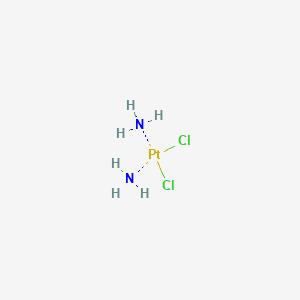
DESCRIPTION Cisplatin Injection is a clear, colorless to pale yellow solution. Each 100 mL amber vial of Cisplatin Injection contains: 1 mg per mL cisplatin USP, 9 mg per mL sodium chloride, hydrochloric acid and/or sodium hydroxide to adjust pH, and water for injection USP to a final volume of 50 mL and 100 mL respectively. The pH range of Cisplatin Injection is 3.8 to 5.9. Cisplatin Injection must be further diluted prior to administration (see DOSAGE AND ADMINISTRATION, All Patients ). The active ingredient, cisplatin USP, is a yellow to orange crystalline powder. Cisplatin is a heavy metal complex containing a central atom of platinum surrounded by two chloride atoms and two ammonia molecules in the cis position. It is soluble in water or saline at 1 mg per mL and in dimethylformamide at 24 mg per mL. It has a melting point of 207°C. PtCl 2 H 6 N 2 M.W. 300.05 Chemical Structure
⚠️ Warnings
WARNINGS Cisplatin produces cumulative nephrotoxicity which is potentiated by aminoglycoside antibiotics. The serum creatinine, blood urea nitrogen (BUN), creatinine clearance, and magnesium, sodium, potassium, and calcium levels should be measured prior to initiating therapy, and prior to each subsequent course. At the recommended dosage, cisplatin should not be given more frequently than once every 3 to 4 weeks (see ADVERSE REACTIONS ). Elderly patients may be more susceptible to nephrotoxicity (see PRECAUTIONS, Geriatric Use ). There are reports of severe neuropathies in patients in whom regimens are employed using higher doses of cisplatin or greater dose frequencies than those recommended. These neuropathies may be irreversible and are seen as paresthesias in a stocking-glove distribution, areflexia, and loss of proprioception and vibratory sensation. Elderly patients may be more susceptible to peripheral neuropathy (see PRECAUTIONS, Geriatric Use ). Loss of motor function has also been reported. Anaphylactic-like reactions to cisplatin have been reported. These reactions have occurred within minutes of administration to patients with prior exposure to cisplatin, and have been alleviated by administration of epinephrine, corticosteroids, and antihistamines. Cisplatin can commonly cause ototoxicity which is cumulative and may be severe. Audiometric testing should be performed prior to initiating therapy and prior to each subsequent dose of drug (see ADVERSE REACTIONS ). All pediatric patients receiving cisplatin should have audiometric testing at baseline, prior to each subsequent dose of drug and for several years post therapy. Cisplatin can cause fetal harm when administered to a pregnant woman. Cisplatin is mutagenic in bacteria and produces chromosome aberrations in animal cells in tissue culture. In mice cisplatin is teratogenic and embryotoxic. If this drug is used during pregnancy or if the patient becomes pregnant while taking this drug, the patient should be apprised of the potential hazard to the fetus. Patients should be advised to avoid becoming pregnant. The carcinogenic effect of cisplatin was studied in BD IX rats. Cisplatin was administered intraperitoneally (i.p.) to 50 BD IX rats for 3 weeks, 3 x 1 mg/kg body weight per week. Four hundred and fifty-five days after the first application, 33 animals died, 13 of them related to malignancies: 12 leukemias and 1 renal fibrosarcoma. The development of acute leukemia coincident with the use of cisplatin has been reported. In these reports, cisplatin was generally given in combination with other leukemogenic agents. Injection site reactions may occur during the administration of cisplatin (see ADVERSE REACTIONS ). Given the possibility of extravasation, it is recommended to closely monitor the infusion site for possible infiltration during drug administration. A specific treatment for extravasation reactions is unknown at this time.